


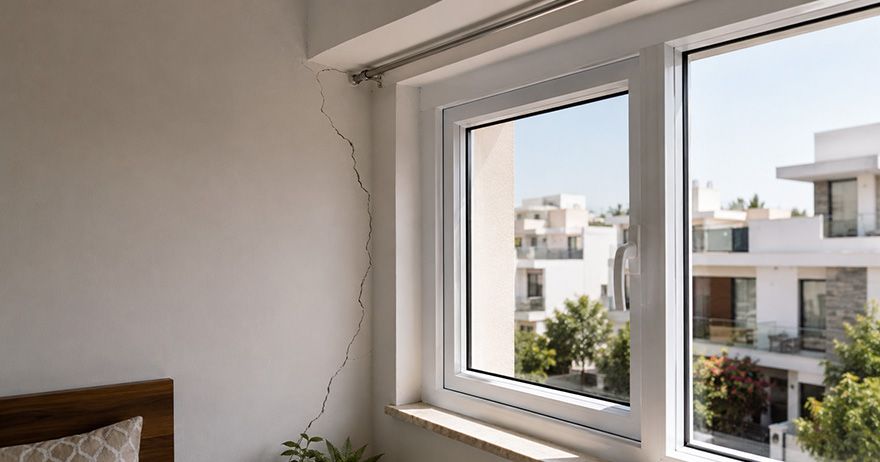
Cracks around windows are a common issue in almost every newly constructed home. And these cracks are often caused by structural movement, plaster shrinkage, improper installation, thermal expansion, or poor workmanship.
Although some cracks are cosmetic, others may indicate underlying construction or sealing problems that require immediate attention. So, it’s important to understand why these cracks occur and take the right corrective measures before moisture intrusion, air leakage, or larger structural problems develop.
In this blog, we’ll discuss the common causes of cracks around windows, how to repair them, and what preventive measures you should take.
Why Do Cracks Appear Around Windows?
There are several reasons why cracks appear around windows. And one of the most common ones is excess moisture. Although cracks do not occur only after some time, most newly constructed homes are also showing cracks around their windows. And it’s important to take care of these cracks before they start creating any structural issues.
Why Cracks Develop Around Windows After Construction?
Yes, hairline cracks around windows are normal after construction. Most newly constructed homeowners experience these cracks and get tense. But in most cases it’s not a threat, and it occurs as the wood framing shrinks, the foundation settles slightly into the soil, and building materials start to adjust to local temperature and humidity.
Common Causes of Cracks Around Windows
There are several reasons behind these window cracks. Sometimes they are just hairline cracks,s whicareis nor, mal but in some cases they are deep, and the reason behind these cracks is:
Building Settlement and Structural Movement
While constructing a building, windows are built into the load-bearing walls. And after completion of the construction, sometimes the foundation settles unevenly, which shifts the weight of the house, and window cutouts become high-stress points; hence, the cracks around windows.
Plaster Shrinkage
Another reason why there are cracks around your windows is plaster shrinkage. When plaster dries application it reduces in volume, but the uPVC window frames or any other window frames don’t shrink, leading to a hairline gap or crack.
Improper Window Installation
If your windows are not installed properly, it also leads to cracks around the windows. It is very important to level or bed in mortar correctly, because if not done properly, the weight of the window itself will crack the wall below it.
Thermal Expansion and Contraction
The construction materials expand in hot weather and contract in cold weather. And this continuous process creates a lot of stress on the walls and around the window, leading to cracks.
Poor Joint Sealing
Poorly sealed joints around windows allow moisture and air to enter the gaps between the frame and the wall. And over time, this contributes to cracks around the windows.
Low-Quality Construction Practices
In order to save some construction costs, sometimes people use low-quality construction materials and practices. Using incorrect mortar mixes, inadequate curing, improper alignment, and failure to follow installation standards lead to cracks in walls and even damage to walls.
Types of Window Cracks and What They Mean
There are different types of window cracks, and the reasons behind those cracks are also different.
Hairline Cracks
Hairline cracks are just like a strand of hair, thin and surface-level. These cracks usually occur due to plaster shrinkage, minor building settlement, or temperature fluctuations. They are very common and easy to repair.
Vertical Cracks
Vertical cracks run straight up or down from the window frame. And they are caused by natural building settlement or slight structural movement. And if your house has narrow vertical cracks, they are often harmless, but the wider ones require immediate inspection.
Horizontal Cracks
Horizontal cracks are quite rare and indicate excessive pressure on the wall and poor load distribution. If you see any horizontal cracks around your windows, then you should evaluate them, especially if they continue to widen.
Diagonal Cracks
Diagonal cracks often appear at a 30–75° angle from the corners of windows. They are commonly caused by foundation settlement, uneven structural movement, or inadequate lintel support and may indicate a more serious structural issue.
Stair-Step Cracks
These cracks follow the mortar joints in brick or block walls, creating a staircase-like pattern. They are usually associated with differential foundation settlement or structural movement and often require professional assessment.
Cosmetic vs Structural Cracks
Understanding whether a crack in your windows is cosmetic or structural is essential before deciding on repairs. And check out this below mentioned table to know the difference between cosmetic and structural cracks:
| Feature | Cosmetic Cracks | Structural Cracks |
|---|---|---|
| Crack Width | Less than 1–2 mm wide | Wider than 2–3 mm and gradually widen over time |
| Cause | Normal shrinkage thermal expansion and minor foundation settlement | Foundation movement poor construction and excessive structural loads |
| Repair Method | Can be repaired using filler sealant and repainting | Should be repaired by a structural engineer or experienced contractor |
| Affected Area | Usually affects only paint and plaster | Extends through bricks concrete and masonry |
How to Repair Cracks Around Window Openings?
If you want to repair the cracks around your windows start by identifying their cause and severity. Most home only have hairline cracks that only affect the surface and can usually be repaired by cleaning the area, applying a quality crack filler or sealant, sanding the surface smooth, and repainting once it has dried.
But if the crack is wider and deeper, it will require more extensive repairs. So, first consult a professional and usually they start by removing loose material, filling the gap with repair mortar or epoxy, and restoring the surrounding finish. Also, it is very important to understand the root cause of the cracks.
How to Prevent Cracks Around Windows Future?
If you want to prevent the future cracks, follow these simple steps:
- Use quality materials while construction
- Hire the professionals
- Do routine inspection of sealants
- Select uPVC windows as they can handle the everyday temperature better
- Build a proper drainage system
Why Proper Window Installation Matters?
Proper window installation is essential for maintaining the structural integrity and long-term performance of both the windows. When your windows are properly installed, leveled, securely anchored, and adequately sealed, then minor building movement dosen’t create any heavy damage to your windows or walls.
When Should You Call a Professional?
It is easy to repair small cosmetic hairline cracks with simple DIY methods. But if the cracks are deeper then you should consult a professional. If the cracks around your windows continue to widen, they may indicate a more serious structural problem. And a professional can identify the root cause of the damage, and can recommend the appropriate repair solution.