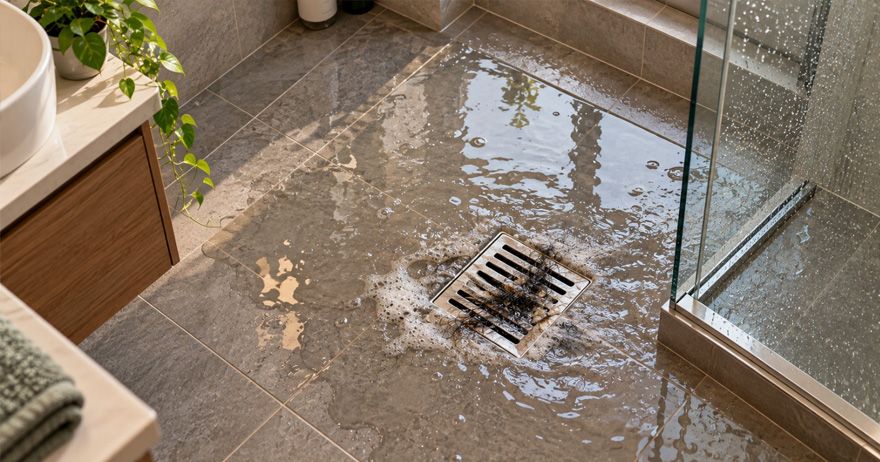
Most bathroom drain blockages are hair and oil bound together with soap, sitting within the first foot of the drain. That means you can usually reach them and pull them out, without pouring anything down the pipe. Chemical cleaners are the last step, not the first.
One warning before anything else. Never use a plunger after pouring a chemical drain cleaner. The plunger can splash caustic liquid back up into your face and eyes. And never mix two drain products, or a drain cleaner with bleach or phenyl — some combinations release toxic gas.
What Causes Bathroom Drain Blockages?
Hair is the main culprit, catching on any rough spot inside the pipe and forming a net that traps everything else.
Hair oil matters more here than most guides admit. Coconut oil solidifies below about 24°C, so in winter it hardens inside the pipe and binds loose hair into a solid plug.
Soap residue reacts with hard water to leave a sticky film that narrows the pipe over time. Dirt and grit wash off feet and clothes and settle in the trap. And small objects — bottle caps, earbuds, hair clips — lodge there and catch everything after them.
Signs That Your Bathroom Drain Is Clogged
- Water draining slower than it used to, or pooling around your feet.
- A gurgling sound from the drain or a nearby fixture.
- A bad smell rising from the drain even when it is not in use.
- Water backing up when another fixture is used.
- Damp or seepage near the floor trap.
Slow drainage is the stage to act on. Clearing a partial blockage is far easier than a full one.
Why Hair Is a Common Cause of Drain Clogs
Hair does not break down. Unlike food or tissue it stays intact for years inside a pipe. One strand catches on a rough joint, the next catches on that one, and within months you have a mat holding oil, soap and grit until water barely passes.
This is why a strainer beats any cleaner. Stopping hair entering the drain takes ten seconds a week; removing it afterwards takes an hour.
How to Clear a Bathroom Drain Safely
Work through these in order and stop as soon as water runs freely.
- Remove the drain cover and take out everything visible.
- Pull out the hair mat with gloved fingers, a bent wire or a plastic drain zip tool.
- Flush with hot tap water hot, not boiling, since boiling water can soften PVC and loosen joints. Run it two to three minutes.
- Try baking soda and vinegar if it still drains slowly. Half a cup of each, left 20 to 30 minutes, then flushed with hot water. Works on light soap film and smell; it will not shift a solid hair plug.
- Use a plunger, then a drain snake if that fails.
- Open the trap as the last home step, or call a plumber.
Using a Drain Strainer and Removing Visible Debris
Lift the grating and clear what you can see, wearing rubber gloves. A bent wire hook, long-nose pliers or a plastic drain zip tool reaches most of what sits in the first few inches. Pull upward and out slowly; pushing debris down turns a reachable clog into a plumber's job.
Many Indian bathrooms have a removable cup inside the nahani trap. Lift it out and wash it.
How a Plunger Can Help Clear a Blocked Drain
A plunger works on suction, so it needs a seal and water in the basin. Cover the basin overflow hole with a wet cloth, or the pressure escapes through it. Add enough water to cover the cup, push down gently to expel air, then pump firmly ten to fifteen times without breaking the seal, pulling off sharply on the last stroke.
Repeat two or three times. If nothing moves, the blockage is further along than a plunger can reach.
Never plunge if you have already poured chemical cleaner down the drain.
When to Use a Drain Snake or Cleaning Tool
A drain snake reaches blockages a plunger cannot. Feed it in slowly. When you feel resistance, turn the handle rather than forcing it forward — you want to hook the mat and pull it back, not push it deeper. Withdraw slowly, clean the end, repeat until clear.
Move gently in older pipes and at bends, where forcing a wire can crack a joint. A snake is for one fixture — if several drains block together, the problem is in the main line.
Should You Use Chemical Drain Cleaners?
Only as a last resort. Caustic and acid-based cleaners dissolve organic matter and generate heat doing it. That heat can soften PVC, and repeated use damages older pipes and metal fittings. They also do little against a solid hair mat, which is why people end up pouring a second bottle after the first fails.
If you do use one:
- Follow the stated contact time. Longer is not better.
- Ventilate the bathroom and wear gloves and eye protection.
- Never mix products or use one after another, and never combine with bleach or phenyl.
- Never plunge afterwards.
- Do not use it in a fully blocked drain. The chemical sits in standing water and never reaches the clog.
- Tell your plumber you have used one, before they open the trap.
Enzyme-based cleaners are slower but far gentler, and suit maintenance rather than an emergency.
How to Prevent Future Bathroom Drain Blockages
- Fit a hair strainer over every drain. This single step prevents most blockages.
- Clear it after each shower, binning the hair rather than rinsing it down.
- Brush hair before bathing, so loose strands come out beforehand.
- Run hot tap water for a minute weekly to move soap and oil along.
- Rinse with hot water after hair oiling, never cold.
- Wipe hair dye, face packs and ubtan into the bin instead of washing them down.
- Pour a mug of water into unused drains weekly. A dry trap lets sewer gas up, which is the usual cause of smell in a guest bathroom.
- Dry the bathroom between uses. A room that never dries grows biofilm in the drain and mould in the corners, so run the exhaust fan or open the window. IndiFrame's uPVC windows include small casement units and ventilators for bathrooms, where frames face constant moisture.
Bathroom Drain Maintenance Checklist
Weekly — clear strainers, flush with hot tap water for a minute. Monthly — clean the floor trap; pour water into unused drains to keep the seal. Every three months — baking soda and vinegar or an enzyme cleaner; check each fixture for slow drainage. Yearly — have traps cleaned properly and check for seepage near floor traps and behind the WC.
When Should You Call a Plumber?
Call a plumber if:
- More than one fixture is blocked at once. That points to the main line.
- Water backs up in one fixture when you use another.
- Sewage or foul water comes back up. A health hazard, not a DIY job.
- The blockage returns within weeks, which usually means a pipe problem — a sag, a crack or roots.
- You have already tried plunging, snaking and opening the trap.
- Mention any chemical cleaner you have used. A plumber opening a trap full of caustic liquid without knowing is how injuries happen.
Final Thoughts
Start mechanical and stay mechanical. Pull the hair out, flush with hot tap water, plunge, then snake. Chemical cleaners come last, and never with a plunger or another product.
The real fix is upstream. A strainer on every drain and a minute of clearing each week does more than any product you can buy.