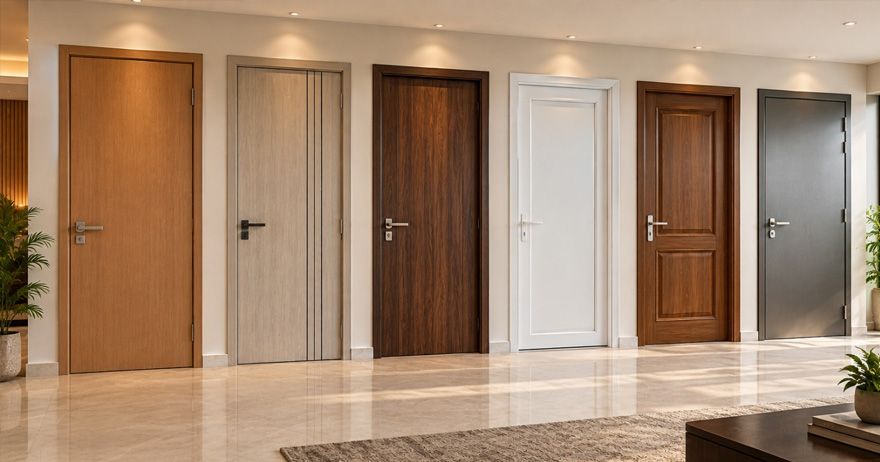
Choosing a door material for your home isn’t always simple. And that’s when you have options like flush, WPC, ABS, uPVC, wood, and steel doors. Each has its own advantages, and a material that works well in one part of the house may not be suitable for another. For instance, a bathroom door needs to withstand moisture, while a main entrance door should offer good strength and security.
Knowing what each material has to offer can help you find the right fit for your space, budget, and everyday needs. And in this blog, we will be comparing all the door materials.
How Do the Major Door Materials Differ?
Doors differ in three ways that matter: how they handle water, how much weight and force they take, and whether damage can be repaired.
| Material | Water resistance | Strength | Best use |
|---|---|---|---|
| Flush (plywood core) | Poor to moderate | Moderate | Bedrooms; dry interiors |
| WPC | Fully waterproof | Moderate | Bathrooms; kitchens; utility |
| ABS | Fully waterproof | Low to moderate | Bathrooms only |
| uPVC | Fully waterproof | Moderate | Balcony; utility; bathroom |
| Solid wood | Moderate; needs sealing | High | Main door; pooja room |
| Steel | Good if coated | Highest | Main door; terrace; fire exit |
Two things cut across all of them. Every door fails at its weakest point first, usually the bottom edge and the hardware fixings. And the frame matters as much as the shutter - a good shutter in a rotting wooden frame will still jam every monsoon.
Flush Doors: Strengths and Limitations
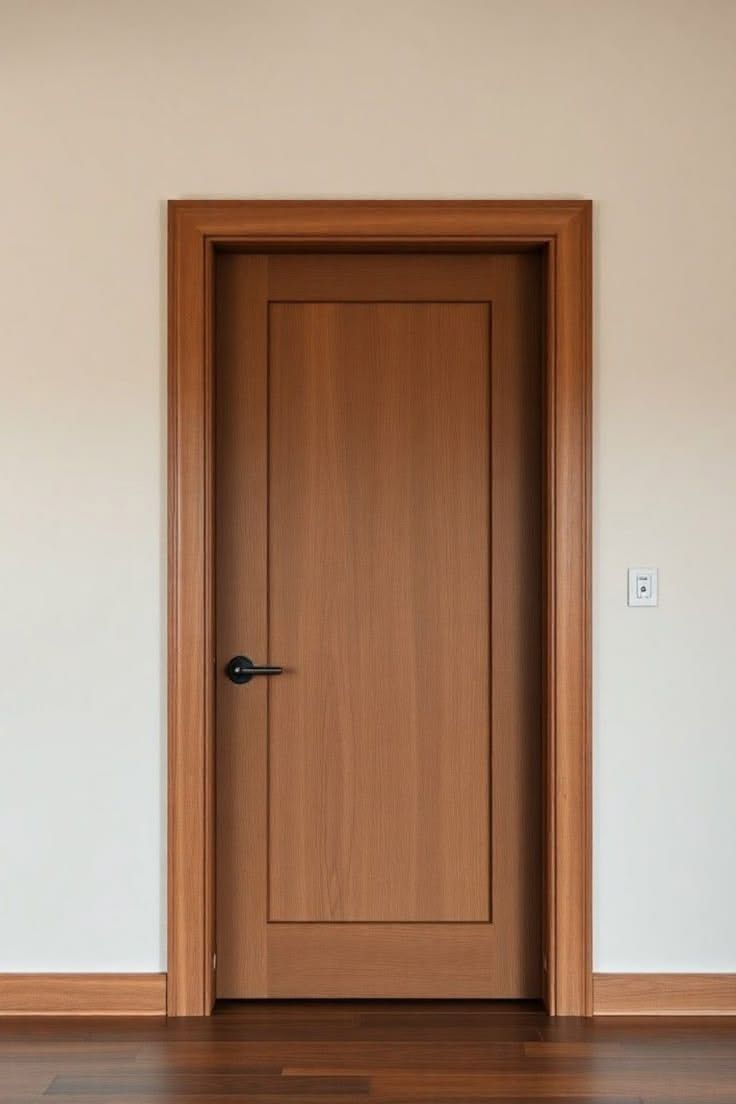
A flush door is a timber or particle-board core faced with plywood, laminate or veneer — the default interior door in Indian homes because it is cheap, light and available everywhere.
The core decides everything. A solid block-board core feels substantial and holds screws. A hollow or tubular core is lighter, cheaper and sounds like cardboard when you knock it. Ask which you are being quoted: the price difference is small, the lifespan difference is not. Look for factory doors conforming to IS 2202, and specify BWP grade anywhere near water.
The limitation is moisture. Standard flush doors swell at the bottom edge in bathrooms, and once the skin delaminates there is no repair.
WPC Doors: Where They Work Best
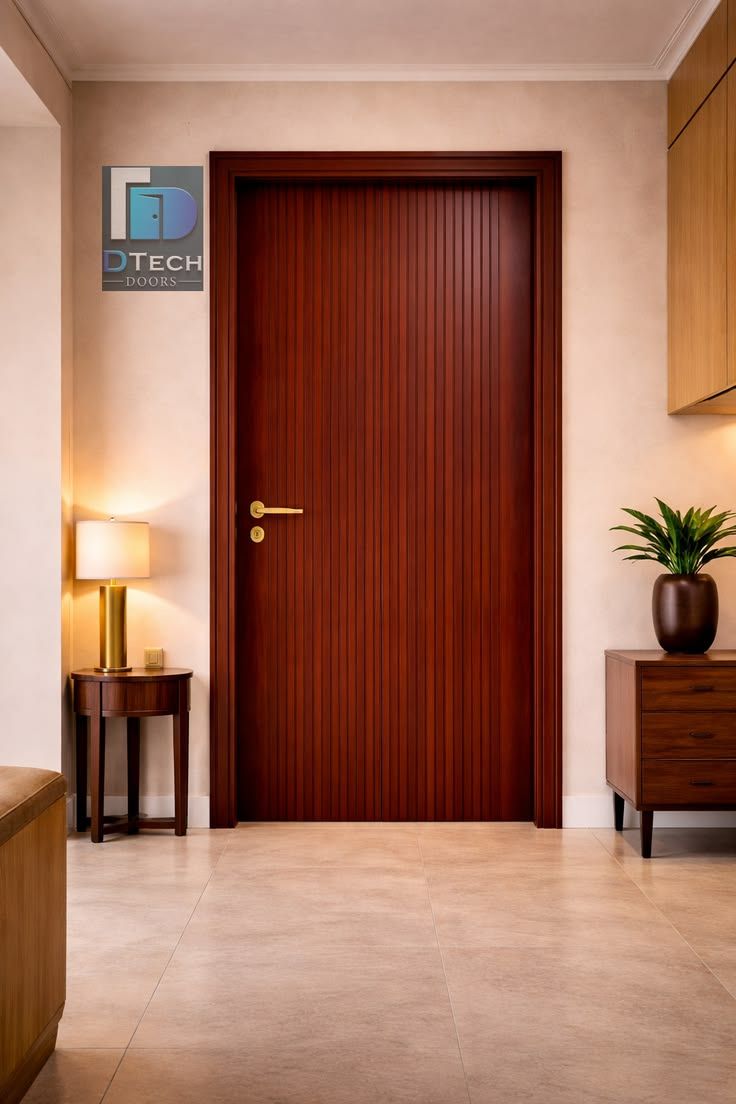
WPC is wood plastic composite — wood flour mixed with PVC and additives. It works like timber but does not absorb water.
It is waterproof, termite-proof, takes paint or laminate, and holds screws reasonably well. That makes it the sensible default for bathroom, kitchen and utility doors, and it is increasingly used for frames too.
Two limitations. WPC can sag over wide spans if hinges are under-specified, so use three rather than two. And it does not hold heavy hardware as securely as solid timber, which is why it is not a main-door material.
ABS Doors: Benefits and Limitations
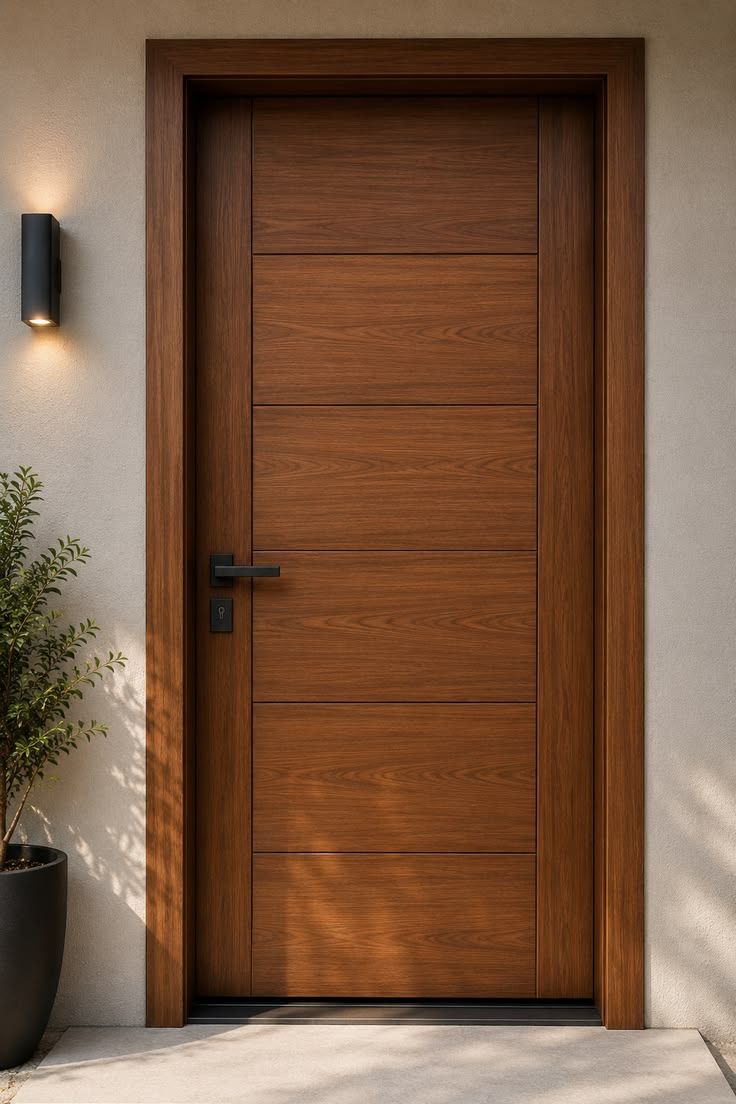
ABS doors use a moulded thermoplastic skin over a honeycomb or polymer core. They arrive pre-finished, weigh very little and are unaffected by water. For a small bathroom they work well nothing to swell, nothing to repaint.
The limitations are real. ABS cannot be cut or planed on site, so the opening has to suit the standard size rather than the reverse. Surface damage cannot be repaired a deep scratch or dent is permanent. Sizes and finishes are limited, and they feel light.
Use them for bathrooms, and nowhere that takes impact.
uPVC Doors: Best Applications
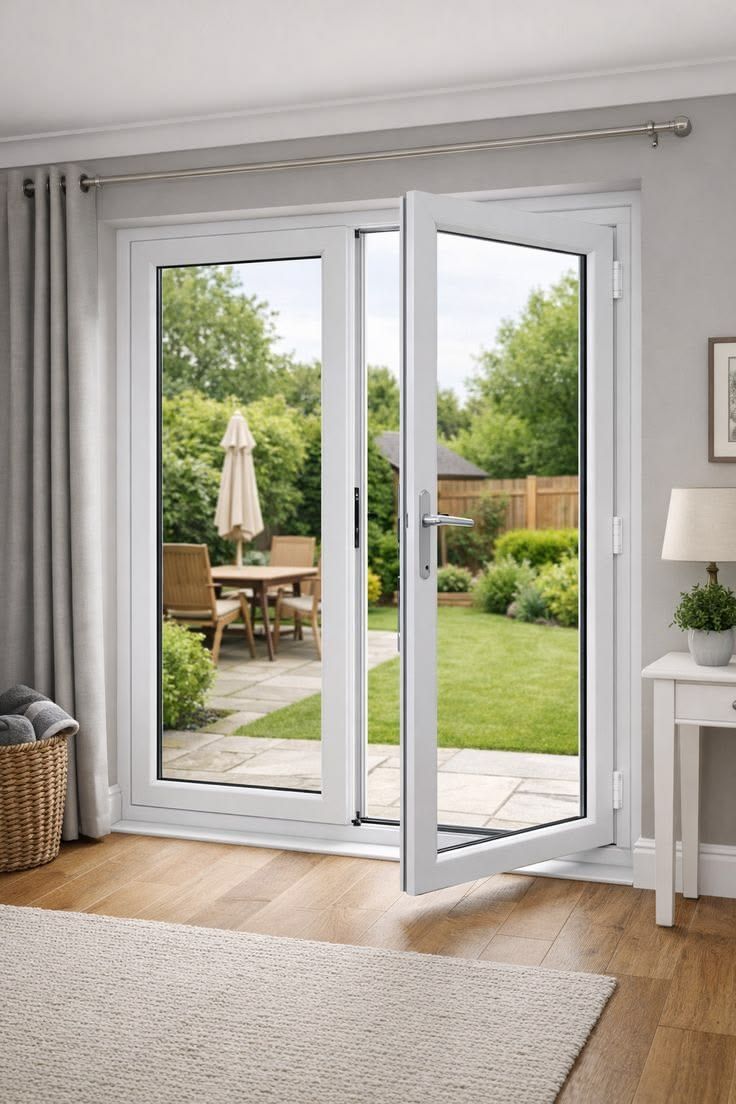
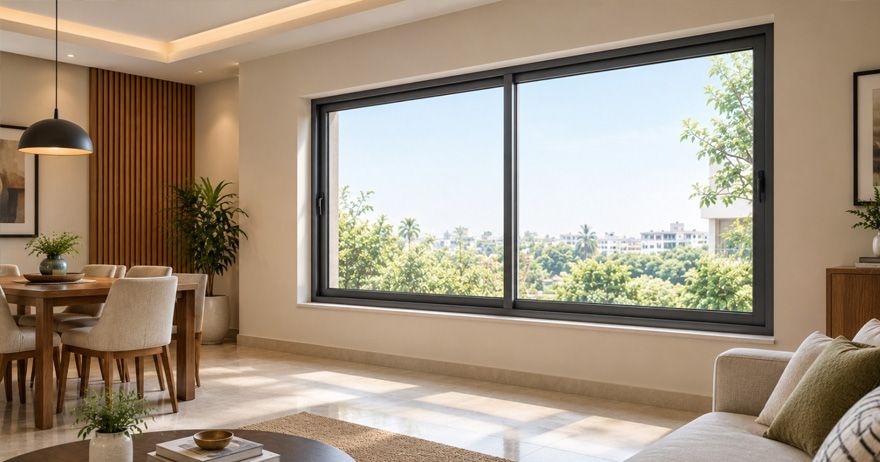
uPVC doors use a multi-chamber profile, usually steel-reinforced, with a glass or panel infill. They do not swell, rot, corrode or need repainting, they seal on a gasket when shut, and they come as sliding, casement or slide-and-fold.
That makes them the strongest choice for the places ordinary doors fail: balcony and terrace doors, utility areas, bathrooms and enclosed washing balconies, where a timber door warps within two monsoons.
Being straightforward about the limits: uPVC is not a main entrance door. It does not give the weight, feel or physical security people reasonably want at the front of a house, and anyone selling it for that is overselling it. Large single leaves also need proper steel reinforcement, or they sag.
IndiFrame's uPVC doors cover sliding, casement, slide-and-fold and duct configurations, which handle most wet-area and external openings in a flat.
Wooden Doors: Appearance and Performance
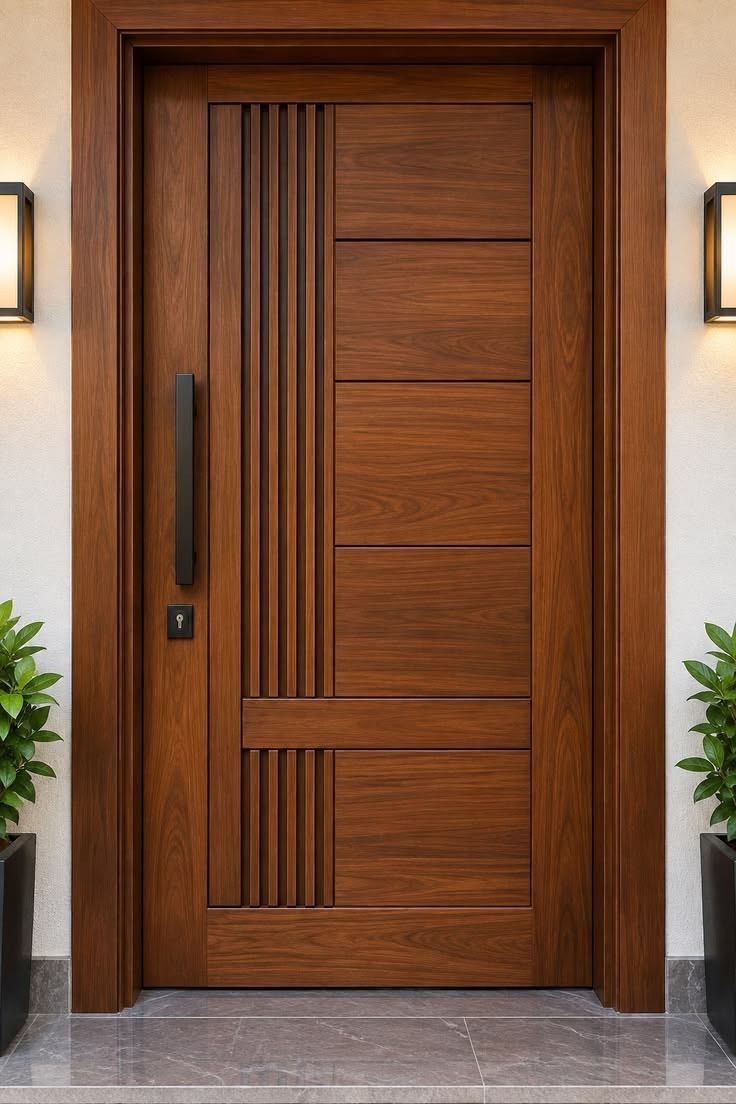
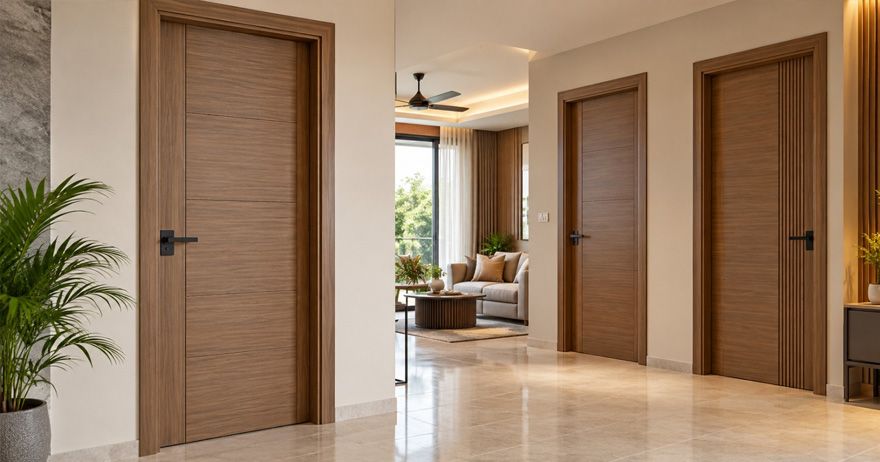
Solid timber remains the best main door, and nothing matches it on feel. A well-made teak door closes differently and can be sanded and refinished decades later the only material here that improves with maintenance rather than simply wearing out. It is also the only one that handles heavy locks and a large single leaf without compromise.
The trade-offs are cost and movement. Timber expands in monsoon and contracts in summer, so a door that closed perfectly in March may stick in July. Use seasoned wood, insist on termite treatment, and keep all six faces sealed — including the top and bottom edges installers routinely leave bare.
Steel Doors: Strength and Security
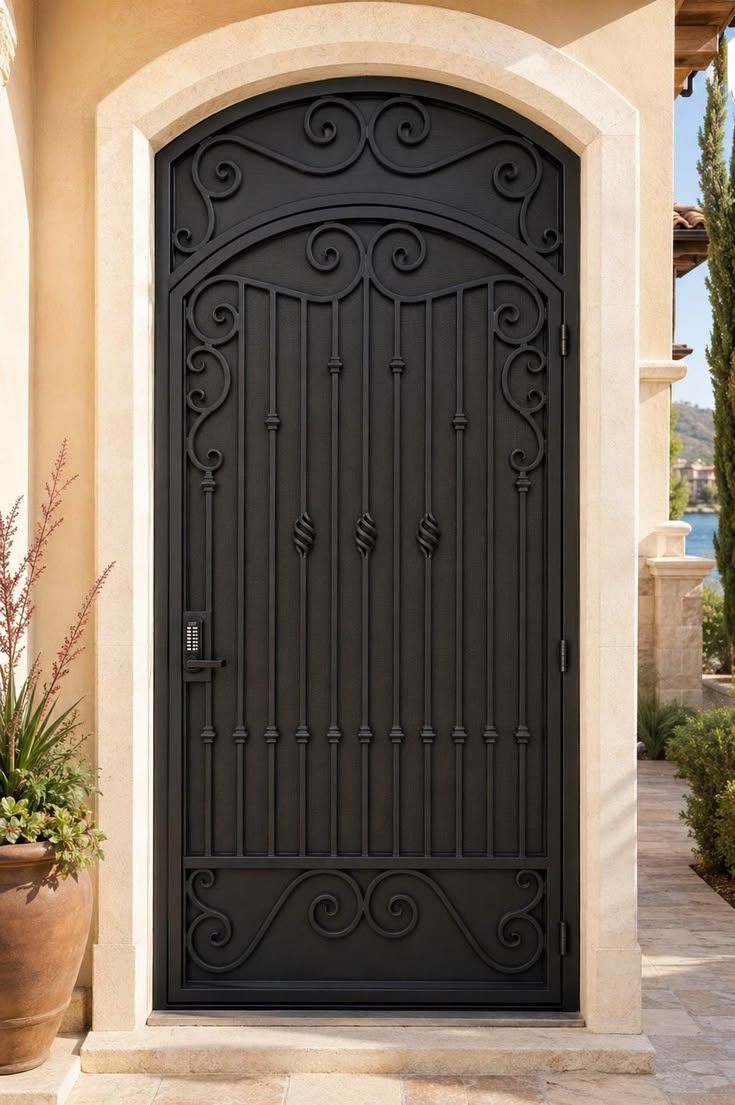
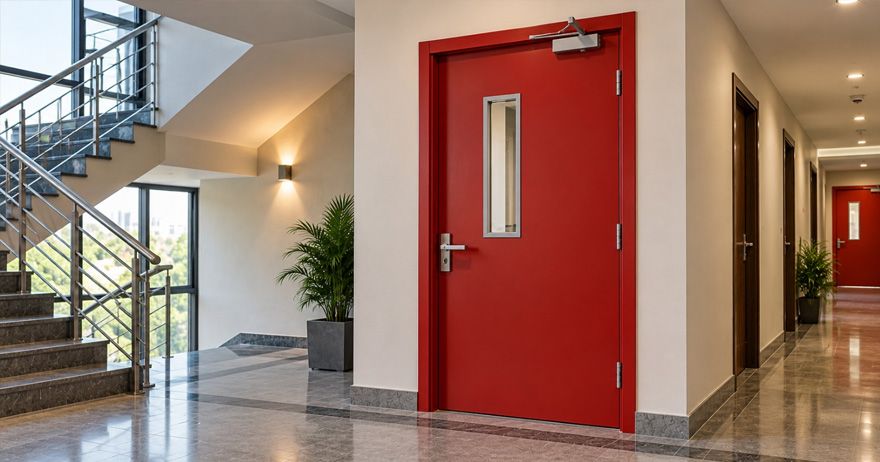
Pressed or galvanised steel is the strongest option, and the only one offering meaningful fire resistance when certified for it. It suits main doors where security is the priority, terrace and service doors, and staircase fire exits. A powder-coated steel door needs no annual maintenance and outlasts everything else here.
Two cautions. Steel dents rather than scratches, and a dent is hard to make good. And in coastal cities any break in the coating starts rust, so touch up chips promptly.
How Cost and Maintenance Compare?
Here’s the detailed comparison between cost and maintenance:
| Material | Per sq ft | Per standard shutter |
|---|---|---|
| Flush; standard | ₹60–190 | ₹1200–4000 |
| Flush; veneered or designer | ₹190–430 | ₹4000–9000 |
| WPC | ₹75–150 | ₹2000–4500 |
| ABS | Confirm locally | Confirm locally |
| uPVC | ₹400–700 of opening | By size |
| Solid wood | From ₹800 | ₹10000–25000+ |
| Teak; Burma or CP | ₹800–1500+ | ₹25000 upward |
| Steel; pressed or galvanised | — | ₹8000–25000 per set |
A standard internal shutter at 3 ft × 7 ft is about 21 sq ft.
The figure almost every quotation hides: the frame, hardware, fitting and GST add roughly 40 to 55% on top of the shutter price. A ₹3,000 flush door is a ₹4,500 door installed. Compare quotes on the installed cost, not the shutter.
On maintenance, uPVC, ABS and steel need nothing beyond cleaning. WPC needs occasional repainting if painted. Timber needs re-coating every few years — the cost of being the only repairable material here.
How to Choose the Right Material
Work room by room rather than picking one material for the house.
Main entrance: solid wood for appearance and feel, or certified steel for security. Not uPVC, not ABS.
Bedrooms: solid-core flush, veneered or laminated. The cheapest sensible choice.
Bathrooms: WPC or ABS. Never a standard flush door.
Kitchen and utility: WPC, or uPVC if the opening is external or faces a washing balcony.
Balcony and terrace: uPVC sliding or casement, or coated steel for a service terrace.
Pooja room: solid wood, where appearance matters most.
Fire exits and staircases: certified steel only.
Then check three things on every door, whatever the material: that the frame suits the location as well as the shutter does, that hinges and locks are rated for the leaf weight, and that the bottom edge is sealed before fitting. Those three cause more door failures in Indian homes than the choice of material ever does.