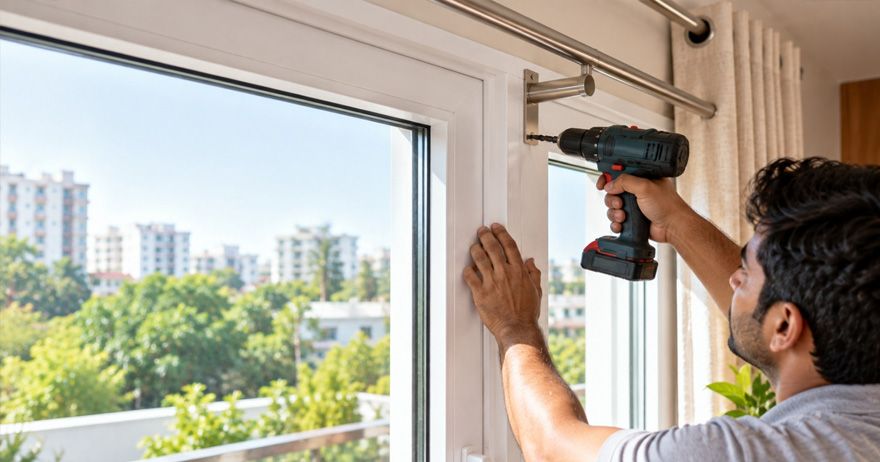
Can You Drill Into a uPVC Window or Door Frame?
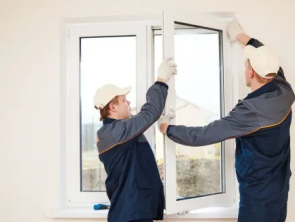
The answer is YES - provided it is done by a technical expert from a trusted brand/vendor. Most homeowners should avoid drilling into a uPVC Window or Door Frame.
What Happens When You Drill Into a uPVC Frame?
- Plastic stress and cracks: uPVC is under tension. A wrong drill bit or high heat from fast drilling can warp, melt, or crack the profile.
- Metal contact: Most frames contain hidden galvanised steel bars for strength. Your drill bit may stall or dull.
- Glass damage: Drilling near the glazing bead risks hitting the glass, especially in a double-glazed unit, which can shatter.
- Insulation loss: Piercing through the internal hollow air chambers can create a cold bridge and reduce thermal efficiency.
- Warranty void: Most manufacturers state that modifying or puncturing the frame invalidates your product guarantee
Where Is It Safe to Drill on a uPVC Frame?
Drilling into a uPVC frame requires care because the frame contains hollow chambers, seals, reinforcement, and hardware. As a general rule, drill only into the appropriate outer hollow chamber, keeping a safe distance from the glass, seals, locking points, and other internal components.
If you are unsure about where to drill, it is safer not to drill into the frame at all. Instead, you can fix fixtures directly to the surrounding wall, with enough distance from the window or door frame to avoid interfering with its operation or installation.
Can Security Grills Be Fixed to uPVC Frames?
Yes, you can install security grills around uPVC windows. IndiFrame offers two installation options, depending on the opening and the home's requirements: wall-mounted grills and frame-mounted grills, both installed from inside the home.
The choice depends on the available space, the window configuration, and how the grill needs to sit around the opening. Ideally, plan this before the window installation so the grill and window don't interfere with each other.
Can You Install Curtain Rods on uPVC Windows and Doors?
You can install curtain rods around uPVC windows and doors, but you need to consider placement alongside any security grill planned for the opening.
If there is no internal security grill, you can generally fix a curtain rod around the window or door as needed, as long as the drilling point does not interfere with the frame, glass, seals, or hardware.
If you are installing a security grill inside the home, whether frame-mounted or wall-mounted, fix the curtain rod at a suitable distance from the grill. This gives both the curtain and grill enough clearance and prevents one fixture from interfering with the other.
When Should You Fix a Fixture to the Wall Instead?
Fixing a fixture to the wall is the safer option when you are unsure about the internal construction of the uPVC frame, when the required drilling point is close to hardware or seals, or when a grill is already installed around the window.
It is also preferable when multiple fixtures need to be installed around the same opening. Planning them on the wall gives you more flexibility with positioning and reduces the chances of damaging the window frame.
Common Mistakes to Avoid When Drilling Into uPVC Frames
1. Drilling without professional help
The exact location of the reinforcement, hardware and other components can vary depending on the window or door configuration. Drilling without knowing what is behind the frame can result in damage that may affect the window's operation or performance.
2. Drilling into the frame without checking the warranty
Some types of drilling or modifications may affect the manufacturer's warranty. Always check the warranty terms before making any permanent modification to the frame.
3. Using the wrong fixtures or fasteners
The fixture must suit the material and the load it is expected to carry. Using an unsuitable screw, anchor, or fixing can result in a loose fixture or unnecessary stress on the frame.
4. Ignoring other fixtures around the window
Plan curtain rods, security grills, and other additions together. Installing one fixture without considering another can leave insufficient clearance or make future installation difficult.
Safer Alternatives to Drilling Into uPVC Frames
If you need to install curtains, grills or another fixture around a uPVC window or door, professional installation is the safest approach. A trained installer can identify suitable fixing points and decide whether to attach the fixture to the frame or the surrounding wall.
For new windows, it is especially useful to mention requirements such as security grills at the time of purchase. IndiFrame can install grills when requested at the start of the window purchase process, allowing the window and grill installation to be planned together.
For existing windows, if you're unsure where to drill, fixing the fixture to the surrounding wall is generally safer than modifying the uPVC frame yourself.
Final Thoughts
A uPVC window or door frame may look like a simple surface to drill into, but several components inside it need to remain protected. The right fixing point depends on the frame construction, the fixture being installed, and what else is planned around the opening.
So before drilling, check the manufacturer's recommendations, consider the warranty and make sure the fixing will not interfere with the glass, seals, hardware or existing fixtures. When in doubt, get professional help or fix the fixture to the surrounding wall instead.