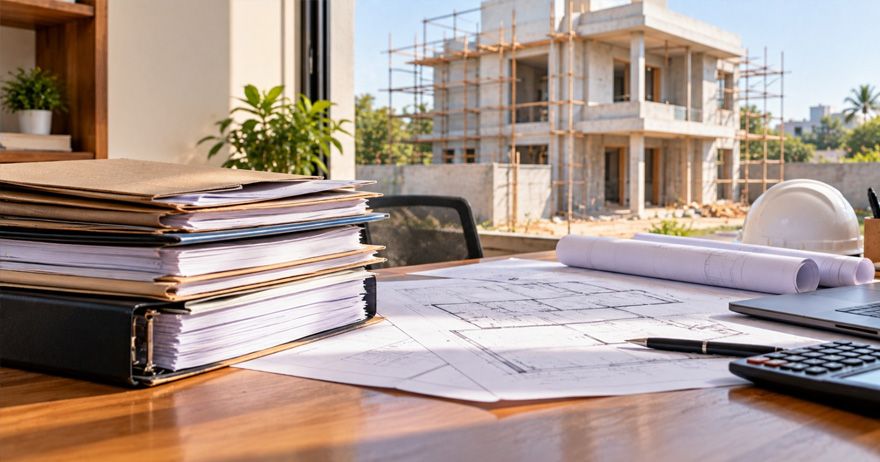
Building a house during the monsoon can be challenging, but rain does not necessarily mean that you stop all the construction work. Building during monsoon requires careful planning to determine which activities can continue safely, and which should be postponed.
During the monsoon, excess moisture can affect earthwork, concrete, masonry, plastering, waterproofing, stored materials, and electrical work if proper precautions are not taken. At the same time, you can continue with some indoor or protected activities with minimal disruption.
But it’s important to monitor weather conditions, cover materials, manage site drainage, protect fresh concrete, and maintain worker safety. Because a well-managed construction site can minimise delays while reducing the risk of moisture-related damage.
Is It Safe to Build a House During the Monsoon?
Building a house during rainy season is very much possible, but you need extensive planning and care. Rain can slow down activities such as excavation, concrete work, brickwork, and waterproofing, while also making it harder to store construction materials safely. This does not mean construction has to stop completely, and with proper drainage, covered storage, weather protection, and a flexible schedule, you can continue suitable work during the season. But you must pause outdoor activities during heavy rainfall, as it makes the site unsafe and can even affect the quality of the work.
Construction Activities That Can Usually Continue
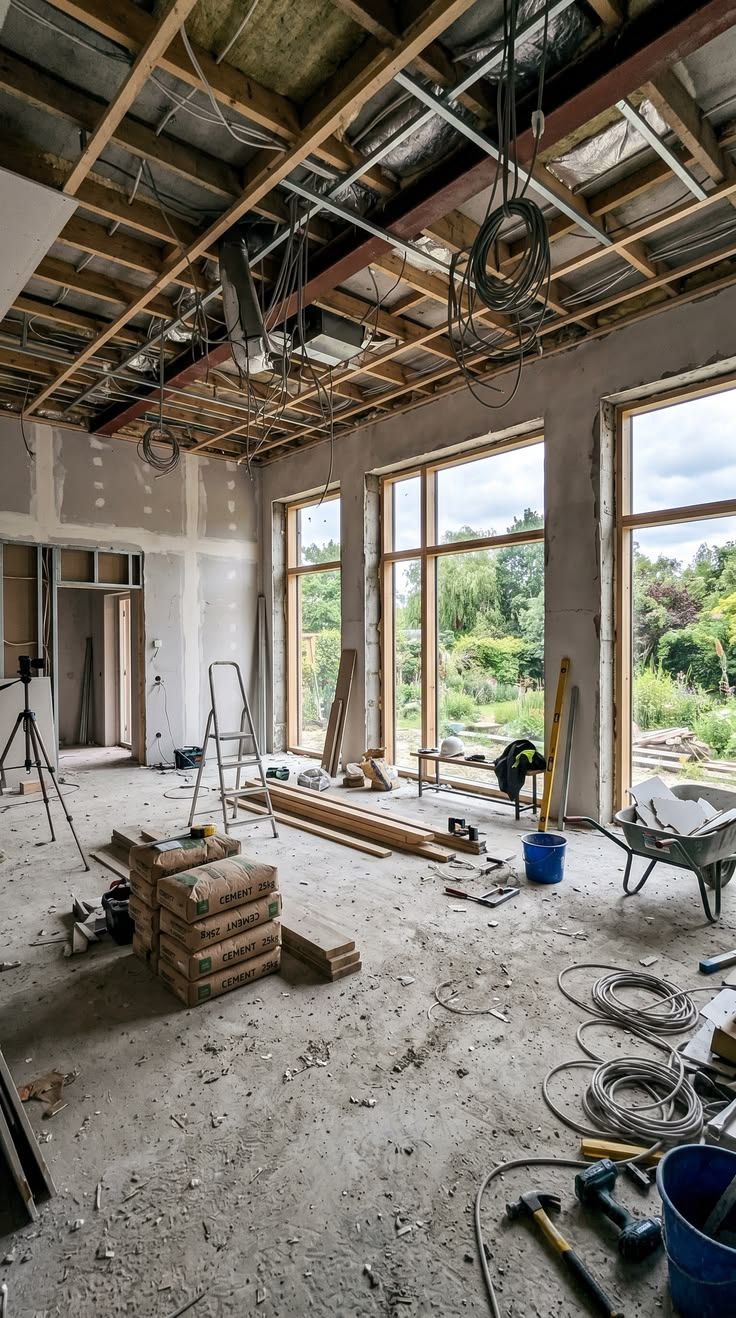
There are certain construction activities that you can continue even during the monsoon. The only condition is to keep the site safe and the work area protected from rain. And here’s the list of activities that can continue:
- Indoor electrical work
- Plumbing
- Plastering
- Interior preparation
- Steel fabrication
- Material cutting
Construction Work That May Need to Be Paused
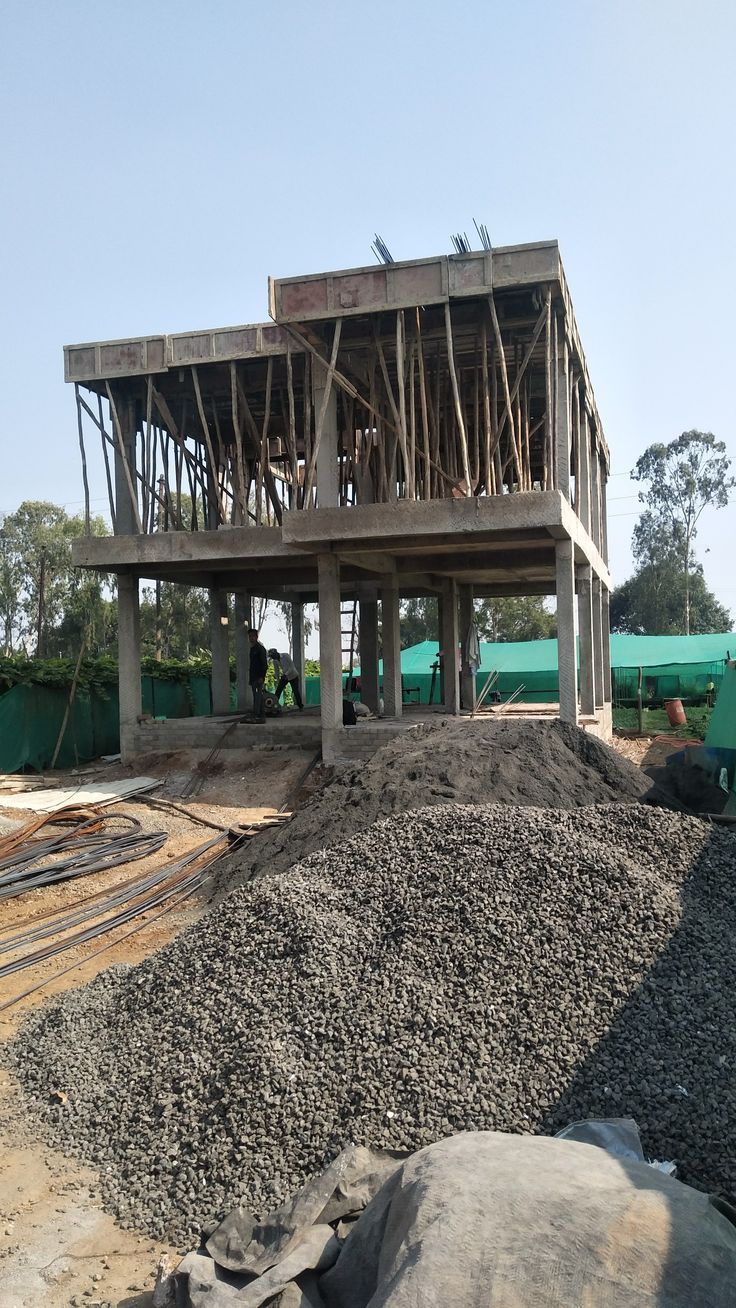
Heavy rain can make certain construction activities unsafe or affect the quality of the work. Some work needs a dry surface, and it’s important to stop certain construction activities for the safety and durability of the home. Here list of some construction work that you should pause:
- Excavation
- Foundation work
- Earthwork
- Concrete pouring
- Painting
- Waterproofing
Concrete Work and Slab Casting During Rain
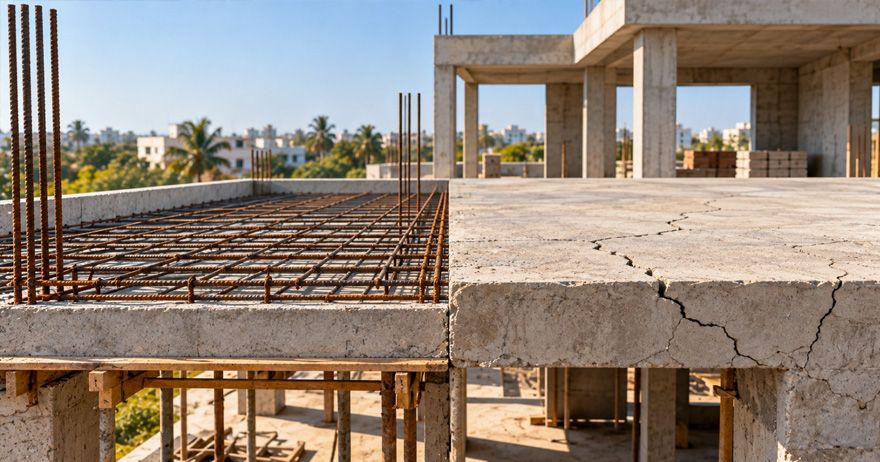
During the monsoon, you need to be a little more careful with concrete work and slab casting. Too much rainwater can get into the concrete and affect its strength and finish. If there is only light rain, you can continue the work as long as the fresh concrete is properly covered. But if heavy rain is expected, it is better for you to postpone your slab casting. Also, make sure water does not collect on the slab and keep cement and other materials in a dry, covered place.
Brickwork, Masonry, and Plastering in Wet Conditions
Rain can cause problems with brickwork and plastering if the walls and materials stay wet for too long. Keep bricks covered and protect newly done masonry and plaster from direct rain. Before starting plastering, check that there is no standing water or too much moisture on the wall. If it starts raining heavily, stop the work and continue once the weather clears and the surface has dried enough.
Waterproofing Work During the Monsoon
Waterproofing work needs dry and suitable weather conditions to bond properly and give lasting protection. During the monsoon, rain and moisture can make it difficult for waterproofing materials to adhere to the surface. Avoid starting waterproofing during monsoon or continuous rainfall, especially on terraces, roofs, balconies, and external walls. The surface should be clean, dry, and free from standing water before application. If waterproofing is already in progress, the area should be properly covered and protected from rain until the material has cured.
Protecting Cement, Steel, Sand, and Other Building Materials
- To protect your cement, store it in a dry area away from rain and moisture.
- Keep your cement bags raised above the ground with the help of wooden pallets.
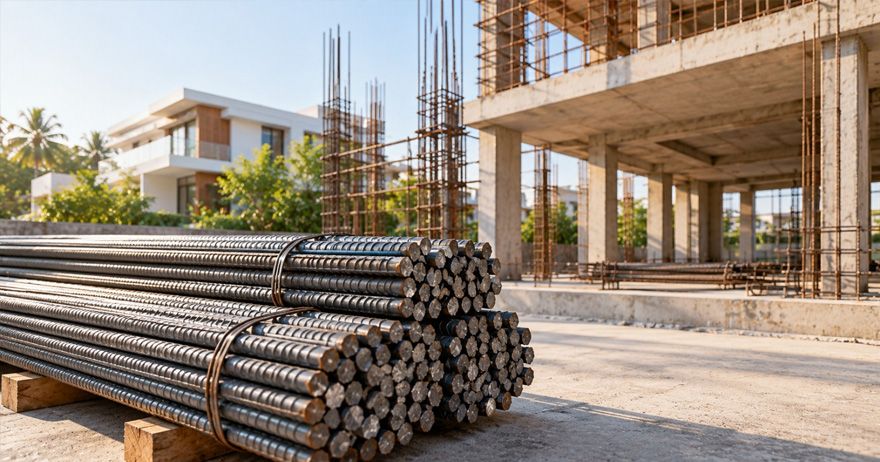
- Cover steel bars properly to reduce prolonged exposure to rain and moisture.
- Store sand and other loose materials on a raised surface to prevent mixing with mud and rainwater.
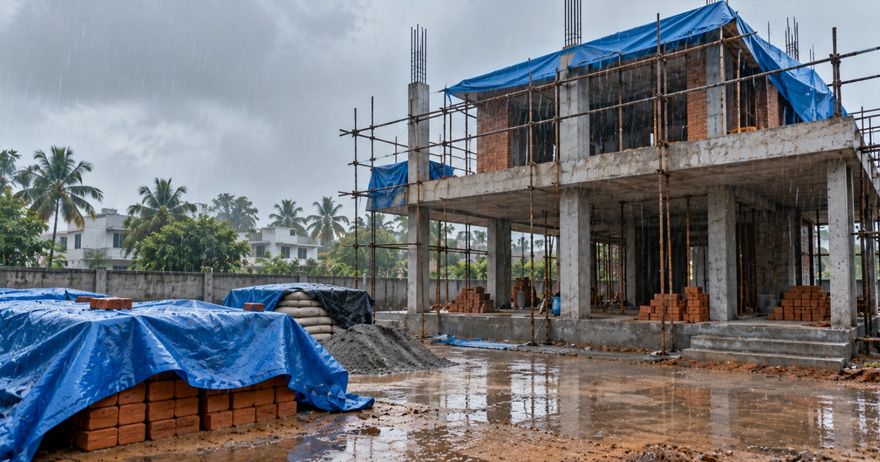
- Cover bricks, blocks, and other porous materials when heavy rain is expected.
- Keep electrical materials, tools, and wooden products in a dry and enclosed storage area.
- Use waterproof sheets or tarpaulins for protecting building materials from rain.
Managing Site Drainage and Preventing Waterlogging
Proper site drainage is important during the monsoon to prevent rainwater from collecting around the construction area. Create clear drainage paths to direct water away from foundations, trenches, and other important work areas. Keep drains, channels, and temporary outlets free from mud, debris, and construction waste so that water can flow without blockage. If water collects in low-lying areas, use pumps to remove it. Building materials and equipment should also be kept on raised platforms to protect them from water. Regularly check the site after heavy rainfall and use temporary covers, barriers, or channels wherever needed to control the flow of rainwater.
Electrical and Plumbing Work: Important Monsoon Precautions
During the monsoon, electrical and plumbing work becomes a headache. And here are some precautions that you must take:
- Keep all your electrical tools, wires, switches, and other equipment away from water and damp surfaces.
- Pause all electrical work in areas with standing water or active water leakage.
- Cover all temporary electrical connections properly.
- Check cables and electrical equipment for damaged insulation before use.
- Keep plumbing materials protected from rain, mud, and construction debris.
- Seal open pipes and plumbing connections to prevent rainwater and dirt from entering.
- Check newly installed pipes and drainage lines for leaks and blockages after heavy rainfall.
Construction Site Safety During Monsoon
Heavy rain can make a construction site unsafe within a short span of time. So, before continuing your work, there are a few basic precautions that you must take to protect workers and prevent accidents on site:
- Stop outdoor work during heavy rain, strong winds, hailstorms, or thunderstorms.
- Keep all your workers away from waterlogged areas, deep trenches, unstable structures, and electrical work.
- Keep all walkways and working areas clear of mud and debris.
- Ask your workers to use proper safety gear, including non-slip footwear and helmets.
- Secure loose materials, tools, scaffolding, and temporary structures before heavy rain.
- Avoid working at height when surfaces are wet or visibility is poor.
- Inspect the site after heavy rainfall before resuming the work.
How to Plan Your Construction Schedule Around Monsoon Weather?
Monsoon can interfere with some construction activities. Hence, your schedule should be flexible enough to accommodate such delays. You should plan ahead, considering the rain pattern to ensure that activities are carried out in a logical order while maintaining safety and quality of the work. And here are some monsoon construction tips
- Plan weather-sensitive work: Schedule excavation, concrete work, plastering, and waterproofing during periods when rainfall is expected to be lower. These activities can be affected by excess moisture and may need to be paused during heavy rain.
- Check the weather forecast: Before scheduling the outdoor construction activity, you must check the local weather forecast. This way, work that needs to be done in dry weather will not be scheduled right before long periods of rainfall.
- Keep extra time in the schedule: Since monsoon construction can see significant interruptions and halts, leave a few days in the schedule for every task that requires working outdoors.
- Complete major outdoor work early: Wherever possible, try to finish important outdoor activities before the peak monsoon period. This will reduce the chances of repeated interruptions once heavy rainfall begins.
- Use indoor work during rainy days: Electrical work, plumbing, interior preparation, and other indoor activities can be scheduled when outdoor work cannot continue. This helps keep the project moving despite bad weather.
- Prepare drainage in Advance: Arrange proper drainage channels and water removal systems before the monsoon starts. Good drainage helps prevent waterlogging around foundations, trenches, and other work areas.
- Store materials safely: Keep all the construction materials like cement, tools, electrical materials, and other moisture-sensitive items in covered and dry areas. This prevents rainwater from damaging materials or affecting their quality.
- Review the schedule after heavy rain: Inspect the site after heavy rainfall and check whether the ground, materials, and unfinished work are in suitable condition. Adjust the next activities according to the actual site conditions.
Final Thoughts
You can build your house during the monsoon, but you cannot follow the same schedule you would in dry weather. There is a high possibility that rain may slow down some of your work, but you should focus on keeping the site well-drained, storing materials in a dry place, and covering unfinished areas properly. If the rain gets heavy, stop the work and start again when the site is safe and ready. A little extra planning can help you avoid unnecessary delays and damage.