What Are Door Frames and Architraves?
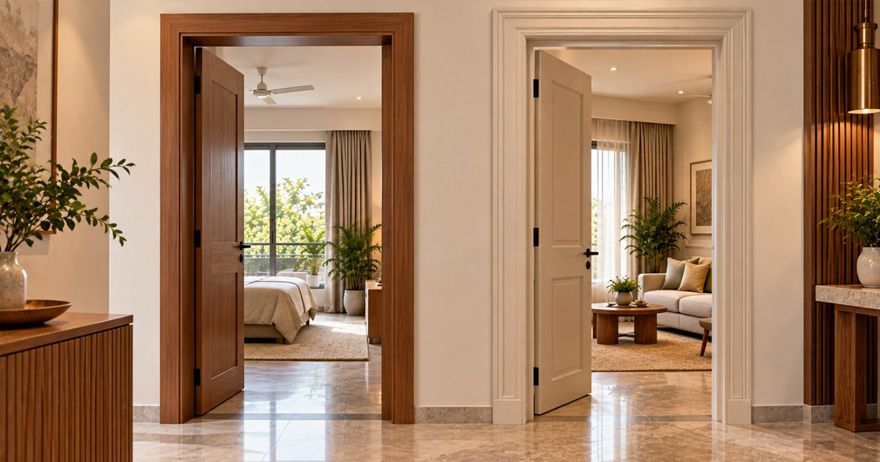
As the name suggests, door frames are structural supports that hold the door pane(s) in place. Architraves can be a completely new term for you to learn. An architrave is decorative trim that covers the gap between the frame and the wall. Surprisingly, architraves can be mistaken for the frame because of their look and feel, and even for something merely decorative, when in reality they serve an important purpose for doors and their frames.
Why Door Frames and Architraves Matter in Interior Design
Let’s go one by one. First, door frames matter in interior design because they provide the foundational structural support, acoustic insulation, and clean visual boundary that defines how a room connects to the rest of the home.
An architrave is the decorative moulding that surrounds a door opening, and it matters in interior design because it transforms a raw structural joint into a polished, intentional design statement. While a door frame provides the structural support to hold the door in place, the architrave acts as the visual frame. Here is why this finishing trim plays a crucial role in interior spaces:
Conceals Imperfections: It neatly covers the expansion gaps and rough plaster edges between the wall and the door frame.
Protects Wall Edges: It shields fragile plaster or drywall corners around the opening from daily bumps, scratches, and wear.
Enhances the aesthetics: Whether you choose a grand, multi-layered Victorian moulding or a slim, simple profile, the architrave sets the room’s stylistic tone.
Creates Visual Depth: Flat doors or doorways may not always suit your home’s interior style; architraves add dimension, casting subtle shadow lines that create depth.
Popular Door Frame and Architrave Design Ideas
Minimalist Door Frames for Modern Interiors
Wooden Door Frames and Traditional Architrave Designs
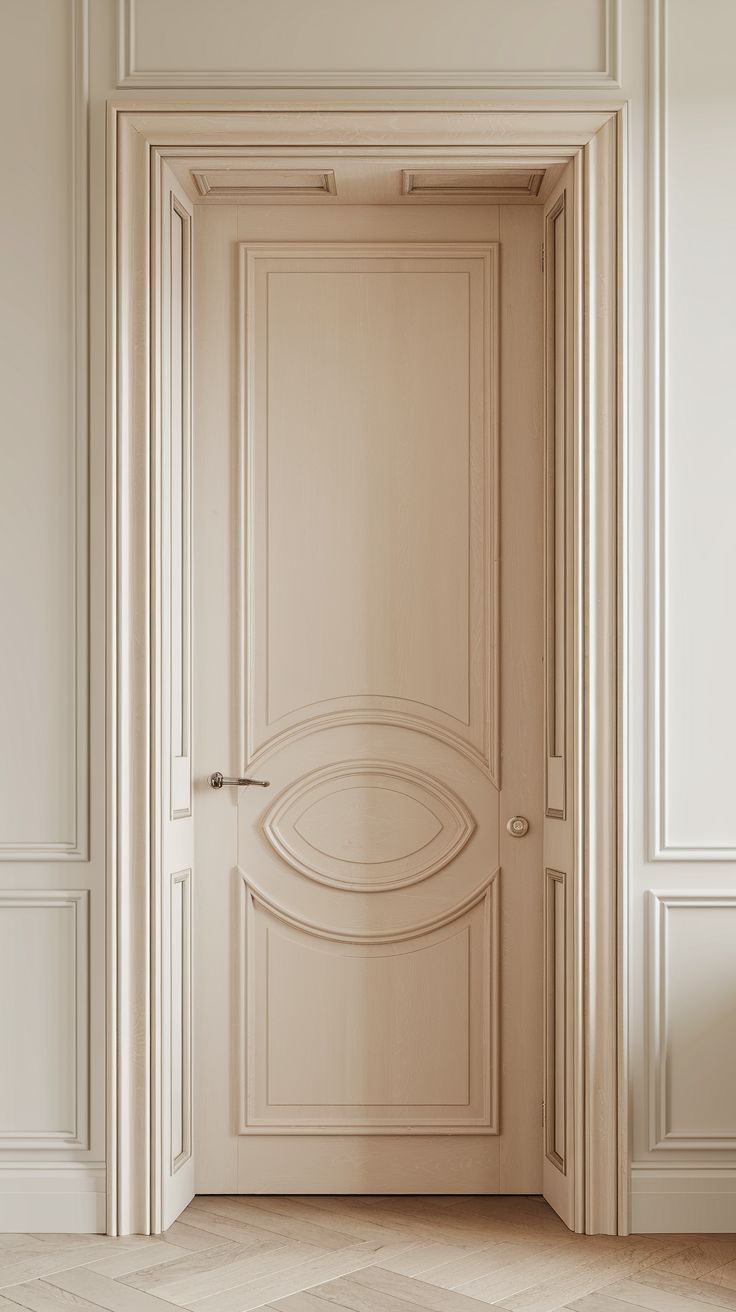
Decorative Mouldings for Classic and Elegant Interiors
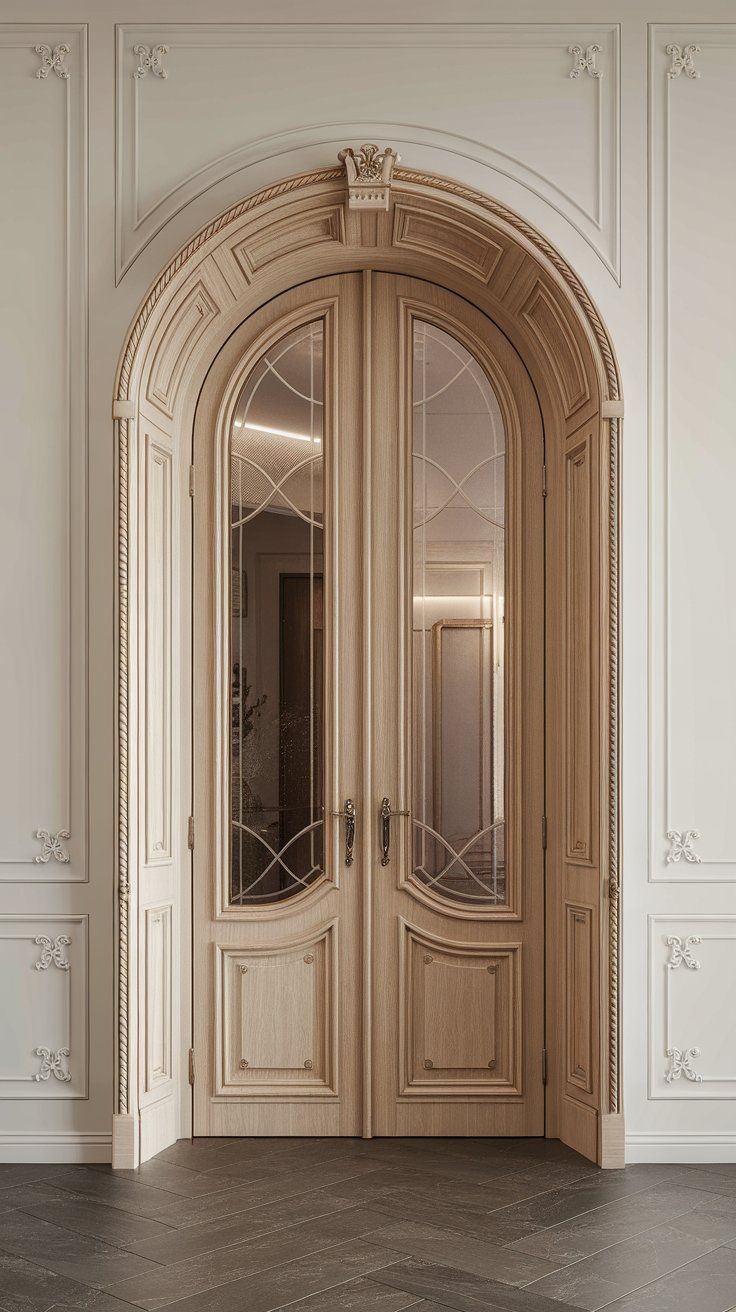
How to Match Architraves with Doors, Walls, and Flooring
Match it with the door.
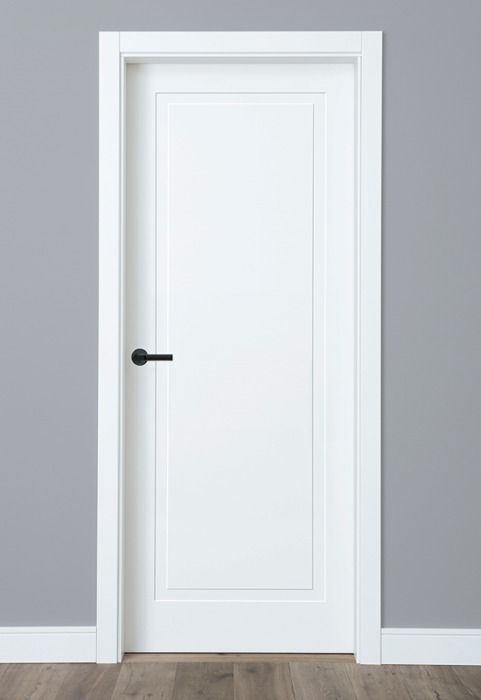
For a clean look, match the architrave to the door. For example, a white door with a white architrave creates a neat frame around the opening.
Match it with the wall
Want the architrave to blend in? Match it to the wall colour. This makes it less noticeable and gives the room a seamless look.
Look at the flooring
The architrave doesn’t have to match the floor. With wooden flooring, you can choose a similar wood tone. With tiles or stone, matching it to the door or wall usually works better.
Don’t forget the skirting
The architrave meets the skirting at the bottom, so keeping them in the same colour or finish usually makes the transition look much cleaner.
The easiest rule to follow:
Match your architrave with the door and skirting, then choose a finish that works well with your walls and flooring.
The Golden Rule to follow is that your architraves should match or closely coordinate with your skirting boards and door frames in both colour and profile style
Door Frame and Architrave Ideas for Small Spaces
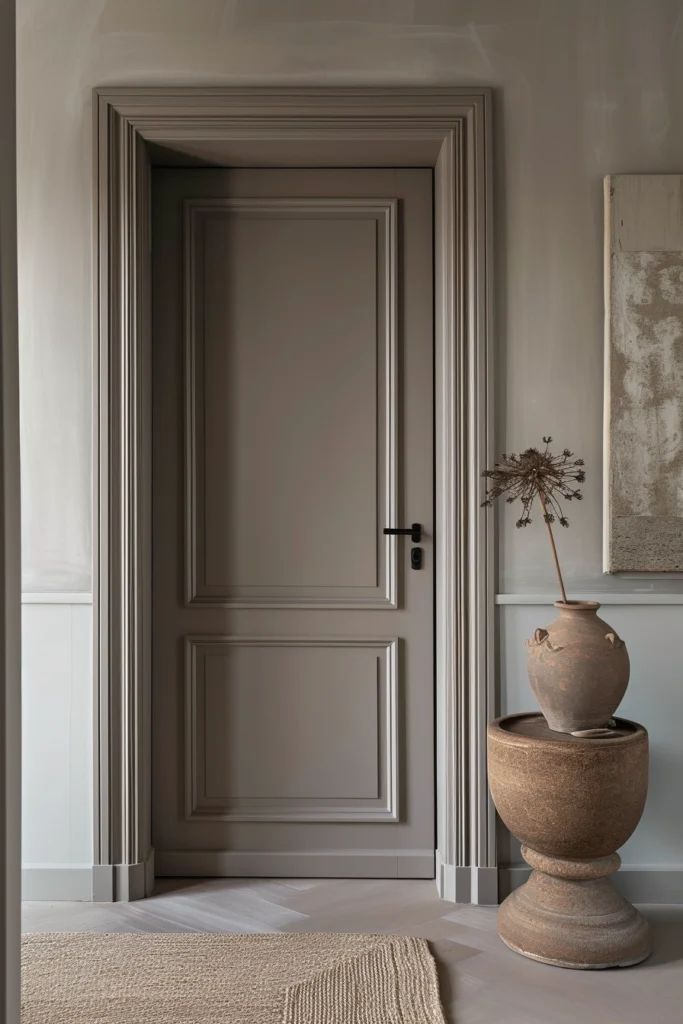
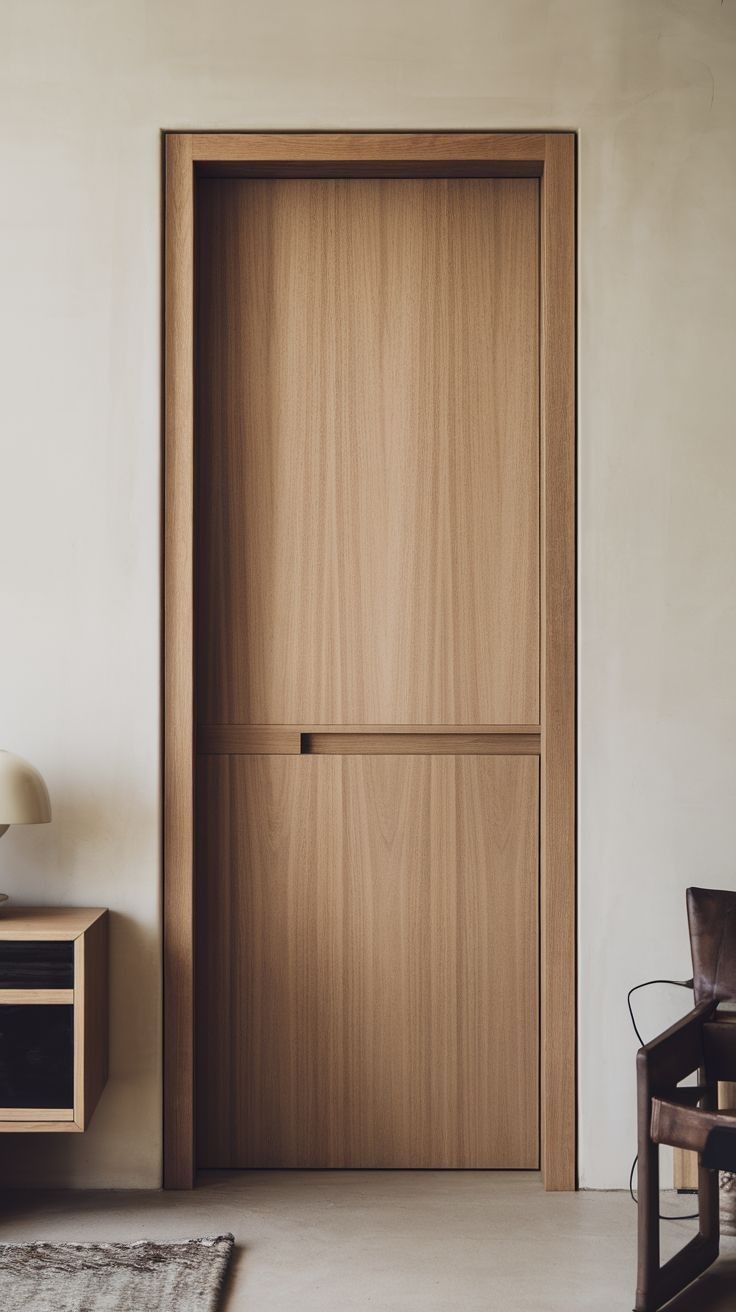
Common Door Frame and Architrave Design Mistakes to Avoid
Choosing the wrong size
An architrave that is too wide or too narrow can make the door look out of proportion.
Mixing too many finishes
Different colours and wood finishes around the door can make the space look busy. Keep the door, architrave, and skirting coordinated.
Ignoring the wall and flooring
The architrave should work with the rest of the room. A finish that clashes with the wall or floor can make the doorway stand out for the wrong reason.
Poor corners and joints
Uneven corners, visible gaps, or poorly joined architraves can make even a good door look unfinished.
Forgetting the skirting
The architrave and skirting meet at the bottom of the door. If their heights, colours, or finishes don’t work together, the transition can look awkward.
Using the same design everywhere
Not every room needs the same architrave style. Consider each space’s size, design, and overall look before choosing one.
Not planning before installation.
Decide the door, frame, architrave, skirting, and wall finishes together. This helps avoid mismatched sizes and finishes later.
Final Thoughts
Door frames and architraves are essential elements in interior design, providing structural support and enhancing aesthetics. Door frames give foundational support and acoustic insulation, while architraves cover gaps, protect edges, and add visual depth. Design ideas range from minimalist frames for modern spaces to traditional wooden styles and decorative mouldings for classic looks. Choose durable materials and coordinate architrave styles and colours with doors, walls, and skirting boards for a cohesive look. Avoiding the wrong architrave size is crucial to maintain visual balance. Thoughtful design of these elements can greatly enhance a room’s overall refinement and cohesiveness.