


What Are French Windows?
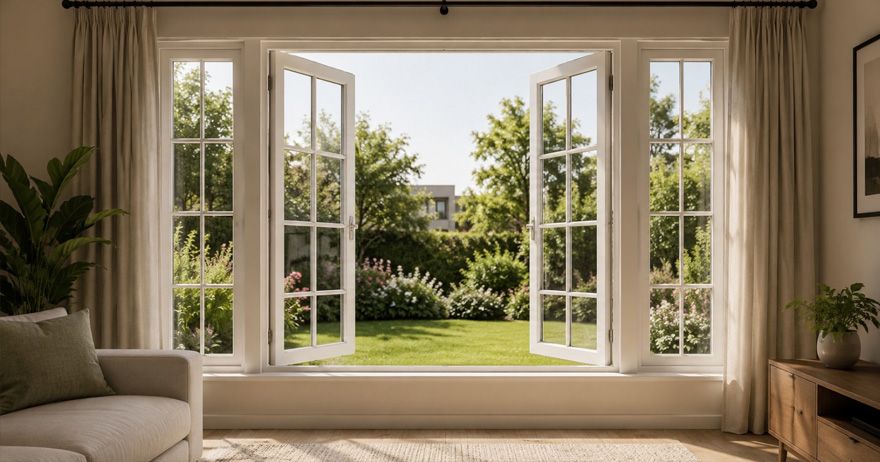
A type of Casement Window, French windows (or French casements) feature two window panes side by side that open from the centre. They do not have a central post (mullion). Think of it like a smaller version of French doors for your wall.
Ironically, the French window was a reinvention of an existing window style - Palladian Windows which too was a reinvention of the Venetian/Serlian windows. Palladian windows used a complex layout in which small panes conform to both straight lines and the curved top arch, whereas French windows used a uniform grid of rectangular glass panes running from top to bottom on both doors.
Key Features of French Windows
1. The Floating Mullion (No Centre Post)
The most defining technical feature of a true French window is the absence of a central vertical frame post (a mullion) when both halves are open. Instead, the mullion is attached directly to one of the window sashes (the moving parts). When you open both sides completely, you get an entirely uninterrupted, panoramic view of the outdoors.
2. Dual Sash / Side-Hinged Opening
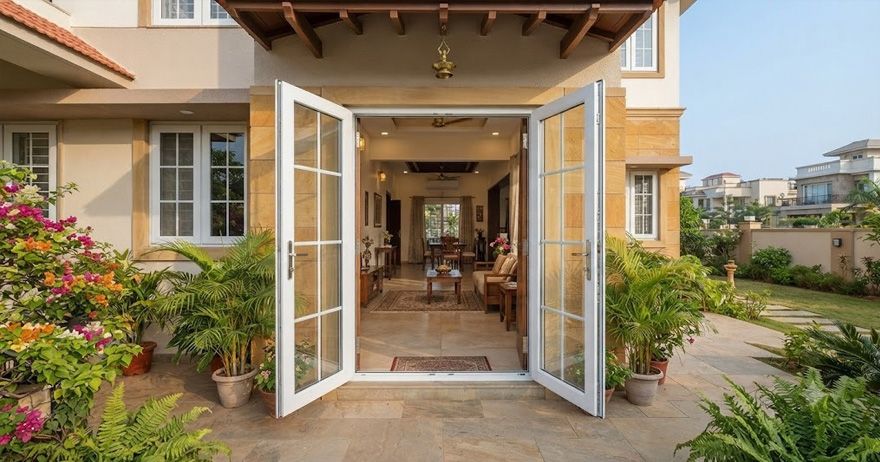
Like standard casement windows, French windows too feature two sashes that hang from side hinges. They open either inward or outward from the centre, functioning exactly like double doors.
3. Floor-to-Ceiling Proportions
While they can be sized like standard windows, traditional French windows are heavily elongated. They are designed to extend all the way down to the floor—or very close to it—often serving as access points to balconies, patios, or manicured gardens.
4. Glazing Bars and Multi-Pane Aesthetics
Classic French windows use muntins like Georgian bars to divide the expansive glass into multiple smaller grid panes, known as lights. While modern minimalist architecture sometimes drops the grid in favour of solid sheets of glass (which makes it a standard casement), the multi-pane grid is what gives French windows their distinct, historic charm.
5. Single/Dual Options
French windows are available in both single- and dual-sash configurations. While the classic design features two side-hinged sashes opening from the centre, single French windows offer the same elegant appearance in a more compact format. The choice depends on the opening size, available space, and functional requirements.
Benefits of Installing French Windows
1. Maximised Daylighting Within Standard Openings
By utilising a French window design for a standard wall/door opening, you optimise the amount of natural light entering the room despite the thicker profile of uPVC frames. Because the design allows both sashes to lock tightly together without a permanent centre post dividing the wall space, it prevents a heavy vertical shadow from constantly cutting through the centre of the room. Sunlight pours in as a single, unified beam rather than being fragmented, creating a much brighter, warmer, and more inviting interior atmosphere.
2. High-Efficiency Ventilation and Quick Air Exchange
Standard sliding or double-hung windows severely restrict airflow because a fixed pane of glass always blocks half of the opening. A uPVC French window completely solves this issue by allowing both sashes to swing wide open simultaneously, clearing out 100% of the window aperture. The rigid, sturdy nature of uPVC ensures the sashes remain incredibly stable even in high winds, letting you safely capture passing breezes to quickly flush out stale indoor air and cool the room.
3. Unobstructed Views and Enhanced Room Depth
While uPVC frames feature a more robust, substantial border around the glass, a French window ensures that this frame completely disappears from the centre of the line of sight the moment you open the central mullion and sash out of the way; it eliminates the harsh visual barrier that standard windows impose. This creates a clean, open portal to the outdoors from your standard viewing height, effectively drawing the eye outside and making a standard-sized room feel deeper and less confined.
4. Exceptional Thermal Insulation and Low Maintenance
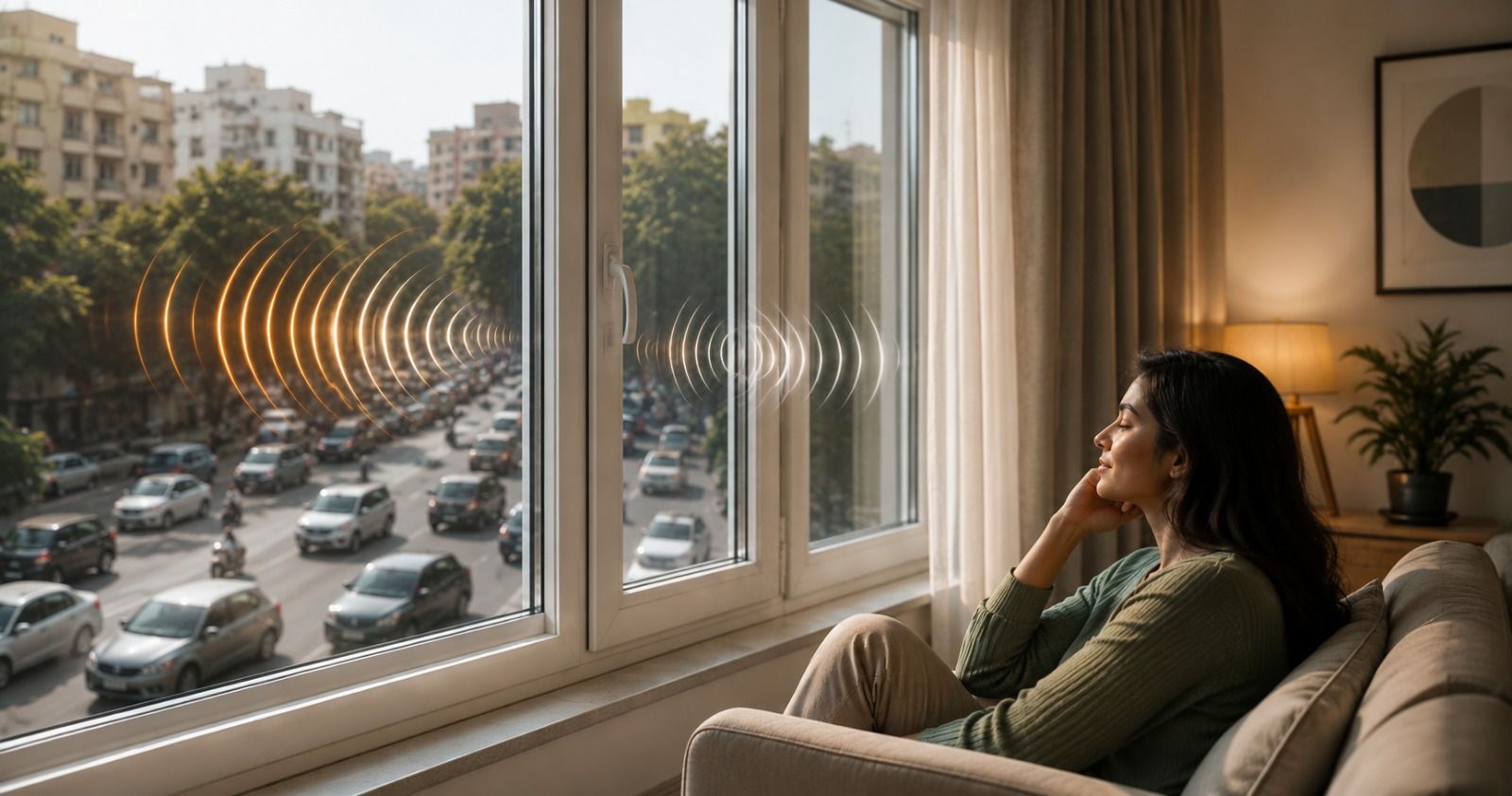
Choosing uPVC for a standard-sized window offers significant benefits, including efficiency and low maintenance. Multi-chambered uPVC frames, combined with the tight compression seals of a dual-sash closing mechanism, create a powerful barrier against drafts, outdoor noise, and heat transfer. Furthermore, unlike timber, these thick uPVC frames will never warp, rot, or require repainting, providing a highly durable, weatherproof solution that only requires a quick wipe down to keep looking new.
Different Types of French Windows
French Windows with Sidelights
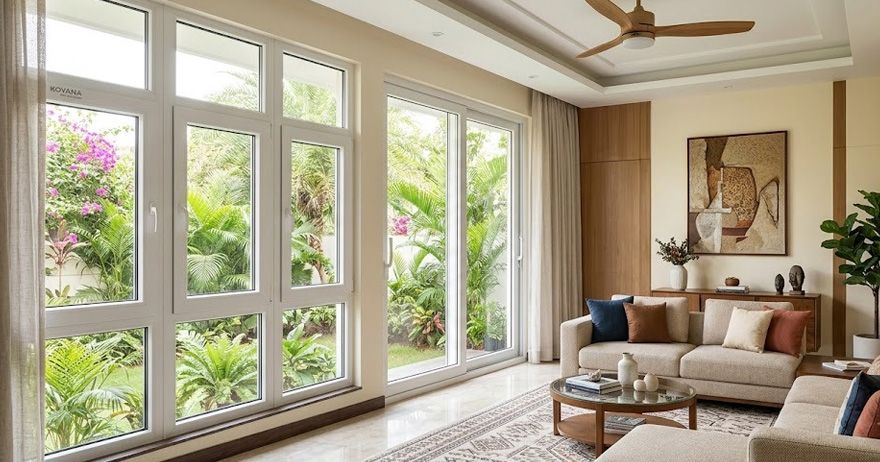
French windows with sidelights feature fixed glazed panels on one or both sides of the operable shutters. This configuration is commonly used for wider wall openings, creating a larger glazed façade while keeping the central French windows functional.
French Windows with a Transom (Fanlight)
These French windows include a transom or fanlight above the main window. The upper section may be fixed or operable and is often used to complement taller openings while maintaining the overall design proportions.
Balcony French Windows
Balcony French windows are installed in floor-to-ceiling openings that lead directly to a balcony, terrace, patio, or garden. They typically consist of full-height glazed shutters that provide access to the outdoor space.
Corner French Windows
Corner French windows are installed on adjoining walls that meet at a corner, creating a wraparound glazed opening. They are designed to maximise the corner opening while maintaining the functionality of the hinged shutters.
Single-Pane French Windows
Single-pane French windows feature a single full-height glazed shutter instead of the traditional pair of hinged shutters. They are suited for narrower openings where a double-shutter configuration is not feasible while retaining the characteristic full-height glazed appearance.
French Windows with Grill
French windows with grill are particularly popular in Indian homes where security is a priority. Homeowners can choose from integrated decorative grills between the glass panes, traditional external grills, or Georgian bars that recreate the classic French aesthetic while maintaining safety. The ideal solution depends on the location, security requirements, and architectural style of the home.
Also Read: French Windows vs Sliding Windows
Best Places to Install French Windows
French windows are remarkably versatile, making them suitable for almost every part of the home. In living rooms, they frame uninterrupted outdoor views; in bedrooms, they create a brighter, more inviting retreat with easy access to the balcony; in dining areas, they seamlessly connect indoor meals with outdoor entertaining spaces. They are equally effective for balconies, patios, and garden entrances, where their wide centre-opening design enhances accessibility; home offices benefit from increased daylight; sunrooms enjoy expansive garden views; and courtyard-facing rooms gain a stronger visual connection to the surrounding landscape.
How to Choose the Right French Windows for Your Home
Choose the Right French Window Configuration
Decide whether a single, double, or floor-to-ceiling French window best suits your opening. The size of the opening, access requirements, and desired visual impact should guide this decision.
Select the Appropriate Installation Location
French windows are best suited for balconies, patios, terraces, gardens, and large living spaces where they can maximise natural light, ventilation, and outdoor access. Consider whether they are practical for the intended room.
Determine the Opening Style
Choose between inward-opening and outward-opening French windows based on the available clearance, furniture placement, and ease of operation.
Consider the Frame Material
Select a frame material that offers the desired balance of durability, maintenance, aesthetics, and weather resistance. uPVC is widely preferred for its low maintenance and long service life.
Choose the Right Glazing
Match the glass specification to your home's needs. Toughened glass improves safety, laminated glass enhances security and noise reduction, while double glazing improves thermal and acoustic performance.
Evaluate Security Features
Ensure the French windows include reliable locking systems, robust hardware, and appropriate safety glazing to enhance home security.
Check Weather Sealing and Performance
High-quality weather seals, drainage systems, and durable hardware are essential for preventing air and water infiltration, particularly in regions with heavy rainfall or harsh weather.
Customise the Design
Finally, select colours, finishes, grille designs, handles, and accessories that complement your home's architectural style.
Common Mistakes to Avoid When Installing French Windows
Ignoring the Swing Radius
French windows require sufficient clearance for the shutters to open fully. Overlooking the swing path can cause the shutters to collide with furniture, walls, railings, or other fixtures.
Installing on an Uneven Opening
An uneven or out-of-square opening can cause misalignment, making the shutters difficult to operate and preventing a proper seal.
Neglecting Drainage Provisions
Poor sill detailing or inadequate drainage can allow rainwater to accumulate around the frame, increasing the risk of water ingress over time.
Skipping Post-Installation Adjustments
French windows should be checked for proper alignment, smooth operation, and lock engagement after installation. Failing to make these final adjustments can affect long-term performance.
Overlooking Threshold Requirements
Choosing an unsuitable threshold height can impact accessibility, weather resistance, or drainage, depending on where the French window is installed.
Note: Many installation issues can also be avoided by following the recommendations discussed in How to Choose the Right French Windows for Your Home—such as selecting the appropriate opening direction, frame material, glazing, hardware, size, and weather performance for your specific application.
Final Thoughts
French windows have remained a defining feature of residential architecture for centuries, and for good reason. Their timeless design, expansive glazing, and versatile configurations make them suitable for everything from compact apartments to spacious villas. Whether you're looking to maximise natural light, create a stronger connection with the outdoors, or simply elevate your home's appearance, French windows offer a practical and elegant solution.
If you're planning to install French windows, consult our IndiFrame experts who can recommend the right configuration for your space. With the right choices, your French windows can become a visually appealing feature of your home, functioning for decades.