


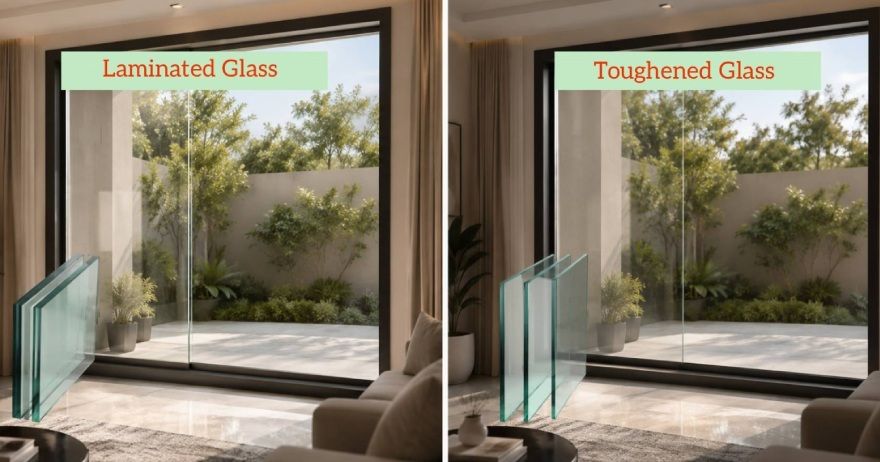
Toughened Glass vs Laminated Glass: Quick Comparison
Toughened glass and laminated glass are both safety glass options, but they serve different purposes. Toughened glass is stronger and more impact-resistant than regular glass because it is heat-treated, making it ideal for windows, doors, and balconies. Laminated glass has two or more glass layers joined by a protective interlayer, helping it remain intact when broken. If you're wondering which is better— toughened glass vs laminated glass—the answer depends on whether your priority is strength, security, noise reduction, or overall performance. This guide explains the difference between toughened and laminated glass so you can choose the best glass for home windows.
What Is Toughened Glass?
Toughened glass is a type of processed safety glass that is specially heat-treated to make it significantly stronger than ordinary annealed (regular) glass. In India, it is commonly known as toughened glass, while the term tempered glass is also widely used internationally.
It is manufactured by a 620–680°C thermal conditioning process, followed by rapid cooling with high-pressure air. This process creates internal compressive and tensile stresses, and, compared to a regular glass of the same thickness, makes the toughened glass around four to five times stronger.
One of its defining characteristics is the way it breaks. Instead of forming large, sharp shards, toughened glass fractures into numerous small, relatively blunt fragments, which is why it is classified as a safety glass under applicable standards.
What Is Laminated Glass?
Laminated glass is a type of processed safety glass made by permanently bonding two or more glass panes with a transparent interlayer, most commonly Polyvinyl Butyral (PVB) or SentryGlas® (SGP). Unlike monolithic glass, laminated glass is a composite glazing product designed to keep the glass layers bonded together.
The manufacturing process involves placing the interlayer between the glass panes and bonding them using heat and pressure in a controlled environment. This creates a single, durable glass unit without compromising optical clarity.
Its defining characteristic is the way it behaves when broken. Instead of shattering into separate pieces, the broken glass remains adhered to the interlayer, keeping the pane largely intact. This unique construction distinguishes laminated glass from other types of safety glass and contributes to its widespread use in modern glazing systems.
Key Differences Between Toughened and Laminated Glass
| Feature | Toughened Glass | Laminated Glass |
|---|---|---|
| Safety Glass Type | Safety comes from heat tempering that increases strength | Safety comes from an interlayer that holds broken glass together |
| Construction | Single heat-treated glass pane | Two or more glass panes bonded with a PVB or SGP interlayer |
| Manufacturing Process | Heated and rapidly cooled to improve strength | Glass and interlayer bonded using heat and pressure |
| Strength | Around 4–5× stronger than ordinary annealed glass | Strength depends on the glass type and laminate build-up |
| Breakage Pattern | Shatters into small blunt fragments | Cracks but remains attached to the interlayer |
| Integrity After Breakage | Loses structural integrity after breaking | Stays largely intact even after breaking |
| Modification After Processing | Cannot be cut or drilled after tempering | Cannot be cut or modified after lamination |
| Common Thicknesses | 4 mm 5 mm 6 mm 8 mm 10 mm 12 mm 15 mm and 19 mm | 3+3 mm 4+4 mm 5+5 mm 6+6 mm and customised builds |
Note: Toughened and laminated glass are both recognised safety glazing materials, but they are engineered differently to achieve safety. The application, opening size, structural requirements, and desired performance influence the glass choice. Glass specifications should comply with applicable CCPS guidelines for residential buildings, relevant BIS standards, and processing recommendations issued by the Federation of Safety Glass (FOSG). For the right glass configuration for your home, consult a trusted window systems expert from IndiFrame.
Which Glass Is Stronger?
If impact and bending strength are the criteria, toughened glass is stronger. The tempering process makes it approximately four to five times stronger compared to an ordinary annealed glass of the same thickness. This allows it to withstand accidental impacts, wind loads, and thermal stress more effectively.
However, strength isn't the only measure of performance. Laminated glass is engineered differently. Instead of relying on a single pane, it combines two or more glass panes with a durable interlayer. As a result, even if the glass cracks under impact, the interlayer helps hold the broken pieces together and maintain the integrity of the glazing.
It's also important to note that laminated glass can be manufactured using toughened glass panes. In such cases, the glazing benefits from the high impact resistance of toughened glass, while retaining the integrity of the laminated construction.
Which Glass Offers Better Security?
When it comes to security, laminated glass generally offers better protection than toughened glass.
The key difference lies in how each glass behaves after impact. While toughened glass is highly resistant to everyday impacts, it breaks into small fragments once its strength limit is exceeded, creating an opening that can be penetrated.
Laminated glass, on the other hand, is designed to remain largely intact even after cracking. Its transparent interlayer continues to hold the broken glass fragments together, making it considerably more difficult to create an opening through the glazing. This additional resistance can help delay forced entry and provides an added layer of protection for homes.
That said, both toughened and laminated glass contribute to a safer home when specified correctly. The window or door location, the required level of security, and the overall glazing specification should help determine the suitable glass choice. In applications where both strength and security are priorities, laminated glass can also be manufactured using toughened glass panes, combining the benefits of both technologies.
Toughened vs Laminated Glass for Noise Reduction
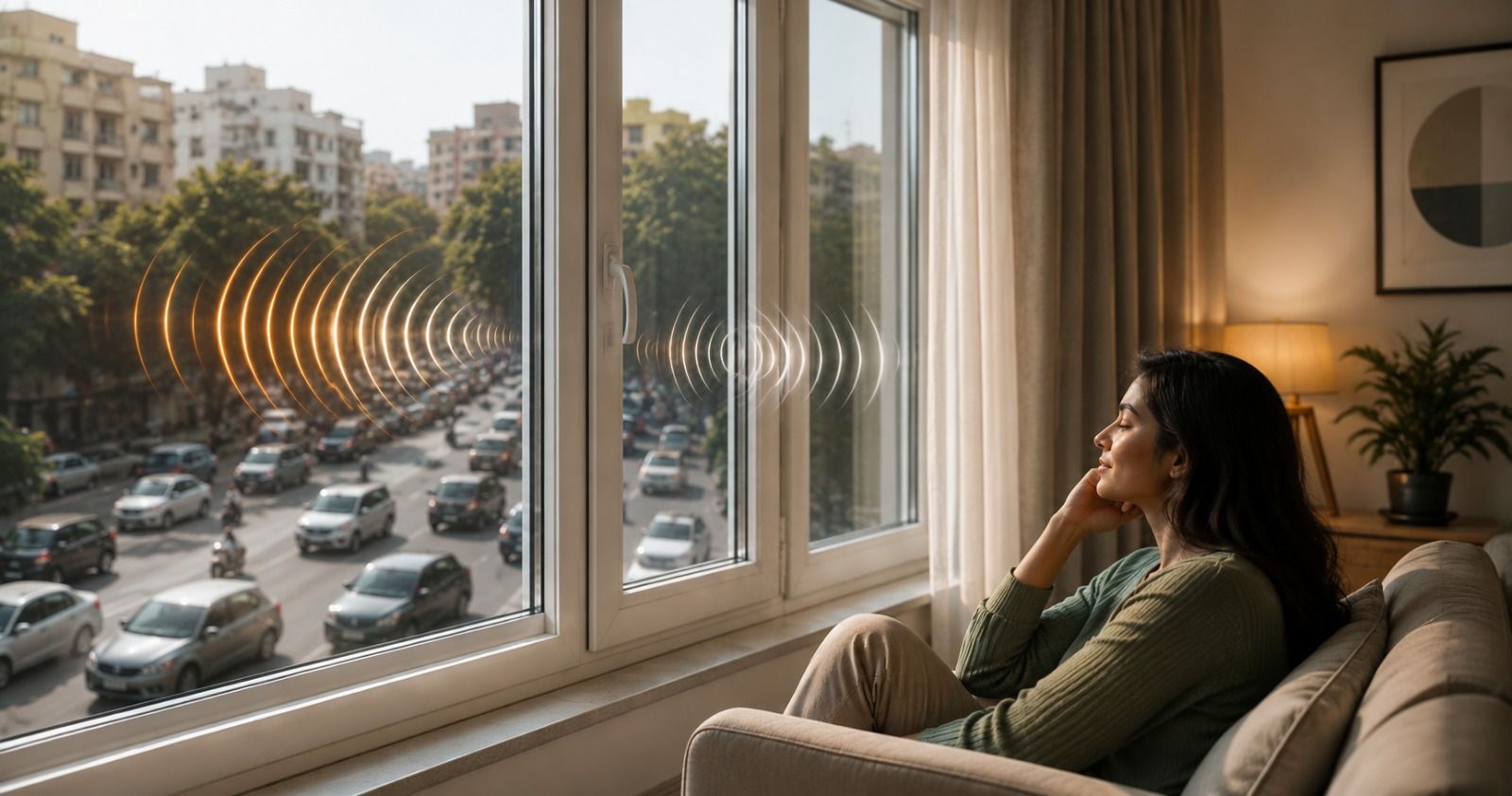
If noise reduction is a priority, laminated glass generally performs better than toughened glass.
The difference lies in the construction. Toughened glass is a single pane of heat-treated glass, so its ability to reduce sound depends primarily on its thickness and the overall glazing system. Laminated glass, however, incorporates a transparent interlayer that helps dampen sound vibrations as they pass through the glass, reducing the transmission of external noise.
For homes located near busy roads, railway lines, airports, or other high-noise environments, laminated glass can provide a noticeably quieter indoor environment. Acoustic performance can be further enhanced by using specialised acoustic interlayers or incorporating laminated glass into a double-glazed insulated glass unit (IGU).
It's important to note that glass alone doesn't determine acoustic performance. Factors such as glass thickness, air gap in double glazing, window frame quality, sealing, and installation all contribute to how effectively outside noise is reduced.
Which Glass Is Best for uPVC Windows? Toughened or Laminated?
Both toughened and laminated glass are excellent choices for uPVC windows—the better option depends on your home's location, the application, and your performance priorities.
If your primary concern is impact resistance and everyday durability, toughened glass is often the preferred choice. Its high mechanical strength makes it well suited for standard residential windows, large glazed openings, and areas where resistance to accidental impact is important.
If your priorities include enhanced security, noise reduction, or retaining the glass in place after breakage, laminated glass is generally the better option. Its bonded construction provides additional performance benefits beyond those of a single glass pane.
Ultimately, the glass should complement the performance of the uPVC window system rather than be chosen in isolation. Factors such as glass thickness, glazing configuration (single- or double-glazing), opening size, wind load, and installation quality all influence the overall performance of the window.
Best Rooms for Toughened Glass Windows
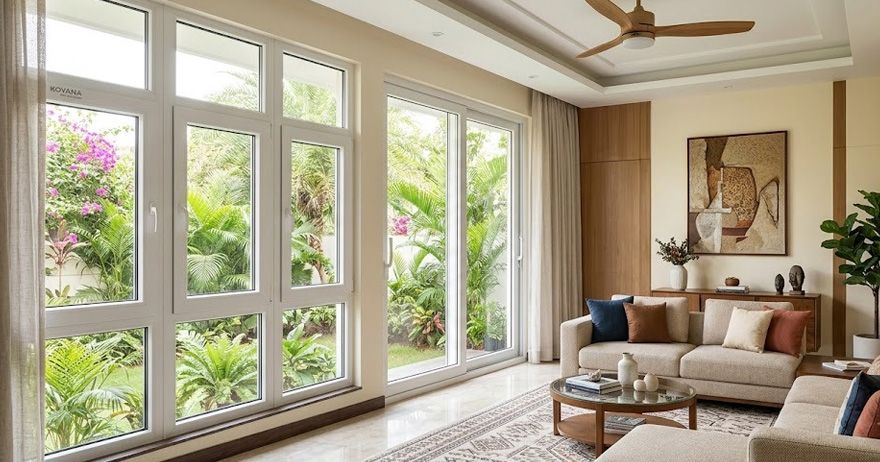
Toughened glass is well suited for rooms where durability, larger window openings, and everyday safety are the primary considerations.
| Room | Why Toughened Glass Works Well |
|---|---|
| Living Room | Ideal for large windows that let in natural light while offering excellent strength against everyday impacts |
| Dining Room | Suitable for wide window openings where durability and unobstructed views are desired |
| Kitchen | Performs well in areas exposed to heat and temperature fluctuations |
| Children's Playroom | Offers enhanced safety by breaking into small blunt fragments if damaged |
| Utility Room | A practical choice for spaces where windows are more likely to experience accidental knocks or impacts |
Best Rooms for Laminated Glass Windows
Laminated glass is ideal for rooms where security, acoustic comfort, and enhanced protection are important.
| Room | Why Laminated Glass Works Well |
|---|---|
| Bedroom | Helps reduce outside noise creating a quieter and more comfortable sleeping environment |
| Home Office | Improves acoustic comfort making it easier to work with fewer external distractions |
| Living Room (Road-Facing) | Helps minimise traffic noise while providing added security |
| Ground Floor Rooms | Offers increased resistance to forced entry by helping the glass remain intact after impact |
Best suited for: Homes located near busy roads, commercial areas, schools, railway lines, or wherever additional security and noise reduction are priorities.
Which Glass Should You Choose for Your Home?
Every home is different, and so are its windows. If you're choosing between laminated and toughened glass for windows, consider the room's location, safety requirements, and whether you need improved security or acoustic comfort.
The glass that's ideal for a quiet bedroom may not be the best choice for a large living room or a ground-floor window. Choosing the right glazing is about balancing safety, comfort, security, natural light, and everyday performance.
Rather than asking "Which glass is better?", ask "Which glass is right for this room?"
That's where IndiFrame comes in. Our experts at IndiFrame help you choose the ideal glass specification for every window, ensuring your home gets the performance it truly needs.