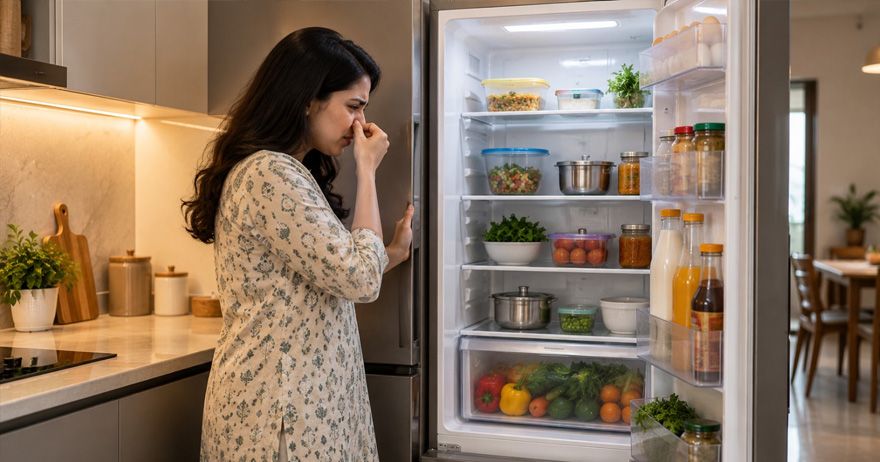
An unpleasant refrigerator smell can sometimes begin even when your fridge looks clean and organised. A forgotten vegetable, spilt milk, uncovered leftovers, expired ingredients, or moisture trapped inside a drawer can create a strong smell that spreads throughout the refrigerator.
Learning how to get rid of refrigerator smells starts with identifying the source instead of simply covering the odour with a fragrance. A thorough cleaning, proper food storage, and an effective deodorising method can help to restore freshness.
Fortunately, you do not always need specialised products for your fridge odour removal. Simple household ingredients such as baking soda, lemon, and coffee grounds can sometimes help to eliminate mild odours. Regular cleaning and good storage habits are equally important for preventing the smell from returning.
Here are the 15 essential ways to remove unpleasant smells and keep your refrigerator fresh for a long period of time.
Why Does Your Refrigerator Smell Bad?
Before knowing how to remove bad smell from fridge, it is important to recognise what exactly is causing it.
Some of the common causes include:
- Spoilt or expired food
- Uncovered leftovers
- Spilt milk, sauces, or other liquids
- Rotten fruits and vegetables
- Strong-smelling foods
- Food residue under shelves and drawers
- Dirty door seals
- Moisture accumulation
- A clogged refrigerator drain
- A dirty drain pan
- Poor practices in food storage
A refrigerator can also smell bad when food has been stored properly, but a small spill has gone unnoticed. This is why cleaning visible surfaces alone may not always solve the problem.
Remove Spoilt and Expired Food
The first step in refrigerator smell removal is to find and remove anything that has spoiled or passed its safe storage period.
Take everything out of the refrigerator and check for -
- Leftovers
- Fruits and vegetables
- Dairy products
- Open sauces
- Meat and seafood
- Cooked food
- Expired packaged items
If something smells unusual, has developed mould, or has visibly deteriorated, dispose the product as soon as possible.
Do not forget about the small containers at the back of shelves. Even a small forgotten item can sometimes be responsible for a strong refrigerator odour.
Clean Spills and Food Residue Immediately
Spills can leave very strong smells, particularly when the liquid seeps underneath the containers or into shelf edges.
For effective fridge odour removal, wipe out the spills as soon as you notice them. Pay particular attention to milk, fruit juice, sauces, gravies, and other liquids.
Use a suitable food-safe cleaning solution and follow the refrigerator manufacturer's cleaning recommendations. Cleaning immediately will prevent the residue from drying and becoming harder to remove later.
Deep-Clean Refrigerator Shelves and Drawers
If you are wondering how to clean a smelly refrigerator, wiping out the main shelves is not the only way.
Remove the shelves, trays, and drawers entirely where possible according to the manufacturer's instructions. Clean them separately and allow them to dry properly before putting them back.
Clean the shelves, vegetable drawer, compartments, edges, tracks, walls and corners as well.
Pay special attention to the areas where food particles or liquids may have gotten accumulated.
Clean the Door Seals and Gaskets
The rubber seals around refrigerator doors can be primary places that collect crumbs, grease, moisture, and dirt.
Use a soft cloth and an appropriate cleaning solution to clean the seals. Wipe away any residue and dry the area thoroughly. Clean these door seals regularly because dirt around the gasket can also interfere with a proper door seal.
Use Baking Soda to Absorb Odours
Baking soda is one of the most commonly used household options for a refrigerator deodorizer.
Place an open container of baking soda inside the refrigerator. It can help to absorb certain food odours instead of simply covering them with fragrance.
For best results, you can follow these -
- Use a clean, shallow container.
- Place it where it will not spill.
- Replace it periodically.
- Keep it separate from uncovered food.
Remember that baking soda cannot entirely help in case of spoilt food or a dirty refrigerator. Always clean the source first.
Try Activated Charcoal as an Odour Absorber
Activated charcoal can also be used as an odour-absorbing material.
Commercial refrigerator smell absorbers containing activated charcoal are available, or you can use a product specifically designed for refrigerator use.
Follow the manufacturer's instructions and replace the absorber as recommended. This approach can be useful when mild odours remain after cleaning.
Use Coffee Grounds Carefully for Mild Odours
Dry coffee grounds are sometimes used as a household natural fridge odour remover. Their strong aroma can help to reduce the perception of certain mild food smells.
If you try this method, use completely dry grounds in a shallow, open container. Replace them regularly and make sure that they do not come into contact with food.
Coffee is better viewed as a supplementary method rather than a replacement for proper cleaning.
Place Lemon or Citrus for a Fresh Scent
Lemon and other citrus fruits are popular natural options for making a refrigerator smell fresher.
A small amount of lemon can provide a pleasant citrus scent, but it should not be treated as a substitute for removing the source of an odour.
If you use citrus:
- Use a clean container.
- Replace it when it dries out or deteriorates.
- Do not leave spoilt citrus inside the refrigerator.
- Clean the area if the juice spills.
The goal is to supplement refrigerator smell removal, not mask a persistent problem.
Clean the Refrigerator Drain and Drain Pan
A refrigerator's drainage system can sometimes collect moisture and residue. If the drain or drain pan becomes dirty, it may contribute to unpleasant smells.
Check your appliance manual before cleaning these components because refrigerator designs vary.
Depending on the model, you will need to clean:
- The drain opening
- Drain channel
- Drain pan
- Surrounding areas
If the drain is blocked or inaccessible, avoid forcing objects into it. Follow the manufacturer's instructions or seek professional assistance.
Check for Hidden Food Under Drawers and Shelves
One of the most overlooked fridge cleaning tips is checking underneath removable components.
A small piece of food can fall beneath a drawer or shelf and go unnoticed for days or weeks.
When you are deep-cleaning your refrigerator, look for -
- Under vegetable drawers
- Behind removable shelves
- Around shelf supports
- Door compartments
- Corners
- Lower sections of the refrigerator
Finding and removing the hidden source can make a significant difference when dealing with persistent odours.
Store Strong-Smelling Foods in Airtight Containers
Certain foods naturally have strong aromas. Onions, some cheeses, cooked seafood, spices, and strongly flavoured dishes can spread their smell throughout a refrigerator.
Store these foods in airtight containers with secure lids.
This is one of the easiest ways to prevent bad smells in fridge spaces.
Make sure containers are clean, dry, and appropriately sized for the food being stored.
Keep Raw Food Properly Sealed
Raw meat, seafood, poultry, and other foods should be stored securely to prevent leaks and cross-contamination.
Use suitable sealed containers or packaging and follow safe food storage practices.
Place raw foods in appropriate areas of the refrigerator according to your appliance and food-safety guidance. Clean any leaks immediately.
Proper storage helps reduce both unpleasant smells and hygiene concerns.
Maintain the Correct Refrigerator Temperature
Temperature management is another important part of how to keep refrigerator smelling fresh.
A refrigerator that is too warm may allow food to deteriorate more quickly. Follow your appliance manufacturer's recommended temperature settings and use the controls appropriately.
Avoid repeatedly leaving the refrigerator door open for long periods, particularly in warm conditions.
Good temperature management helps maintain food quality and can reduce the likelihood of premature spoilage.
Avoid Overcrowding the Refrigerator
An overcrowded refrigerator can restrict airflow and make it harder to identify forgotten food.
Keep enough space around stored items for appropriate air circulation according to your appliance's design.
Avoid packing containers so tightly that:
- Air cannot circulate properly
- Spills remain hidden
- Food gets forgotten
- Shelves become difficult to clean
- Items are pushed to the back and overlooked
An organised refrigerator makes both cleaning and food management easier.
Create a Regular Refrigerator Cleaning Routine
Regular maintenance is one of the simplest ways to prevent bad smells in fridge spaces.
A basic routine can include a schedule for weekly, monthly or once in three months.
Regular cleaning prevents small problems from becoming strong refrigerator odours.
Final Thoughts on Keeping Your Fridge Fresh
Learning how to get rid of refrigerator smells does not have to involve complicated cleaning products or expensive solutions. The most important step is always to identify and remove the source of the odour.
Start by checking for spoiled food, hidden spills, expired ingredients, and residue underneath shelves and drawers. Then deep-clean the refrigerator and consider an odour absorber such as baking soda or activated charcoal.
Finally, regular maintenance is the best way to prevent bad smells in fridge spaces. With proper food storage, timely cleaning, good organisation, and attention to moisture and drainage, you can keep your refrigerator fresher for longer.