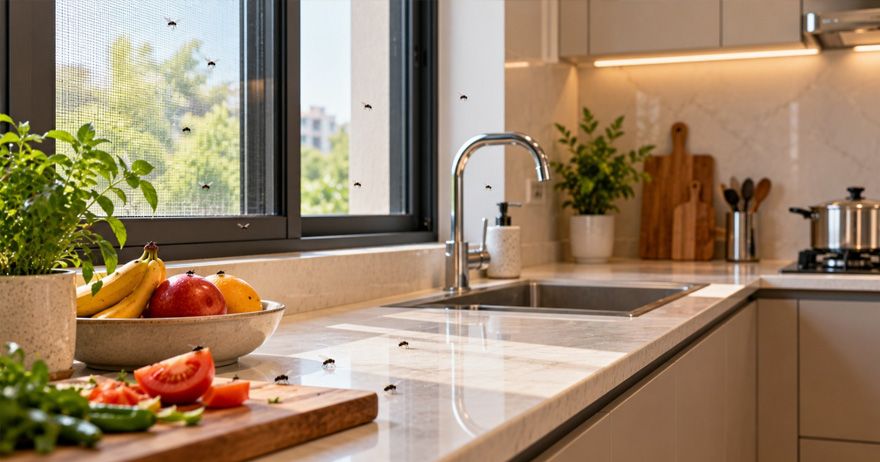
Finding houseflies at home can be more than an everyday nuisance. A few flies around the kitchen or dining area can quickly become a recurring problem when food, garbage, pet waste, moisture, or other organic materials are easily accessible. Warm and humid conditions can also make some areas more attractive to flies.
Houseflies can move between contaminated surfaces and food preparation areas, which makes good hygiene particularly important. Simply swatting visible flies may provide temporary relief, but it does not remove the conditions that attract them.
Effective housefly control at home involves several simple steps. Keeping food covered, managing waste properly, cleaning drains, removing potential breeding sources, and installing window and door screens can all help reduce fly activity.
If flies keep returning, it's crucial to identify the source. This guide offers practical methods to eliminate houseflies, prevent their entry into your home, and create a less inviting environment for them.
Why Do Houseflies Enter Homes?
Houseflies generally enter homes of food, moisture, and suitable places to rest or breed. Open windows and doors provide easy entry, while food waste and organic material provide attractive resources once they are inside.
Common reasons houseflies enter homes include:
- Uncovered food and leftovers
- Open or overflowing garbage bins
- Fruit and vegetables left exposed
- Food spills and crumbs
- Pet food and pet waste
- Dirty or poorly maintained drains
- Damp organic waste
- Compost stored incorrectly
- Waste accumulated around the house
- Gaps around doors and windows
A home does not have to be visibly dirty to attract flies. Even small amounts of food residue or organic waste can become an attraction.
What Attracts Houseflies to Your House?
Understanding what attracts flies is an important part of housefly prevention. Removing these attractions can make your home less suitable for continued fly activity.
Food and Food Waste
Houseflies are attracted to exposed food, food scraps, sugary spills, and decomposing organic material. Uncovered plates and food containers can therefore become easy targets.
Garbage
Garbage containing food waste can attract flies quickly, especially when the bin is uncovered or not emptied regularly.
Pet Waste
Pet waste around the house can provide a source of attraction and may contribute to fly breeding if it is not removed promptly.
Moisture
Damp areas, leaking pipes, wet waste, and poorly maintained drains can create conditions that attract certain flies.
Organic Material
Compost, rotting food, garden waste, and other decomposing materials can attract flies around the home.
Removing these sources is one of the most effective fly control methods for home environments.
Common Places Where Houseflies Breed
If flies keep appearing, do not focus only on the areas where you see them. The source may be somewhere nearby.
Potential breeding areas include:
Garbage bins, food waste containers, compost bins, pet waste areas, damp organic waste, dirty drains, outdoor waste piles, areas with leaking plumbing, animal waste around the property, and decomposing plant material.
Regular inspection of these areas is an important part of housefly breeding prevention.
Outdoor areas deserve just as much attention as indoor spaces. Flies may gather or breed outside before entering through an open door or window.
Signs of a Housefly Infestation
Occasional flies entering through an open door are normal. However, frequent or increasing fly activity may indicate a larger problem.
Watch for the following signs of fly activity:
- A noticeable presence of several flies each day
- Flies consistently gathering around garbage
- Increased fly activity around drains
- Flies appearing near food preparation areas
- Flies reappearing shortly after cleaning efforts
- A large number of flies around outdoor waste
- Concentrated fly activity in a specific area
If the number of flies keeps increasing, identifying the source is more important than repeatedly removing individual insects.
How to Get Rid of Houseflies at Home
If you are wondering how to get rid of houseflies, start by removing the conditions that attract them.
1. Remove Exposed Food
Keep food covered and store leftovers in sealed containers. Clean spills and crumbs as soon as possible.
2. Empty Garbage Regularly
Use bins with secure lids and avoid allowing food waste to remain indoors for extended periods.
3. Clean Kitchen Surfaces
Wipe countertops, dining tables, stovetops, and other food preparation surfaces regularly.
4. Remove Breeding Sources
Check garbage areas, drains, pet waste, compost, and outdoor waste for organic material that could attract flies.
5. Use Fly Traps
Commercial or household fly traps can help reduce adult fly numbers. They are most useful when combined with source removal.
6. Install Screens
Use properly fitted screens on windows and doors to reduce the number of flies entering the house.
7. Keep Outdoor Areas Clean
Remove animal waste, rotting plant material, and exposed organic waste from areas around the home.
The key to successful housefly infestation control is addressing both the visible flies and the conditions that support them.
Keep Kitchens and Food Areas Fly-Free
The kitchen is one of the most important places to focus on when you want to prevent flies in kitchen areas.
Follow a consistent cleaning routine:
- Always cover both cooked and uncooked food.
- Store fruits and vegetables in the appropriate conditions.
- Clean up any food spills immediately.
- Regularly empty food waste containers.
- Keep garbage bins closed at all times.
- Avoid leaving dirty dishes for extended periods.
- Wipe down countertops after preparing food.
- Clean underneath appliances regularly.
- Ensure drains are free from food residue.
- Wash pet food bowls regularly.
- Check for moisture and plumbing leaks frequently.
A clean kitchen reduces accessible food sources and makes it more difficult for flies to remain active.
Proper Garbage and Waste Management
Effective waste management is one of the easiest ways to prevent flies in your home.
- Select Appropriate Garbage Bins: Choose bins with tight-fitting lids to keep flies out. Avoid overfilling them, as overflowing waste can attract flies and make nearby areas harder to clean.
- Promptly Dispose of Food Scraps: If your household separates wet and dry waste, ensure that wet organic waste is contained properly and follow your local waste collection guidelines.
- Don’t Neglect Outdoor Waste: An uncovered trash container outside can attract flies, which may later enter your home through doors and windows.
- Clean Garbage Bins Regularly: Periodically clean your garbage bins, especially if food liquids have leaked to the bottom or sides.
How Window and Door Screens Help Prevent Flies
Physical barriers are an important part of how to prevent flies from entering your house. Properly installed screens can reduce the opportunity for flies to enter through open windows and doors.
Screens are particularly useful for:
- Kitchen windows
- Dining areas
- Frequently opened doors
- Utility areas
- Balconies
- Ground-floor windows
Inspect screens regularly for tears, loose edges, gaps, and damaged mesh.
Also check the area around door frames. Even a small gap can provide an entry point for insects.
Keeping doors and windows closed when practical, combined with properly maintained screens, can help keep flies away from home.
Common Housefly Control Mistakes to Avoid
Mistake #1: Only Killing the Visible Flies
Swatting flies do not remove the source attracting them. Always investigate why they are appearing repeatedly.
Mistake #2: Leaving Food Uncovered
Food left exposed, even temporarily, can attract flies. Use covers and sealed containers whenever possible.
Mistake #3: Ignoring Outdoor Waste
The source of an indoor fly problem may actually be outside the home.
Mistake #4: Keeping Garbage for Too Long
Food waste can become increasingly attractive to flies when it remains in an indoor bin.
Mistake #5: Forgetting About Drains
Organic residue and moisture around drains should not be overlooked during cleaning.
Mistake #6: Relying Only on Natural Repellents
Repellents may offer supplementary protection, but eliminating food and breeding sources is more important.
Mistake #7: Ignoring Damaged Screens
Torn or poorly fitted screens make it easier for flies to enter.
Final Thoughts on Housefly Prevention
Effective housefly prevention starts with understanding what attracts flies to your home. Food waste, uncovered garbage, pet waste, moisture, dirty drains, and decomposing organic material can all contribute to fly activity.
Instead of focusing only on visible insects, identify and remove the conditions that allow them to feed and breed. Regular cleaning, covered food, proper waste disposal, clean drains, and maintained outdoor areas can make a significant difference.
The most effective fly control methods for home are consistent rather than complicated. Small daily habits can help prevent a minor fly problem from becoming a persistent infestation.