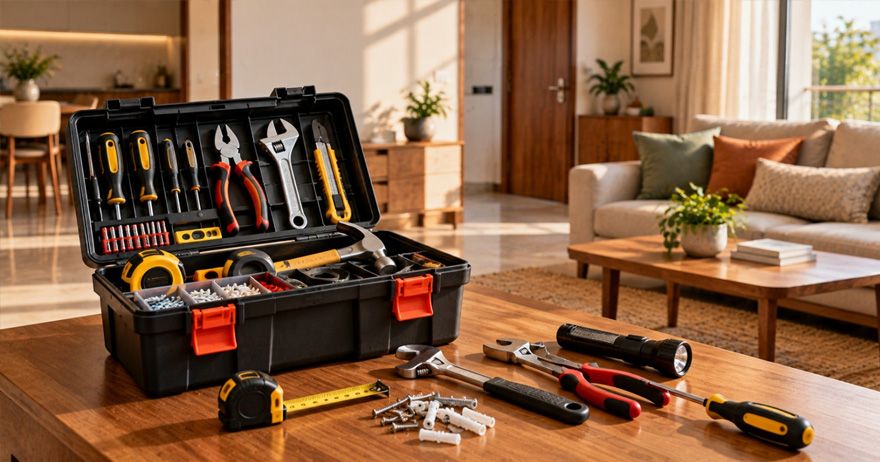
Every household should be prepared for minor household problems that can happen at any time. From loose screws and leaking taps to furniture repairs and unexpected maintenance jobs, these tasks can easily be handled with an emergency home repair kit.
Keeping an emergency home repair kit ready can help you handle simple issues quickly without searching for tools at the last minute. Your household toolkit does not need to contain every tool available, but it should contain versatile essentials that can be safely used for common repairs and maintenance tasks.
A screwdriver set, adjustable wrench, pliers, measuring tape, utility knife, hammer, torch, and basic fasteners are useful starting points. Depending on your home, you may also need tools for plumbing, furniture assembly, electrical checks, or minor wall repairs. And in this blog, we will be discussing everything related to an emergency home repair kit.
Why Every Home Should Have a Basic Repair Kit?
Every homeowner should have a basic repair kit because small problems can come up at any time. Like a loose cabinet handle, a leaking tap, a hanging picture frame, or a piece of furniture that needs tightening- for such small issues, you might not find a professional. But if you have the right tools at home, you can easily handle these simple repairs on your own.
Don’t you remember how all Indian fathers used to have a basic repair kit that saved them from so many unnecessary expenses? And sometimes, it’s actually fun to take care of simple tasks by yourself. And the repair kit is especially helpful when something needs to be fixed on an immediate basis and waiting for a professional is not an option.
15 Essential Tools Every Household Should Own
A basic set of tools can make everyday household repairs much easier. From tightening loose screws to hanging frames and assembling furniture, having the right tools at home can save time and money. So, here’s the list of 15 essential tools for home repairs that every household should have:
Screwdrivers, Pliers, Wrenches, and Other Hand Tools
If you are building your basic home repair kit, then hand tools are some of the most useful items. Screwdrivers can help you tighten those loose screws, while pliers are useful for gripping, bending, and holding small objects. Wrenches are helpful for tightening or loosening nuts and bolts. Other useful hand tools include hammers, Allen keys, utility knives, and measuring tapes, which can come in handy for everyday repairs and DIY tasks around the house.
Measuring, Cutting, and Fastening Tools
Measuring, cutting, and fastening tools are useful for a wide range of household repair and DIY tasks. A measuring tape helps you take accurate measurements before installing or fixing something. Cutting tools such as utility knives and hacksaws can be used to cut materials like cardboard, plastic, wood, or thin metal. Fastening tools, including screwdrivers, drills, and Allen keys, help secure furniture, fixtures, and other household items properly.
Basic Plumbing Tools for Common Household Repairs
Basic plumbing tools can help you handle minor issues such as loose connections, clogged drains, and small leaks. A pipe wrench is useful for tightening or loosening pipes and fittings, while an adjustable wrench can be used for nuts and bolts. A plunger can help clear simple drain blockages, and plumber’s tape can seal threaded connections to reduce leaks. Keeping a bucket, basin wrench, and pair of pliers in your repair kit can also be useful for basic plumbing work at home.
Electrical Safety Tools and Essential Testing Equipment
Electrical work requires extra care, so having the right safety and testing tools is important. A voltage tester can help check whether a wire or outlet is carrying electricity, while a multimeter can measure voltage and other electrical values. Insulated screwdrivers and pliers provide an extra layer of protection when working near electrical components. It is also useful to keep electrical tape, safety gloves, and a flashlight in the repair kit. For complex electrical problems, however, it is safer to call a qualified electrician rather than attempting the repair yourself.
Tools for Walls, Furniture, Doors, and Windows
A few basic tools can help with common repairs around walls, furniture, doors, and windows. A drill is useful for making holes in walls and installing shelves, frames, or fixtures. A hammer and screwdriver set can help with furniture assembly and loose fittings. A measuring tape and level are useful for positioning items accurately. Pliers, an adjustable wrench, Allen keys, and a utility knife can also come in handy for tightening hardware, adjusting fittings, and handling minor repairs.
Emergency Supplies Such as Torch, Tape, Fasteners, and Batteries
Emergency supplies are useful for handling quick repairs and unexpected situations at home. A torch can help during power cuts or when you need to work in dark corners. Duct tape and electrical tape can be used for temporary fixes, while screws, nails, nuts, and bolts are useful for replacing loose or missing fasteners. It is also a good idea to keep extra batteries for torches and other battery-powered tools. Keeping these small essentials together can make it easier to deal with minor problems when you need them.
How to Choose Quality Tools for Your Home Repair Kit?
Building an emergency home repair kit is easy, but choosing quality tools is a task. So, here’s how you can choose the best basic home maintenance kit:
- Always choose tools that are made from durable and rust-resistant materials.
- Check if the handles are strong and easy to grip.
- All quality tools have properly finished edges and sturdy joints.
- Choose the right size and type for common household repairs.
- Avoid investing in cheap tools that feel loose, weak, prone to rust, or are poorly made.
- Instead of buying tools from random places, buy from reliable brands that have good reviews.
- If you’re buying electrical tools, then look for safety features.
- Choose tools that are easy to clean, store, use, and maintain.
How to Store and Organise Your Household Tools?
After buying all the tools, it’s also important that you store them properly. Because if you don’t store and organise the tools well, there’s a high chance that you’ll lose most of them. So, here are tips on how to store and organise household tools:
- Keep all frequently used tools in a single toolbox or storage box.
- Use separate compartments for screws, nails, bolts, and other small items.
- Store all the sharp tools with protective covers to prevent accidental injuries.
- Keep all the electrical tools and batteries in a safe place away from moisture.
- If you have limited storage space, you can use wall-mounted hooks and pegboards.
- After using your tools, clean and dry them before putting them away.
- Keep the toolbox in a safe location away from the reach of children.
Safety Tips for Using Home Repair Tools
Before using the home repair tools, you must follow some safety tips:
- First, read all the instructions before using any tool that you’re not familiar with.
- Always wear safety glasses and protective gloves when required.
- Use the right tool for the job instead of using a DIY tool.
- Always check tools for damage and worn-out handles.
- Keep the toolbox away from children and store it safely.
- Switch off and unplug electrical tools before changing parts or cleaning them.
- For major electrical, plumbing, or structural repairs, seek professional help.
When Should You Call a Professional Instead of DIY Repair?
DIY repairs are useful, and so is your emergency home repair kit for handling small household problems, but not every repair should be done on your own. But you should call a professional when the work involves major electrical wiring, gas lines, serious plumbing leaks, or structural damage. Professional help is also a better option when the repair requires some extra specialised tools and technical knowledge. Also, at times when you’re unsure about the cause of a problem or feel that a DIY repair could make it worse, it is safer to get expert help.
Final Thoughts
A practical home repair kit does not need to be large or expensive. A few reliable tools can help you handle common repairs, furniture adjustments, minor plumbing issues, and everyday DIY tasks around the house. Choose tools based on your actual needs, keep them organised, and store them in a safe and dry place. With the right basic tools within reach, you can deal with small household problems more easily and know when a repair needs professional attention.