Dampness and mould inside wardrobes are among the most common issues. It can be very frustrating, especially if your home is exposed to high humidity, poor ventilation, or seasonal moisture. Over time, excess moisture can leave a musty smell on clothes and may also damage fabrics, wood, and other wardrobe surfaces.
And once you know the cause, simple changes such as improving ventilation, controlling moisture, cleaning the wardrobe regularly, and avoiding overcrowding can help keep the space dry. You can also use products that help manage moisture, odours, or insects. Naphthalene balls are commonly used for protecting stored clothes from insects, but moisture absorbers, activated charcoal, cedar products, and herbal sachets are some alternatives you can consider depending on what your wardrobe needs.
So, in this blog, we will discuss how to keep your clothes fresh and dry.
Why Do Wardrobes Become Damp and Develop Mould?
Wardrobes become damp when moisture gets trapped inside and has nowhere to escape. The source of mould growth is not always inside the wardrobe. Sometimes, the moisture comes from the wall behind it or from a leak nearby.
And some common causes include:
- Damp walls
- Poor airflow
- High humidity
- Damp clothes
- Leaking pipes, bathrooms, windows, or roofs
- Exposed edges of wood or engineered boards
- Poor room ventilation
How to Identify Early Signs of Moisture and Mould?
You can easily stop mould growth before it becomes a big issue. Here are some of the early signs of moisture and mould growth:
- Check if there’s any musky or earthy smell inside your wardrobe
- Check the back panel, corners, and lower sections of your wardrobe. Check if these areas feel unusually damp or cold.
- Check if there are tiny patches or dots on the shelves and corners.
- Check if your wardrobe is peeling or swollen
- Check if your clothes feel slightly moist or develop a musty smell after being stored.
- Check if the paint or laminate is bubbling, peeling, or lifting from the surface, as moisture may be getting underneath.
10 Ways to Prevent Dampness Inside Your Wardrobe
Follow these ten tips if you want to prevent dampness inside your wardrobe:
- Leave a small space behind the wardrobe to allow air to circulate.
- Make sure all your clothes are fully dry before you put them in the wardrobe.
- If there’s excessive humidity in your room, open the windows of your room or use an exhaust fan.
- Fix all the seepage and damp patches on the wall before placing the wardrobe against it.
- Leave some space between clothes so air can move freely.
- Place moisture absorbers inside the wardrobe, especially during monsoon season.
- Let fresh air enter the wardrobe instead of keeping it closed all the time.
- Remove dust from shelves, corners, and less-used areas to spot moisture or mould early.
- Properly seal areas that may allow moisture to enter the wardrobe material.
- Inspect nearby walls, pipes, windows, and ceilings for leaks that could be causing dampness.
Improve Wardrobe Ventilation and Air Circulation
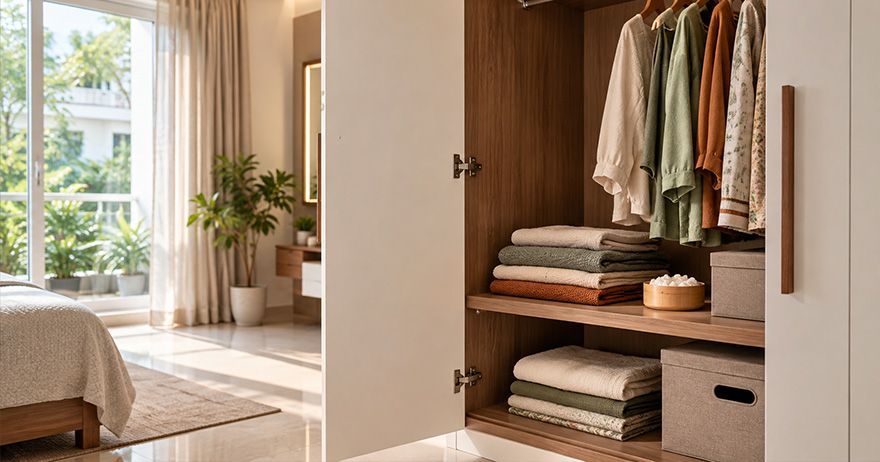
Good wardrobe ventilation ideas help keep moisture from getting trapped inside. Leave a small gap between the wardrobe and the wall, avoid overcrowding shelves, and keep some space between clothes so air can move freely. Opening the wardrobe doors from time to time can also help release trapped humidity. For built-in wardrobes, ventilation openings or breathable panels can improve airflow, while keeping the room itself well ventilated can further reduce the chances of dampness and mould.
Moisture Absorbers and Other Humidity-Control Solutions
If the wardrobe is exposed to excess humidity, moisture-control products can provide some extra help. They are particularly useful for enclosed spaces where air does not move freely.
- Moisture absorber boxes: These collect excess moisture and can be placed on a stable shelf or wardrobe floor.
- Silica gel packets: They can be useful in drawers, boxes, and other small enclosed spaces.
- Wardrobe dehumidifier bags: These are convenient for shelves or hanging storage and are designed to collect moisture over time.
- Room dehumidifiers: If the whole room feels humid, treating the room itself may be more useful than relying only on small absorbers inside the wardrobe.
- Replace them regularly: Check moisture-absorbing products and replace or empty them once they are full.
- Use them safely: Keep liquid-collecting products upright and away from clothes and other materials that could be damaged by a spill.
How to Clean Mould from a Wardrobe Safely?
If you find mould in your wardrobe, then clean it as soon as possible rather than allowing it to spread. The method will depend on the wardrobe material and the extent of the growth.
- Remove all clothes, bags, boxes, and other stored items to inspect the affected areas.
- Open windows or doors where possible while cleaning to improve airflow.
- Remove loose mould gently with the help of mould-cleaning products.
- Then let the surface completely dry before you put your clothes and other belongings back in the wardrobe.
- Make sure you have dried your clothes and other belongings thoroughly.
Naphthalene Balls: What Are They Commonly Used For?
Naphthalene balls are commonly used in wardrobes and storage spaces to help protect clothes from moths and certain other insects. They are particularly common when woollens, blankets, and other fabrics are stored for long periods.
Their strong smell comes from naphthalene, which slowly changes from a solid into a gas when exposed to air. Because of this, naphthalene balls should be used according to the product instructions and kept away from children and pets.
It is also important to remember that naphthalene does not remove moisture or mould. If your wardrobe has a dampness problem, you need to address the source of the moisture separately.
Naphthalene Alternatives for Fresh-Smelling and Pest-Free Wardrobes
Most homeowners don’t like the strong smell of naphthalene balls, especially when the clothes are stored in a closed wardrobe for a long time. If you want milder naphthalene alternatives for wardrobe, you can try options such as:
- Cedar blocks
- Activated charcoal
- Lavender sachets
- Neem leaves
- Clove sachets
- Essential-oil sachets
Natural Options Such as Cedar, Activated Charcoal, and Herbal Fresheners
If you don’t like the smell of naphthalene balls and still you want wardrobe dampness solutions,
then you can try some natural wardrobe fresheners like cedar, activated charcoal, and herbal fresheners. These options work exactly like naphthalene balls but smell even better or have no smell at all.
You can try using cedar blocks as they add a mild woody scent and keep the fabric pests away. Also, activated charcoal is quite useful for absorbing unwanted odours. And you can keep lavender, neem, or other dried herbs in your wardrobe to control odour. But all these options are mainly useful for freshness, odour control, and not for moisture control.
How to Store Clothes to Reduce Moisture and Musty Odours?
The best way to reduce moisture and musty odours is to store clothes only when they are completely dry. Even slightly damp fabric can make your wardrobe smell musty. Also, don’t pack your clothes too tightly. Leave some space between them so air can circulate.
And for clothes that you don’t use regularly, use storage bags made of cotton to store them. You can also keep moisture absorbers and small sachets of activated charcoal inside your wardrobe to control excess moisture and odours.
When Wardrobe Dampness May Indicate a Larger Moisture Problem
If dampness keeps coming back even after cleaning and improving ventilation, the problem may not be limited to the wardrobe. Moisture can come from a leaking pipe, damp wall, roof seepage, or water entering through cracks near the wardrobe. Look for peeling paint, swollen wood, dark patches on the wall, or a persistent musty smell around the same area. If the wardrobe is fixed against a damp wall, the moisture may also be coming through from behind it. In such cases, fixing the source of the moisture is more important than simply cleaning the mould.
Common Mistakes to Avoid When Preventing Mould Removal From Wardrobe
A few everyday habits can make the issue of your damp wardrobe worse. So, make sure you are avoiding these common mistakes:
- Putting away damp clothes
- Covering a damp wall with a wardrobe
- An overcrowded wardrobe with less room for air to circulate
- Ignoring a recurring musty smell
- Leaving seasonal clothes untouched for months
Final Thoughts
A fresh, dry wardrobe starts with controlling the moisture around it. Keep clothes completely dry before storing them, give the wardrobe enough room for airflow, and check nearby walls and plumbing if dampness keeps returning. Moisture absorbers can be useful during humid periods, while options such as cedar, activated charcoal, and herbal sachets can help with freshness or certain storage needs.
Naphthalene balls have their own purpose, mainly for protecting stored fabrics from certain insects, but they should not be treated as a solution for dampness or mould. Once you separate these two problems and deal with the actual source of moisture, keeping your wardrobe clean and fresh becomes much easier.