



Over time, dust, dirt, grease and environmental pollutants can accumulate on uPVC windows and door frames, and make them look dull and discoloured. If you know how to clean uPVC frames properly, you can maintain their appearance, durability, and lifespan without damaging the protective finish for a longer period.
Using harsh chemicals or abrasive cleaning tools can scratch the surface and reduce their longevity. Fortunately, with the right cleaning products and techniques, you can safely deep clean uPVC windows and keep them looking as good as new for years to come.
In this blog, let’s see how to clean uPVC frames, uPVC care tips, and common mistakes to avoid.
Why Is Regular uPVC Frame Cleaning Important?
uPVC does not rot or rust the way wood and metal do. But still, it is prone to dust, traffic pollution, and hard water settling on its surface over time. So, uPVC frame maintenance is mandatory to keep it looking new, stop yellowing, and protect the seals and hinges from grit that wears them down. If dirt is left unattended for months, it turns into a stain that is much harder to remove later.
Before we get to know how to clean uPVC frames, let’s see the cleaning supplies needed.
Cleaning Supplies Needed To Deep Clean uPVC Frames
Here are the uPVC door frame cleaning supplies you will need to clean uPVC frames.
- A bucket of warm water
- Mild dish soap or washing-up liquid (avoid ones with added colour or dye)
- A soft microfibre cloth or sponge
- A soft-bristle brush or an old toothbrush for corners and grooves
- White vinegar for stubborn stains
- A dry microfibre cloth for the final wipe
- Rubber gloves while using vinegar
Do not use any abrasive, such as scouring pads, steel wool, or cream cleaners. These scratch uPVC, and there is no fixing after that.
Step-By-Step Guide On How To Clean uPVC Frames
Here’s how to clean uPVC frames.
- Dust first: Wipe the frame with a dry cloth or soft brush to remove loose dust. Do not skip this step, as the dust turns into a gritty paste once it gets wet, and that paste can scratch the surface as you wipe.
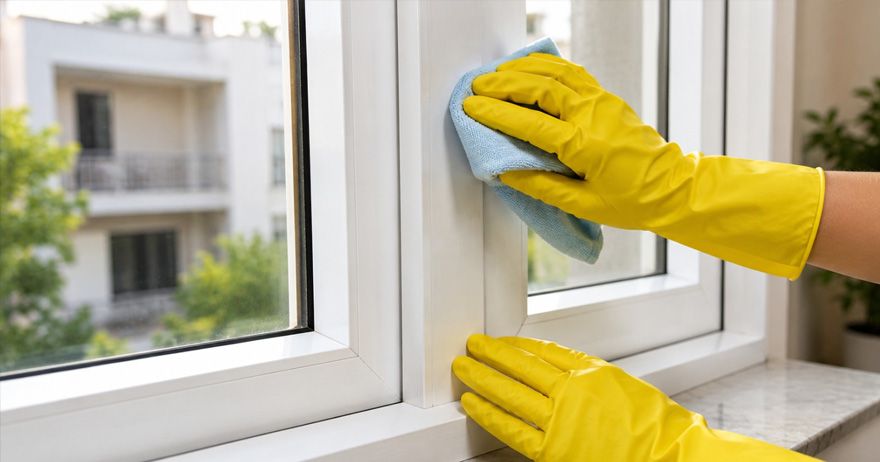
- Wash with soapy water: Mix a few drops of dish soap into warm water. Dip a soft cloth in it and wipe the frame from top to bottom. Make sure to use only light pressure while cleaning.
- Clean the corners: Use a toothbrush or soft-bristle brush to clean the grooves, joints, and edges where grime tends to collect.
- Rinse well: Clean the frame with a fresh cloth dipped in clean water to remove leftover soap.
- Dry completely: Wipe the frame with a dry microfibre cloth. This prevents water spots from forming. This step matters the most if you use hard water.
How To Remove Stains From uPVC Frames Without Causing Damage?
Here is how to clean uPVC window frames without causing damage.
If you are unable to clean the stains with soap and water,
- Mix one part white vinegar with three parts warm water. Apply it to the stain with a soft cloth and let it sit for 10 to 15 minutes. Then, wipe off with a damp cloth and rinse. This is the best cleaner for uPVC frames.
- For tougher marks, such as old paint splashes or mold spots, use a baking soda and water paste. Leave the mix for about 10 minutes and wipe gently without scrubbing hard. This comes in handy for white uPVC frame cleaning.
Always make sure to test any DIY solution on a small, hidden spot first. Do not use bleach, nail polish remover, white spirit, methylated spirit, or WD-40 on uPVC frames. These can permanently discolour the surface or dissolve it.
Cleaning uPVC Window Tracks, Hinges, And Seals
uPVC tracks collect dust, dead insects, and monsoon mud faster than the visible frame. To clear loose debris, use a vacuum fitted with a soft-bristled brush attachment, and then wipe the track with a cloth dipped in soapy water.
For hinges and locks, wipe off the dust with a dry cloth, and add two to three drops of light lubricating oil or a silicone spray made for door and window hardware to keep them functioning smoothly. Do not use water for hinges and locks.
Rubber seals should be wiped with mild soapy water on a soft cloth. Make sure not to use petroleum-based products like WD-40 on the rubber, since these can make it swell and wear out faster. It is recommended to check the seals every season, especially before the monsoon.
Common Cleaning Mistakes To Avoid
Here are some common mistakes to avoid while cleaning uPVC frames.
- Do not use scouring pads, steel wool, or wire brushes, as they leave permanent scratches.
- Do not use bleach or ammonia-based products, since it causes yellowing of the frames over time.
- Do not use cream cleaners such as Cif or Jif, as they are abrasive and can make the frame look dull. There are dedicated uPVC cream cleaners which use can use, followed by car wax application to protect the finish.
- Do not skip the dry dusting step before wet cleaning, as the dirt can accumulate as a gritty paste on the surface.
- Do not use a steam cleaner, as the heat can warp or discolour uPVC.
- Do not apply too much pressure while cleaning the frames, as uPVC gets scratched more easily than other materials.
How Often Should You Clean uPVC Frames?
uPVC is an easy-maintenance material.
A quick wipe with a dry cloth every two weeks keeps the uPVC frames from building up dust.
A proper deep cleaning can be done once every two to three months. In quieter, less polluted areas, once every four to six months is more than enough.
Make sure to clean them before and after the monsoon season, since damp weather brings mold and mineral marks from rainwater.
Tips To Keep uPVC Frames Looking New For Longer
Here are some uPVC window maintenance tips to keep the frames looking new for a longer period.
- Wipe the frames with a dry cloth once every week so that dust does not accumulate and settle.
- Do not use abrasive scouring pads, steel wool, wire brushes, bleach or ammonia-based products, as they can scratch and yellow the uPVC frames.
- Never let the cleaning solution dry on the surface. Always rinse it and wipe it dry afterwards.
- Apply a dedicated uPVC cream after a deep clean for extra shine and a layer of protection.
- Do not let the dirt settle and become a stain. Always deal with the dust, small scratches or marks early.
- Make sure you lubricate the hinges, handles and locking mechanisms from time to time, as it helps extend the mechanical life of your frames.
When To Repair Or Replace Damaged uPVC Frames?
If it is a minor problem, such as a stiff hinge, a loose handle, small surface scratches, or a worn seal, it can be repaired without replacing the entire frame.
Replace the frame if it has deep cracks, severe warping, or permanent yellowing that cannot be cleaned. If you notice condensation or fogging between the panes of a double-glazed window, the sealed glass unit has failed and usually needs replacing. These types of damage cannot be repaired.
Final Takeaway
Cleaning uPVC frames is not a complicated task. All you need is warm water, mild soap, a soft microfiber cloth, and a dry microfibre cloth. You can also use vinegar and baking soda mixes for stubborn stains. It is better to avoid anything abrasive that can cause scratches or yellowing of the frame. In addition to paying attention to the frame, from time to time check the moving parts, like tracks and hinges. This way, your uPVC frame will last for years without needing repair.