




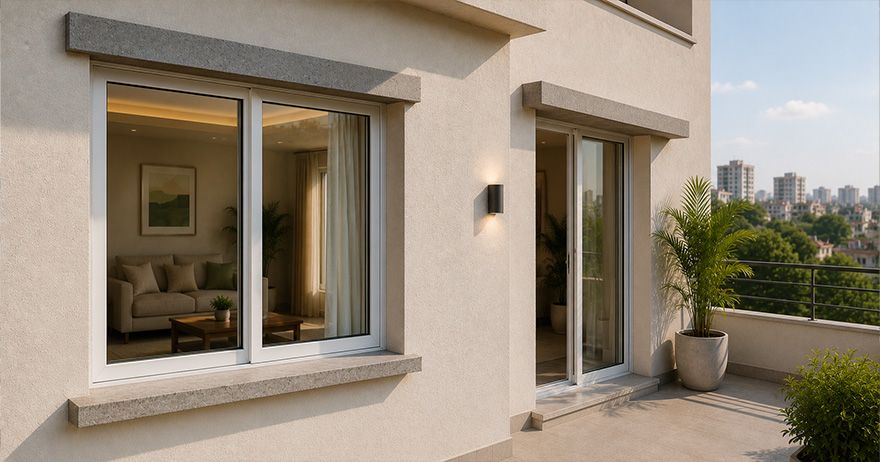
So, in this blog, we’ll discuss everything about lintels and sills, their types, functions, and importance in residential and commercial buildings.
What Is a Lintel?
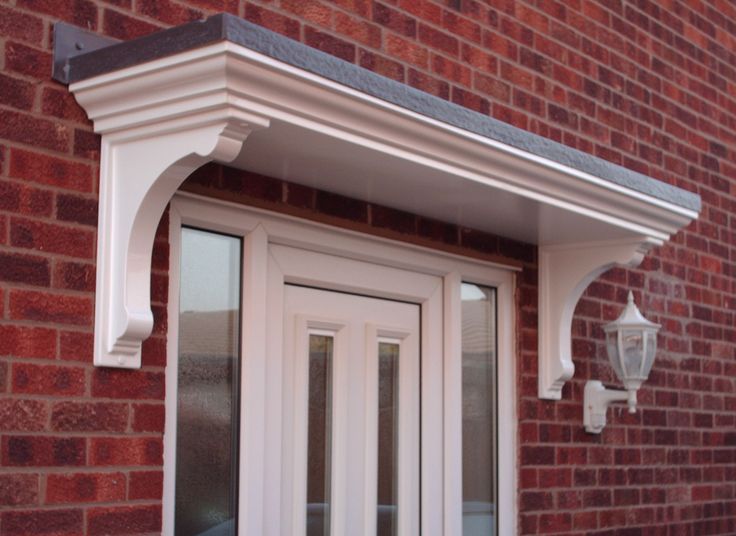
A lintel is a horizontal structural support that is placed above doors, windows, and other openings for load-sharing. It carries the load from the wall, floor, and roof above and transfers it to the supporting walls on either side of the opening for better structural strength.
Functions of a Lintel Beam
Here are the functions of the lintel beam:
- Lintel beam supports the weight above the door and window openings.
- It transfers loads to adjacent walls for enhanced structural ability.
- Lintel prevents cracking around openings.
- Lintel helps in protecting door and window frames from excessive pressure.
- It enhances the overall strength of the building.
Different Types of Lintels Used in Buildings
As a lintel is an important element of building safety, it also has different types:
RCC Lintels
Reinforced cement concrete or RCC lintels are the most widely used lintels in modern construction. As they are known for offering excellent strength, durability, against the weather, and heavy loads.
Steel Lintels
Steel lintels are made from steel pieces, and they are used where some extra strength is needed. The best part about steel lintels is to support heavy loads and are mostly used in commercial and industrial buildings.
Brick Lintels
Brick lintels are another preferred type of lintel made using bricks and mortar. They are best suited for small openings and light loads, but they are considered less strong than RCC or steel lintels.
Stone Lintels
Stone lintels are made from natural stone slabs and are strong and durable. But the only drawback is that they are too heavy and mainly used in traditional or heritage-style buildings. Hence, they cannot be used in modern construction.
Prestressed Concrete Lintels
Prestressed concrete lintels are made from tensioned steel reinforcement that increases their load-bearing capacity. And they are commonly used for larger spans and applications requiring greater structural efficiency.
What Is a Window Sill?
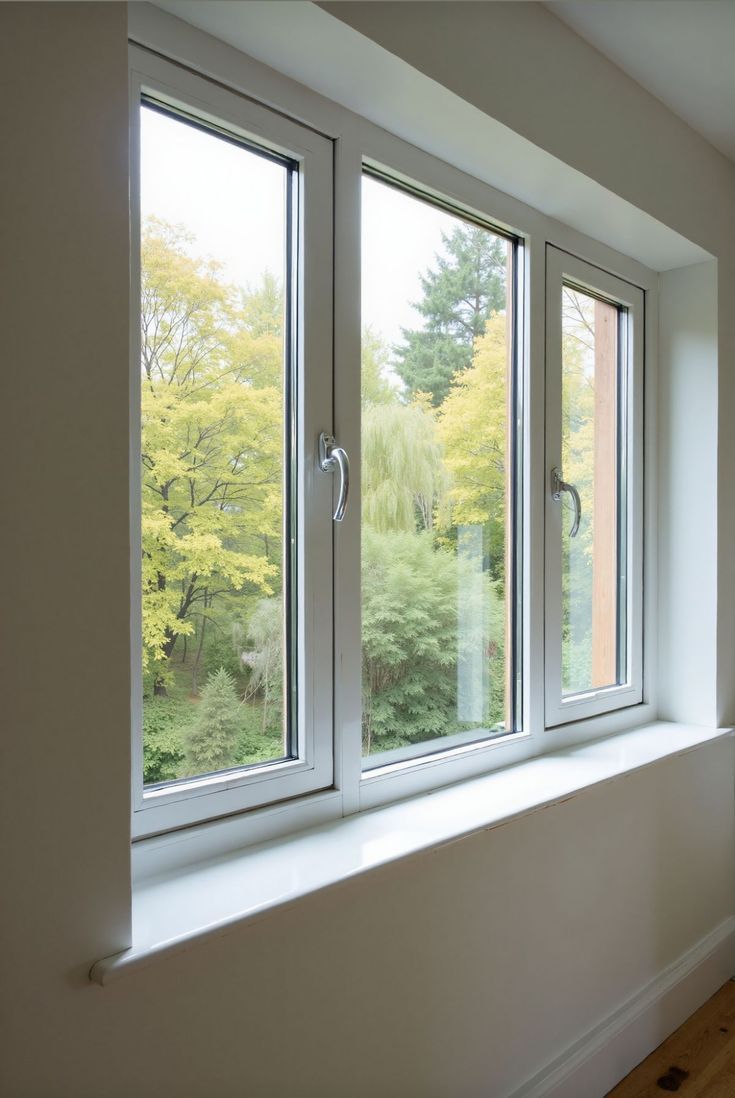
A window sill is the horizontal surface that is located at the bottom of your window opening. It can be positioned inside or outside the building and is designed to support the window, along with directing rainwater away from the wall.
Functions of a Window Sill
Here are the functions of a window sill:
- A window sill provides support to the window frames.
- It helps in draining rainwater away from the wall.
- It helps in preventing water seepage and dampness.
- Protects masonry from weather damage.
- Improves the appearance of windows.
- Increases the durability of the building envelope.
Types of Window Sills
Here are some different types of window sills:
Concrete Sills
Concrete sills are made from cement, sand, and other aggregates. They are durable, cost-effective, and are most commonly used in residential and commercial buildings.
Stone Sills
Stone sills are known for durability and a premium appearance. They are often used in high-end and traditional construction projects.
Tile Sills
Tile sills are easy to maintain and available in various designs, making them a popular choice for modern interiors.
Wooden Sills
Wooden sills provide a warm and attractive appearance but require regular maintenance to protect against moisture.
Metal Sills
Metal sills are lightweight, durable, and commonly used in commercial and industrial buildings. These metal sills are also a good choice for homeowners.
Difference Between Lintels and Sills
Check out the difference between lintel and sill:
| Features | Lintels | Sills |
|---|---|---|
| Main Functions | Transfers the load to the side walls | Prevents water penetration |
| Purpose | The purpose of a lintel in construction is to support structural loads | The purpose of sills is to support windows and drain water |
| Structural Role | Load-bearing element | Protective and supportive element |
| Installation | Above openings | At the base of window openings |
Why Lintels and Sills Are Important in Construction?
Lintels and sills are important because they improve the strength, safety, durability, and functionality of your house. But lintels are known for supporting the weight above doors and windows. Whereas sills help drain rainwater away from windows, protecting walls from dampness, leaks, and water damage. Together, they ensure better structural stability and longer-lasting performance.
Common Construction Mistakes to Avoid
Here are some common construction mistakes that you need to avoid as an Indian homeowner:
- Never use undersized lintels for large openings.
- Providing insufficient bearing length on supporting walls.
- Improper reinforcement in RCC lintels.
- Poor curing of concrete lintels.
- Installing window sills without proper slope.
- Ignoring drainage details and drip grooves.
- Using low-quality materials.
- Failing to align lintels and sills correctly during installation.
How Lintels and Sills Improve Structural Safety?
Lintels improve safety by ensuring the loads above the window and door openings are distributed safely and equally, reducing the risk of cracks and structural failure. Whereas the sills protect walls from water infiltration, dampness, mold growth, and material deterioration. And together, they contribute to improving the overall safety of the structure.
Best Practices for Window and Door Openings
- Select lintels based on the expected load and span.
- Ensure adequate bearing on both sides of the opening.
- Use proper reinforcement and curing for RCC lintels.
- Install window sills with a slight outward slope for drainage.
- Include drip grooves to prevent water from flowing back toward the wall.
- Use high-quality, weather-resistant materials.
- Follow local building codes and structural guidelines.
- Conduct regular inspections during construction to ensure proper installation.
Well-designed and installed lintels and sills not only enhance structural performance but also improve the longevity, safety, and weather resistance of any building. Hence, always focus on your project’s structural strength by investing in good quality lentils and sills.