



What Is the Full Form of uPVC?
uPVC stands for Unplasticized Polyvinyl Chloride.
What Is uPVC Material?
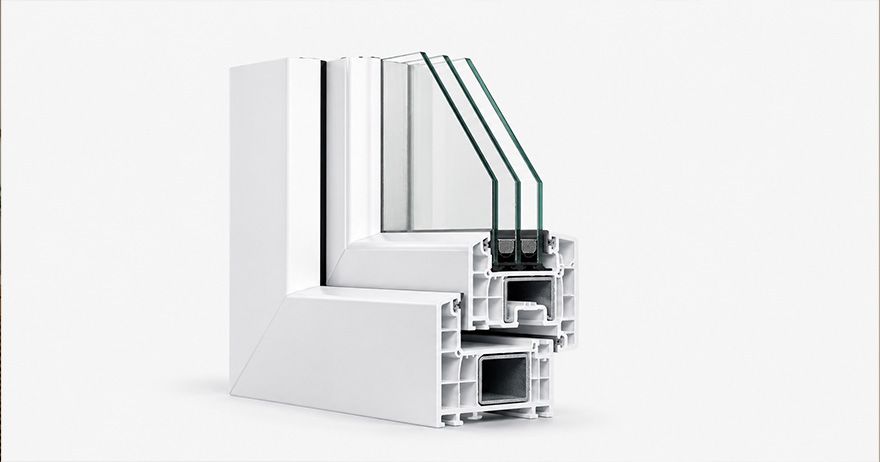
It is a rigid version of PVC (Polyvinyl Chloride) manufactured without plasticizers: the additives used to make conventional PVC flexible. This gives uPVC the strength, dimensional stability, and durability required for structural applications such as windows and doors.
Originally developed for industrial and construction use, uPVC emerged during the 1930s as manufacturers explored rigid, unplasticized forms of PVC that could withstand moisture, weather exposure, and corrosion while requiring minimal maintenance. Its durability and stability made it a practical alternative to traditional materials such as wood and metal for a range of building applications.
The material began finding its way into window and door manufacturing during the 1950s, with the first commercially available uPVC windows appearing in Europe by the late 1950s.
Benefits & Advantages of uPVC Windows and Doors
| Category | Technical Advantage | Practical Benefit |
|---|---|---|
| Energy Efficiency | Low thermal conductivity and multi-chamber profile design help reduce heat transfer | Improves indoor comfort and can help lower heating and cooling costs |
| Low Maintenance | Resistant to rot corrosion fading and weather-related deterioration | Requires only occasional cleaning without painting or polishing |
| Security | Compatible with reinforced profiles toughened glass and multi-point locking systems | Enhances protection against forced entry |
| Durability | Resistant to termites moisture corrosion and most environmental conditions | Delivers reliable long-term performance with minimal upkeep |
| Sound Insulation | Airtight sealing and appropriate glazing help reduce noise transmission | Creates a quieter and more comfortable indoor environment |
| Design Flexibility | Available in various styles configurations colours and finishes | Allows windows and doors to complement different architectural designs |
| Weather Resistance | Designed to withstand rain humidity UV exposure and temperature fluctuations | Helps prevent drafts water ingress and weather-related damage |
| Fire Performance | uPVC is self-extinguishing and does not readily support combustion | Contributes to overall building safety |
| Ventilation Options | Supports a wide range of window and door operating styles | Enables effective airflow and ventilation control |
| Sustainability | Long lifespan and recyclability help reduce material consumption over time | Supports more sustainable building practices |
| Cost Effectiveness | Combines durability with low maintenance requirements | Can offer better long-term value compared to materials requiring frequent upkeep |
uPVC Windows vs Wooden Windows
| Feature | uPVC Windows | Wooden Windows |
|---|---|---|
| Maintenance | Requires only occasional cleaning and does not need painting or polishing | Requires regular painting polishing staining or sealing to maintain its appearance and durability |
| Durability | Resistant to termites moisture and weather-related damage making it suitable for long-term use | Can last for decades but requires consistent maintenance to protect against moisture and pests |
| Thermal Insulation | Helps keep indoor spaces comfortable by reducing heat transfer | Naturally provides good insulation and helps maintain indoor comfort |
| Sound Insulation | Helps reduce outside noise when paired with appropriate glass and sealing systems | Also offers good sound insulation due to its natural density |
| Appearance | Available in various colours finishes and wood-grain textures to suit modern and traditional homes | Offers a natural grain and texture that many homeowners find aesthetically appealing |
| Weather Resistance | Performs well in rain humidity and changing weather conditions without warping or swelling | Can expand contract or warp over time when exposed to moisture and temperature fluctuations |
| Sustainability | Long-lasting and recyclable at the end of its service life | Renewable when sourced responsibly and naturally biodegradable |
| Cost | Generally more affordable to own over time due to lower maintenance requirements | Usually involves higher initial and ongoing maintenance costs |
| Lifespan | Designed to provide reliable performance for several decades with minimal upkeep | Can last for many decades when properly maintained |
Why uPVC Is Ideal for Indian Homes
India's housing landscape has changed dramatically over the past few decades. Traditional homes were often designed with thick masonry walls, deep verandahs, sloped roofs, and naturally ventilated layouts that helped moderate indoor temperatures. Modern housing, however, is increasingly characterised by high-rise apartments, compact urban developments, larger glazed openings, and a greater reliance on mechanical cooling systems.
This shift has taken place alongside rapid growth in the housing sector. In 2024 alone, approximately 4.71 lakh residential units were sold across nine major Indian cities: Bengaluru, Chennai, Hyderabad, Kolkata, Delhi-NCR, Mumbai, Navi Mumbai, Pune, and Thane, highlighting the continued demand for modern housing solutions that balance performance, durability, and long-term value.
During the summer months, temperatures in cities such as Delhi, Jaipur, Nagpur, and Ahmedabad frequently reach 40–45°C, with some regions occasionally exceeding 47°C. Under such intense heat, poorly insulated windows can allow significant solar heat gain, making indoor spaces uncomfortable and increasing dependence on air conditioners. uPVC frames have low thermal conductivity and maintain their shape even under high temperatures, helping reduce heat transfer and supporting better indoor comfort when paired with suitable glazing.
The monsoon season brings another set of challenges. India receives an average annual rainfall of approximately 1,160 mm, with cities such as Mumbai, Chennai, Kochi, and Kolkata experiencing prolonged periods of heavy rain and high humidity. Windows and doors that are not properly sealed can allow water seepage, dampness, and drafts, while moisture can cause certain materials to swell, rot, or deteriorate. uPVC is inherently water-resistant and does not absorb moisture. With quality gaskets, drainage and sealing systems, uPVC windows and doors help prevent water ingress and maintain airtight performance during heavy rainfall.
Winter conditions also affect building performance. In northern cities such as Delhi, Chandigarh, Shimla, and Srinagar, temperatures can fall below 5°C, and in some regions drop below freezing. Poorly sealed windows and doors can allow cold drafts to enter, reducing indoor comfort and increasing heating requirements. Multi-chamber uPVC profiles, combined with appropriate glazing, help reduce heat loss and improve thermal insulation during colder months.
Beyond seasonal weather, Indian cities are also becoming noisier due to increasing urbanisation and traffic. Airtight uPVC window systems, especially when used with double glazing, can help reduce external noise levels and create a more comfortable indoor environment.
Is uPVC Worth the Investment?
For homeowners, the decision is increasingly about more than just the initial purchase price. Factors such as maintenance costs, energy efficiency, durability, and long-term performance play a growing role in determining value. A window that requires minimal upkeep, maintains its appearance over time, and continues to perform effectively for decades can offer a lower total cost of ownership than alternatives that demand regular repairs, repainting, or replacement.
As Indian homes continue to evolve from traditional standalone houses to modern apartments, villas, and integrated townships, the need for durable, low-maintenance, and climate-resilient building materials is likely to become even more important. This is one of the key reasons why uPVC has become a preferred choice for windows and doors across a wide range of residential projects in India.