



What Are Bay Windows?
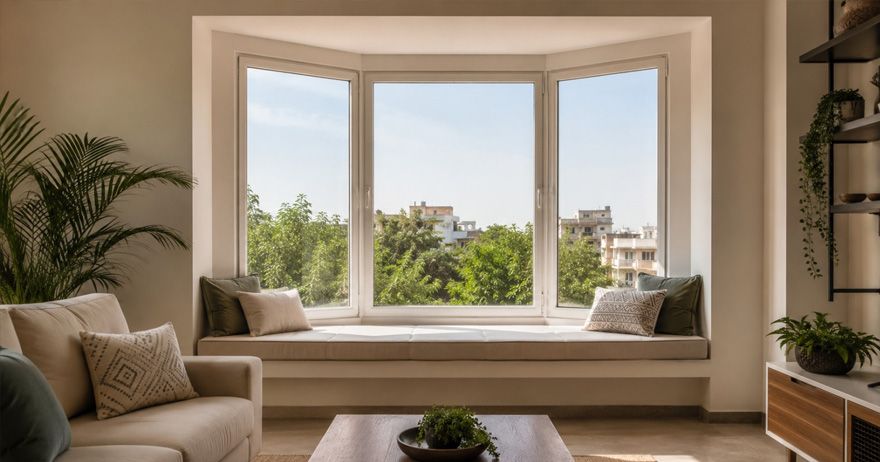
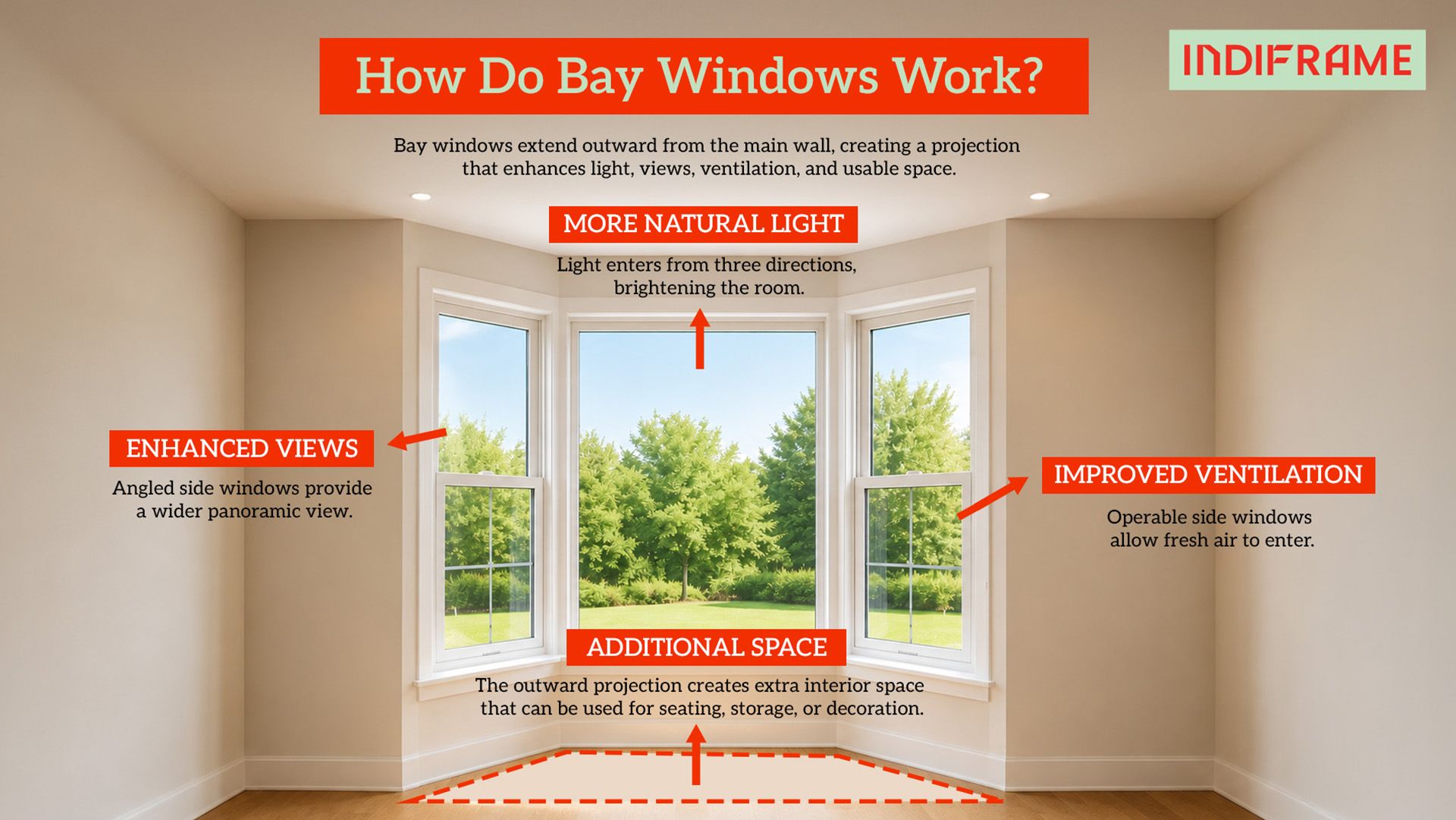
Bay windows are window systems that project outward from the main wall of a building, creating an extended interior space while allowing light to enter from multiple directions. Bay windows typically feature a large central window flanked by two side windows angled outward from the main wall, enhancing views and natural light.
Bay windows originated in medieval Europe and became particularly popular during the Victorian era. Over time, bay windows evolved from ornamental elements into practical design features commonly used in living rooms, bedrooms, and reading nooks.
The term "bay window" comes from the architectural word "bay," which refers to a section of a building that projects outward from the main wall. Essentially, a bay is a recessed or projecting compartment, and since a bay window extends beyond the exterior wall line, it creates a small alcove or protruding space inside the room.
Think of it this way: A flat window sits flush with the wall, while a bay window projects outward, creating a "bay" or niche inside the room.
How Do Bay Windows Work? What Are The Benefits Of Installing Bay Windows?
Bay Windows vs Regular Windows
| Feature | Bay Windows | Regular Windows |
|---|---|---|
| Design | Projects outward from the wall | Installed flush with the wall |
| Natural Light | Receives light from multiple angles | Receives light from one direction |
| Views | Wider panoramic views | Standard field of view |
| Ventilation | Can improve cross-ventilation with operable side windows | Depends on the window type |
| Interior Space | Creates additional usable space | No additional space |
| Aesthetic Impact | Distinctive architectural feature | Simpler appearance |
| Cost | Higher | Lower |
| Best Rooms For Bay Windows | Living rooms reading nooks and bedrooms | Most room types and budgets |
Bay Window Design Ideas for Modern Homes
The ideal bay window design depends on your home's architecture, available wall space, and intended use. A bay window can serve as a statement feature, a functional seating area, an extension of living space, or a way to capture wider views and more natural light. The key is to select a design that complements both the room layout and the home's overall architectural style.
Are Bay Windows Energy Efficient?
Yes. When designed with the right framing materials, glazing, and installation techniques, bay windows can be highly energy-efficient. While their projecting structure creates more surface area than a standard flat window, modern bay windows are engineered to minimise heat transfer and maintain indoor comfort year-round.
A bay window’s energy efficiency depends less on the bay design itself and more on factors such as frame material, glass specifications, weatherstripping, and installation quality. uPVC bay windows with multi-chamber profiles and double-glazed glass can significantly reduce heat gain, heat loss, and air leakage compared to older window systems.
uPVC Bay Windows: Features and Advantages
uPVC bay windows combine the visual appeal of a projecting bay design with the performance benefits of modern uPVC window systems. Designed to accommodate angled window configurations, uPVC profiles provide the structural strength required for bay installations while maintaining a clean and contemporary appearance.
One of the key advantages of uPVC bay windows is their durability. Unlike traditional timber frames, uPVC does not rot, warp, corrode, or require regular repainting, making it well-suited for long-term use in varying weather conditions.
uPVC profiles are also highly energy-efficient due to their multi-chamber construction, which reduces heat transfer and improves indoor comfort. uPVC bay windows with double glazing can improve thermal insulation and reduce energy consumption.
Another benefit is low maintenance. Routine cleaning with mild soap and water is generally sufficient to keep the frames looking new. uPVC is also moisture-resistant, making it suitable for regions with high humidity or frequent rainfall.
IndiFrame uPVC Bay Windows are available in White, Grey, Black, and wood-finish laminates, including Golden Oak, Walnut, and Red Oak. They support glazing options ranging from 5mm single glass to 12mm single glass and up to 20mm double-glazed units, with clear, laminated, and toughened glass options. Optional features include security grill tracks and integrated mosquito mesh systems. Unlike conventional bay windows assembled from multiple sections, IndiFrame Bay Windows are fabricated and installed as a single unit, eliminating intermediate joints for a cleaner appearance and improved performance.
Things to Consider Before Installing Bay Windows
Before installing bay windows, it is important to evaluate the available wall space, structural requirements, and the window's intended purpose. Since bay windows project outward from the building façade, they require adequate exterior clearance and proper structural support.
Room orientation should also be considered, as it influences natural light, heat gain, and ventilation throughout the day. The choice of frame material, glazing specification, and opening style will affect energy efficiency, maintenance requirements, and overall performance.
Additionally, homeowners should ensure that the bay window design complements the property's architectural style while complying with local building regulations and installation requirements.
Are Bay Windows Worth the Investment?
For many homeowners, bay windows can be a worthwhile investment due to the combination of aesthetic, functional, and practical benefits they offer. Their projecting design creates a greater sense of space, increases natural light, and provides wider views compared to standard windows, enhancing the overall living experience.
Bay windows can enhance a property's visual appeal and serve as distinctive architectural features. While they typically cost more than conventional window systems, the added space, design value, and potential improvement in property appeal often justify the higher initial investment. The overall value depends on factors such as the quality of materials, installation, and the effectiveness of the bay window's integration with the home's design and layout.