


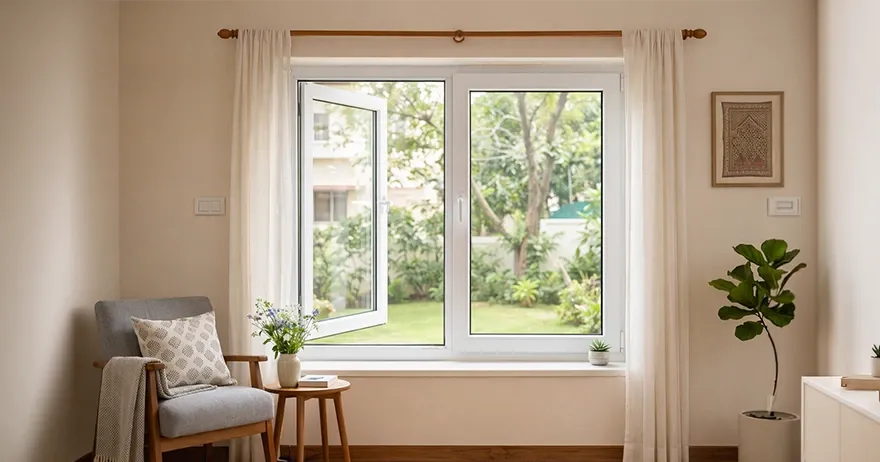
Casement windows are not something new to you. You have probably seen them many times without really noticing them.
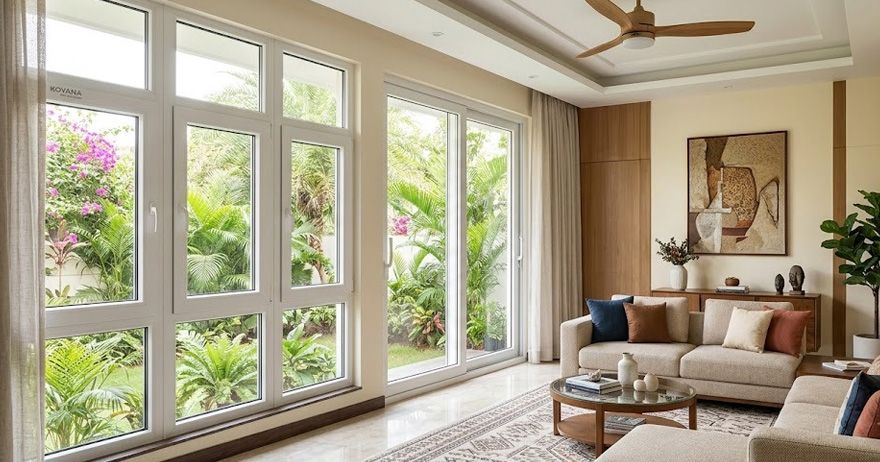
Casement windows are side-hinged windows that open outward or inward like a door. They are one of the most popular window styles because they offer excellent ventilation, airtight sealing, and unobstructed views. Casement windows are commonly used in modern homes where airflow, energy efficiency, and easy operation are important.
In this blog, let’s discuss when to choose casement windows for homes and when not to.
What Are Casement Windows?
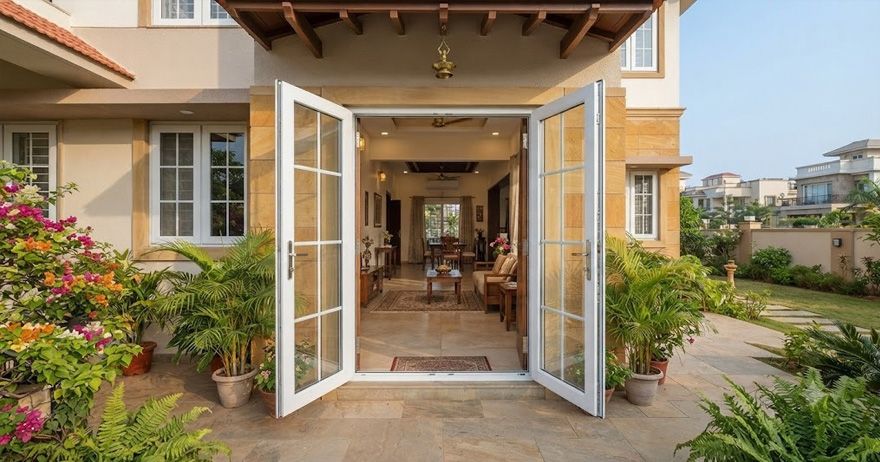
Casement windows are side-hinged windows that open outward like a door. When you push the panel, it swings open, fully or partially, depending on how much air you want. They can be hinged left or right, based on your layout. Some designs also come with a handle or crank, making them easy to open even in slightly hard-to-reach spots.
Key Features Of Casement Windows
Here are the top key features of casement windows.
- Side-hinged outward opening windows design: The window swings out from the frame on a hinge. This is what makes it different from every other window type.
- Airtight seal when closed: When it is shut, the sash presses firmly against the frame all the way around. This creates a tight seal that a very few other window types can match. Since there is no gap, there’s no need to worry about dust.
- Improved insulation: Double glazed casement window improves insulation and helps maintain indoor temperature.
- Multi-point locking: Most casement windows, especially uPVC casement windows, lock at multiple points along the frame when closed. This makes them significantly harder to force open from the outside.
- Works in any direction: You can angle the open panel to catch a cross breeze, direct air into a specific corner of the room, or partially open it for light ventilation without a full gust coming through.
Advantages of Casement Windows
Here are the advantages of casement windows.
- Best-in-class ventilation: No other standard window style pushes more fresh air into the room like casement windows. When fully open, the entire sash works as an inlet.
- Superior energy efficient window design: The tight seal around the full frame prevents air leaks in or out when the window is closed.
- Better security: The locking mechanism on a casement window sits inside the frame, not on the surface. Combined with multi-point locking on uPVC frames, these windows are genuinely hard to tamper with from outside.
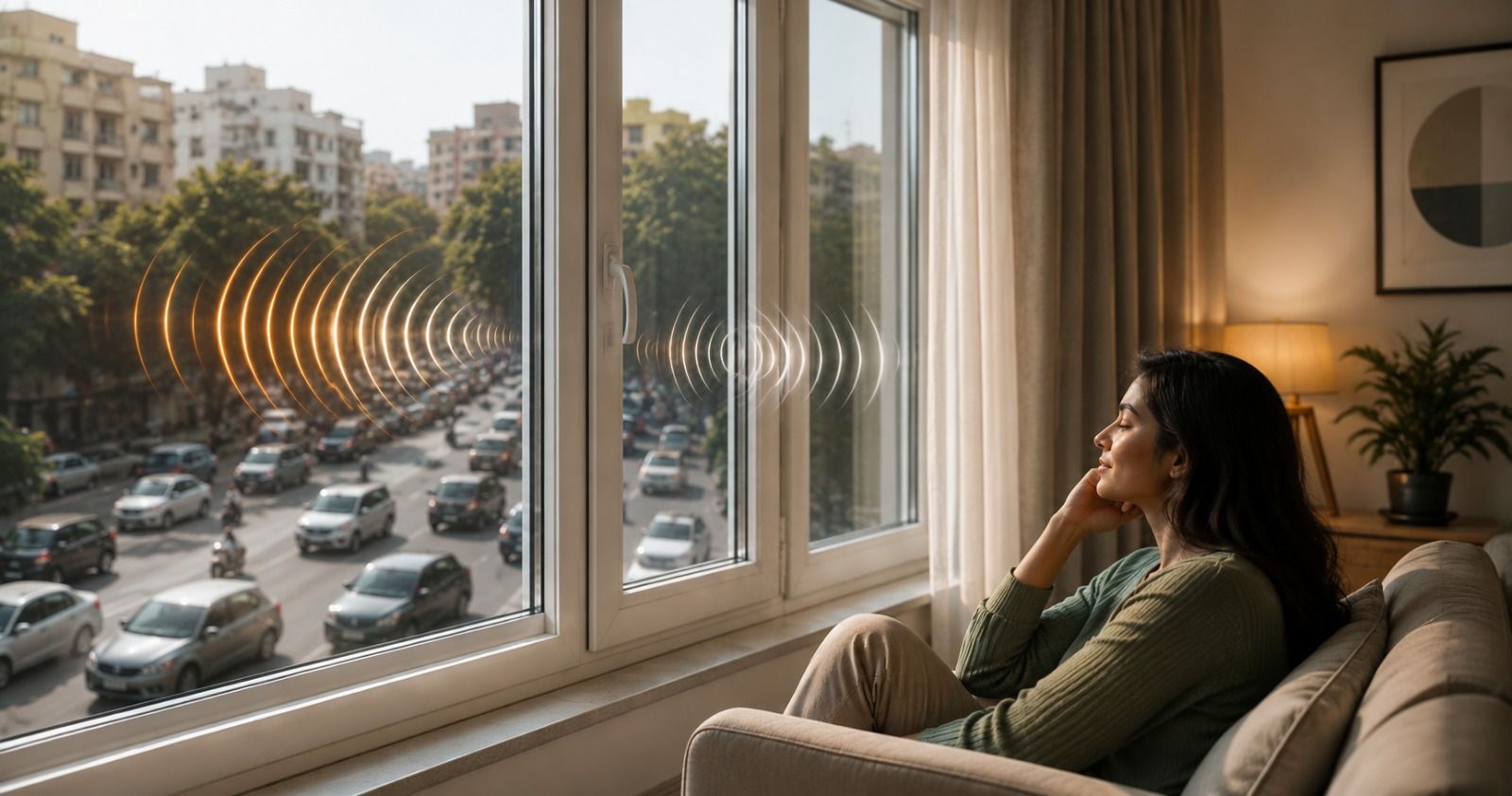
- Noise reduction: The airtight window design blocks sound, along with preventing air leaks. If your bedroom faces a busy road, a market, or a construction site, casement windows with uPVC frames will noticeably reduce what you hear inside.
- Ideal for cross ventilation: In Indian homes, cross ventilation matters a lot for 8 to 9 months of the year, when you want natural air instead of the AC. Casement windows placed on opposite walls of a room create a direct airflow channel.
- Low maintenance: uPVC casement frames do not rust, swell, warp, or fade. The hinges are the only moving parts, and good-quality hinges last for decades. The windows require only basic cleaning with soap and water occasionally.
When To Choose Casement Windows For Homes?
If you are wondering when to choose casement windows for homes, here are some recommendations.
- Casement windows are a great choice for bedrooms. These rooms need proper airflow, especially at night. A casement window allows you to control ventilation easily while also keeping the room quiet when closed.
- They are very useful in kitchens. Kitchens produce heat, smoke, and strong smells. A casement window helps remove these quickly because it allows more air to pass through. It is especially helpful when placed above a counter or sink.
- In bathrooms, ventilation is important to prevent moisture build-up. Casement windows allow fresh air to circulate while still maintaining privacy when placed at a higher level.
- They are also a good option for homes located near busy roads or noisy areas. The tight sealing helps reduce outside noise and prevents dust from entering the room.
- If your goal is to improve energy efficiency, casement windows are a better choice because they reduce air leakage and help maintain indoor temperature.
Casement Windows Vs Sliding Windows
Here’s a comparison between casement windows and sliding windows.
| Feature | Casement Windows | Sliding Windows |
|---|---|---|
| Opening style | Opens outward like a door | Slides horizontally |
| Ventilation | Full airflow | Partial airflow |
| Space requirement | Needs outside space | No extra space needed |
| Sealing | Very tight | Moderate |
| Best use | Bedrooms; kitchens | Balconies; compact spaces |
| Energy efficiency | High | Moderate |
Are Casement Windows Suitable For Indian Homes?
Yes, casement windows are well-suited for Indian homes and Indian weather. uPVC casement windows are particularly useful because they do not rust, warp, or require frequent maintenance. They also provide good insulation and perform well across different climates.
The only thing to consider is the space required for opening. In most homes, this is manageable and does not cause any issues.