



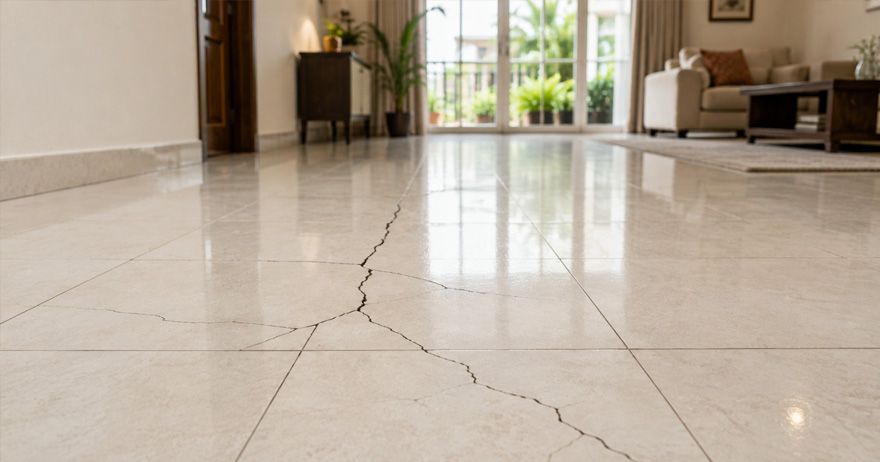
Floor tile cracking is a common problem that can affect both new and old homes, leading to costly repairs and an uneven floor surface. Cracks may develop due to poor installation, an uneven subfloor, structural movement, heavy loads, low-quality materials, or improper expansion joints. Identifying the root cause early is essential to prevent further damage and extend the life of your flooring.
Whether you're building a new home or maintaining an existing one, this guide explains the most common reasons floor tiles crack, how to prevent them, and when repair or replacement is the best solution. Finding the actual cause before replacing the tile can prevent the same problem from happening again.
Why Do Floor Tiles Crack?
Floor tiles can crack for several reasons, ranging from installation problems to structural movement. Some cracks appear soon after installation, while others develop gradually after years of use. Common causes include poor tile installation, uneven or weak subfloors, structural movement, heavy impact or concentrated loads, thermal expansion and contraction, incorrect adhesive selection, inadequate expansion joints and low-quality or unsuitable tiles. Understanding the causes of tile cracking is the first step toward choosing the right repair or prevention method.
Poor Tile Installation and Workmanship
Installation quality has a major influence on how well floor tiles perform over time. Even high-quality tiles can crack when they are installed over an unsuitable surface or with incorrect techniques. Some of the common tile installation mistakes are given below.
- Insufficient Adhesive Coverage: Tiles need adequate support underneath them. If large areas beneath a tile remain unsupported, pressure from people, furniture, or impact can cause the tile to crack.
- Incorrect Adhesive: Using an adhesive that is not suitable for the tile type, substrate, or application can reduce bonding strength.
- Poor Surface Preparation: Dust, grease, loose material, or an uneven substrate can prevent the adhesive from bonding properly.
- Incorrect Grouting: Improperly installed grout can contribute to moisture penetration and movement-related problems, particularly in areas exposed to water.
Professional installation and following the tile and adhesive manufacturer's recommendations can significantly reduce the risk of floor tile cracking.
Uneven or Weak Subfloor Problems
If the subfloor is uneven, weak, unstable, or inadequately cured, movement can transfer directly to the tiles above it. It is one of the most important factors to check when investigating cracked floor tiles.
- Uneven Subfloors: Tiles installed over dips, high spots, or irregular surfaces may not receive uniform support. As pressure is applied, unsupported sections can flex and eventually crack.
- Weak Concrete or Screed: A weak or poorly prepared substrate may move or deteriorate beneath the tile installation.
- Moisture Problems: Excess moisture in the substrate can interfere with adhesive performance and contribute to other flooring problems.
- Poor Surface Preparation: Before installation, the substrate should be clean, stable, appropriately level, and prepared according to the flooring system being used.
For a new installation, correcting substrate problems before laying tiles is considerably easier than repairing cracked flooring later.
Structural Movement and Foundation Settlement
Buildings naturally experience some degree of movement over time. However, significant structural movement or foundation settlement can place stress on rigid floor finishes. The tile surface may not be able to accommodate the resulting stress, causing cracks to develop. Look for signs like cracks appearing across multiple tiles, cracks following a relatively straight line, repeated cracking in the same area after replacement, cracks accompanied by visible changes in walls or ceilings and uneven or displaced sections of flooring.
If cracking appears to be associated with significant structural movement, simply replacing the affected tile may not solve the underlying problem.In such cases, the cause of the movement should be assessed by an appropriately qualified building or structural professional before carrying out extensive flooring repairs.
Heavy Loads and Impact Damage
Floor tiles are designed to withstand normal residential use, but concentrated or sudden loads can damage them. Dropping a heavy object directly onto a tile can create a visible crack or chip. Similarly, heavy furniture with small contact points can place considerable pressure on a localized area.
Common Sources of Impact Damage include dropped cookware or tools, heavy furniture, moving appliances, sharp impacts and concentrated loads on unsupported areas. Furniture should be moved carefully rather than dragged across tiled floors. Protective pads beneath furniture legs can also help distribute loads and reduce the risk of localized damage. For areas expected to experience particularly heavy use, select tiles with specifications appropriate for the intended application rather than choosing solely based on appearance.
Thermal Expansion and Lack of Expansion Joints
Floor tiles and the surfaces beneath them can expand and contract as temperatures and moisture levels change. If the installation does not have enough room to accommodate this movement, stress can build up within the tiled surface. It eventually results in floor tile cracks, tenting, or tiles becoming loose.
Movement or expansion joints allow different sections of a tiled floor to move without transferring excessive stress to the tiles. They are particularly important in large floor areas, long corridors, outdoor or semi-outdoor spaces, areas exposed to significant temperature changes and floors installed over substrates with movement potential. Follow the tile manufacturer's and applicable installation standards recommendations rather than simply filling every joint with rigid grout.
Choosing the Right Tiles and Adhesives
Choosing suitable materials is another important part of preventing tile damage. Different tiles have different characteristics, and the adhesive must be compatible with both the tile and the substrate.
Ceramic Tiles
Ceramic tile cracks can occur when tiles are subjected to excessive impact, inadequate support, or movement beneath them. Selecting tiles appropriate for the intended floor application is essential.
Porcelain Tiles
Porcelain tile cracking can also occur despite porcelain's high density and durability. A strong tile still requires proper substrate preparation and installation.
Choosing the Adhesive
The adhesive should be selected based on tile type and size, substrate material, indoor or outdoor application, moisture exposure, expected traffic and manufacturer recommendations. For large-format tiles, achieving adequate adhesive coverage is particularly important because unsupported areas can become vulnerable to stress and impact.
A quality tile combined with the correct adhesive and a properly prepared substrate provides a much stronger flooring system than focusing on the tile alone.
How to Prevent Floor Tile Cracking
Preventing cracks is generally easier and less expensive than repairing them later. Some of the practices are given below on how to prevent floor tiles from cracking in both new construction and renovation projects.
- Prepare the Subfloor Properly: Make sure the substrate is stable, clean, sufficiently level, and suitable for the tile installation before work begins.
- Choose the Right Tile: Select tiles based on the room's traffic, moisture exposure, expected loads, and intended application.
- Use Compatible Adhesive: Always choose an adhesive suitable for the tile and substrate. Follow the manufacturer's instructions for mixing and application.
- Ensure Adequate Adhesive Coverage: Tiles should receive sufficient support underneath them, particularly in high-traffic areas and when installing larger tiles.
- Allow Proper Curing: Give the substrate, adhesive, grout, and other materials adequate time to cure before exposing the floor to heavy traffic.
- Plan Movement Joints: Large installations and areas subject to movement should have appropriately designed movement joints.
- Protect the Finished Floor: Avoid dropping heavy objects and use protective pads beneath furniture legs.
- Inspect Early: Small changes, loose tiles, damaged grout, or recurring cracks should be investigated before the problem spreads.
When to Repair or Replace Cracked Tiles
Not every cracked tile requires the entire floor to be replaced. For isolated damage, floor tile repair or individual tile replacement can often restore the appearance without disturbing the entire floor. The right solution depends on the extent and cause of the damage.
| Situation | Recommended Approach |
|---|---|
| Small crack in one tile | Consider individual tile replacement |
| Chipped tile from impact | Replace the affected tile |
| Several tiles cracked in one area | Investigate the substrate and installation |
| Cracks repeatedly return after replacement | Identify the underlying cause before further repairs |
| Widespread cracking | Professional assessment may be necessary |
| Structural movement suspected | Address the underlying structural issue first |
Final Thoughts
Floor tile cracking can result from many different factors, including poor workmanship, inadequate substrate preparation, structural movement, impact, thermal movement, and unsuitable materials. For new installations, invest in proper substrate preparation, suitable tiles, compatible adhesives, adequate movement joints, and experienced workmanship. For existing floors, regular inspection and timely floor tile maintenance can help identify developing problems before they become more extensive tile flooring problems.