



How Minor Wall Cracks Turn Into Major Repairs
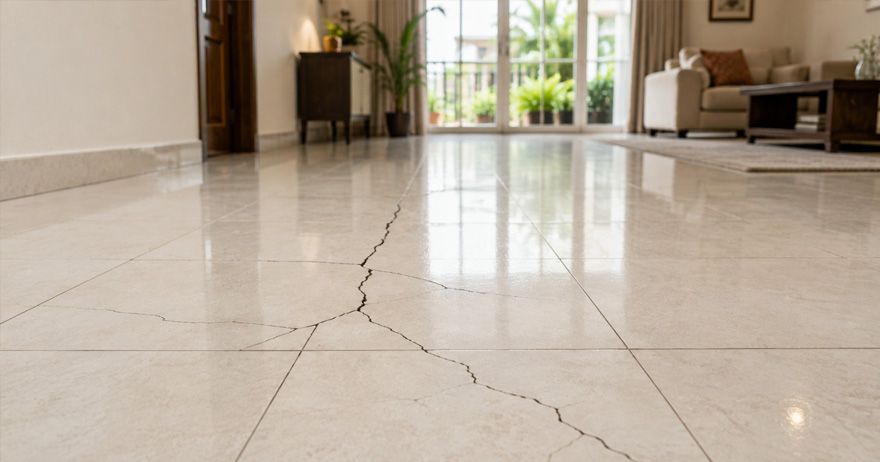
If you think it’s just a hairline crack and you can paint over it and move on, you are wrong. A crack does not stay small forever. Every monsoon and every summer heat, the wall expands and contracts, which makes the crack a little wider.
Within a year or two, what was once a surface line becomes a gap that lets in water, dust, and insects. Water that enters through the crack travels inside the wall, weakens plaster from within, causes steel reinforcement bars to rust, paints to peel and builds up moisture that leads to fungal growth. You need fresh plaster, wall crack repair treatments like waterproofing, and repainting.
Cost Of Ignoring Wall Cracks: Water Leakage
If you ignore cracks and gaps, it leads to water leakage through wall cracks. This is one of the most common home maintenance mistakes homeowners make. Professional waterproofing in India costs between INR 25 and INR 300 per sq ft depending on the surface and method. Wall crack repairs for a 2BHk can cost from INR 15,000 to INR 50,000 or more.
Sealing a crack early with polymer-based filler costs a few hundred rupees. Whereas, repairing the wall after damage costs several thousand rupees. So, it is always wise to act fast.
How Window Gaps Increase Energy Bills
When a window is not properly sealed to the wall, cool air from your AC escapes and hot air enters. Your air conditioner then runs longer and works harder. Sealing these gaps reduces cooling costs by 10 to 20%.
Window gaps also let in dust, insects, and rain. Sealing them with silicone sealant takes less than an hour and costs very little compared to the ongoing rise in electricity bills.
Signs Your Home Needs Resealing
Here are the signs your home needs resealing and solutions for how to repair wall cracks permanently.
Cracks Around Windows
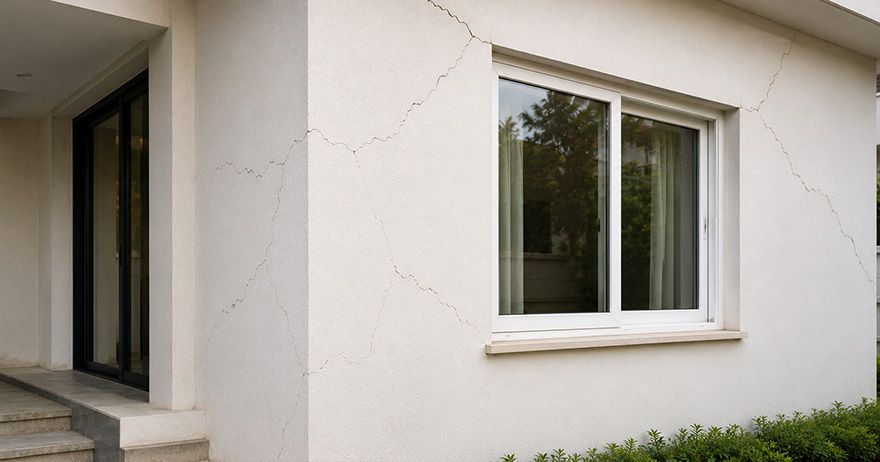
Cracks along window frame edges indicate that the sealant or mortar between the frame and the wall has failed. These are direct entry points for rainwater and hot air to enter inside. If you see lines running along the top, sides, or bottom of any window frame, seal them without any delay.
Peeling Paint
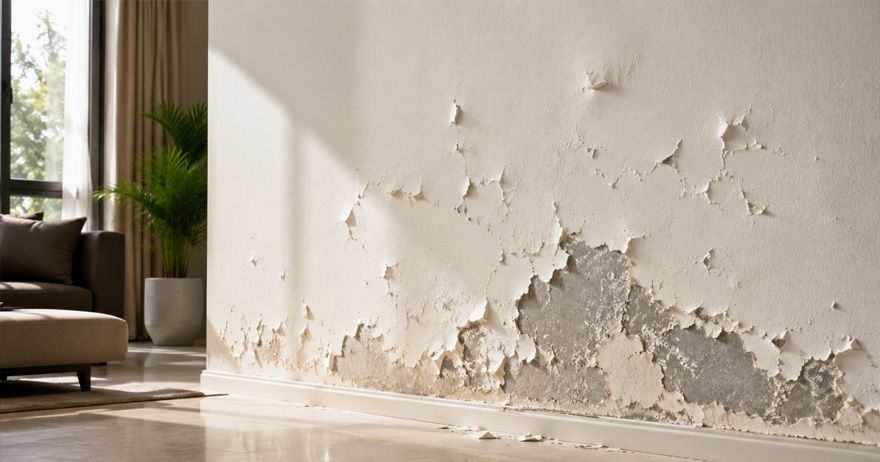
Paint does not peel on its own. Moisture inside the wall pushes it outward. That moisture is entering through a crack in a wall, a window gap, or an unwaterproofed terrace above. So, before repainting, find the source and seal it.
Damp Patches On Walls
If a damp patch appears during rain or stays wet for days after rain, it means water is trapped inside the wall. If the patch feels soft or crumbly to touch, then the plaster has already started to deteriorate.
Mold & Mildew Growth
Mold appears as black, green, or grey patches on walls or ceilings. It grows wherever moisture stays for long, spreads quickly, and affects the air quality inside your home. It will appear within a few weeks if you just clean it but do not fix the moisture source.
Drafts & Dust Entry
If you feel a breeze near a closed window, or if dust collects along window edges even when shut, the sealing has dried out and cracked. You will need to replace it with a new one.
Wall Crack Repair Vs Full Restoration Cost
| Type of repair | What happens | Approximate cost |
|---|---|---|
| Hairline crack sealing | Crack filler or putty on surface cracks | INR 150 to INR 500 per area |
| Surface crack with plaster | Clean fill and replaster a small section | INR 40 to INR 80 per sq ft |
| Moisture-related crack repair | Waterproofing compound and replastering | INR 80 to INR 150 per sq ft |
| Full wall waterproofing | Chemical treatment across the full wall area | INR 25 to INR 150 per sq ft |
| Full wall restoration | Remove plaster waterproof replaster repaint | INR 150 to INR 300 per sq ft |
| Structural crack repair | Professional inspection and epoxy or PU injection | INR 500 and above per running foot |
Why Sealant Maintenance Saves Money
If you are wondering how to fix gaps around windows, the answer is using sealants. Here is a window seal repair guide.
Silicone and polymer-based sealants around windows and wall joints last for five to seven years. After that, they harden, shrink, and crack. So, it is better to inspect and re-apply sealant before failure to keep ahead of the water damage cycle. The sealant costs less, but what it protects against costs a great deal.
An annual pre-monsoon check takes 30 minutes. Spending INR 2,000 to INR 5,000 on early repairs can save INR 20,000 to INR 50,000 in wall restoration costs that would follow if damage is unattended over two or three years.
Best Time To Repair Cracks And Window Gaps
The best time to repair cracks is between February and May, before the monsoon arrives. Crack fillers, plasters, and waterproofing compounds need dry conditions to bond correctly. Repairs done during or after monsoon often fail because the surface is too wet for materials to set.
If you have missed wall crack repair before monsoon, it can be done between October and December after walls have fully dried. Indoor repairs can be done at any time as long as the surface is dry, dust-free, and clean.
How To Prevent Future Damage
Prevention is always better than cure, right? So here are some ways on how to prevent water damage in walls.
- Clean terrace drains before every monsoon so water does not pond and seep through the slab.
- Do not forget to check the joint where the terrace and parapet wall meet, as this is one of the most common water entry points.
- If you live on an upper floor, check whether the balcony above has proper waterproofing, because most times, it is the neighbour’s leakage that shows up as a damp patch on your ceiling.
- Once you change the plaster, ensure it is kept moist for at least seven days after application so it cures evenly without shrinkage cracks.
- Check plumbing walls every few years, as slow pipe seepage causes damp patches.
Why Quality Windows And Proper Installation Matter
A window that is properly installed does not develop gaps for years. But in many households, the windows are fitted without sealing at the frame-to-wall junction and without weatherstrips along the open edges.
With temperature changes, gaps open up almost immediately without proper sealing, leading to air leakage through window frames.
When replacing or installing windows, the frame must be set in proper mortar and the joint sealed with silicone or polyurethane sealant on the outside. Weatherstrips on the moving parts stop air and water from passing through when the window is closed.
These small steps during installation can help your window stay trouble-free for two years or for ten.