




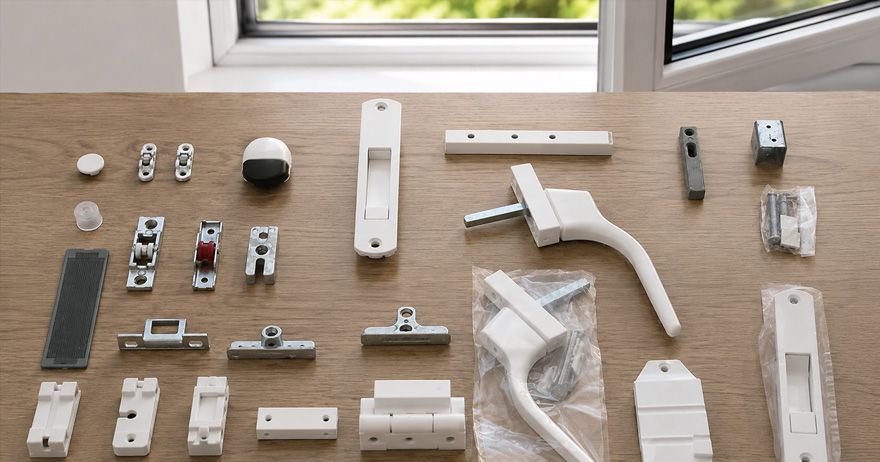
What Are the Parts of a Window?
A window consists of several components that work together to provide ventilation, natural light, insulation, security, and smooth operation. The main window parts include the frame, sash, glass, glazing beads, hinges, handles, locks, seals, and mullions. Each part plays a specific yet significant role in the window's performance, energy efficiency, durability, and safety. Understanding window parts and their functions can help homeowners choose better windows, identify maintenance issues, and be informed when replacing or upgrading windows. This article explains the anatomy of a window and how windows work together with all their components.
Window Frame: The Foundation of Every Window
The "skeleton" that gives a window its strength, stability, and shape; the window frame is a fixed structural component that surrounds and supports a window. It is anchored to the wall opening and serves as the foundation holding all other window components together, including the sash, glass, hardware, seals, and locking mechanisms.
A window frame plays a critical role in the window's performance, durability, and appearance. A well-designed frame provides structural support, ensures smooth operation of opening and closing mechanisms, prevents water and air leakage, enhances energy efficiency, and contributes to a building's overall aesthetics. A frame’s material, too, can influence insulation, maintenance requirements, lifespan, and weather resistance. Without a strong and properly engineered frame, even the highest-quality glass cannot perform effectively.
Understanding Window Sashes
A window sash is the framed structure that holds the glass panes in place. It is the movable (or sometimes fixed) part of a window that allows it to open, close, and lock securely. Depending on the window type, the sash may slide, swing, tilt, or remain stationary. In modern windows, the sash contributes to structural strength, weather resistance, security, and energy efficiency while supporting the glass unit. The sash is one of the most important functional components of a window because it directly affects performance, usability, and durability. A well-designed sash keeps the glass securely in place, enables smooth operation, supports locking mechanisms, and helps create an effective seal against air, water, dust, and noise infiltration. It also reduces heat transfer and prevents drafts, thus playing a significant role in thermal insulation and energy efficiency.
Glass and Glazing Explained
Glass is the transparent material used in windows, doors, façades, and skylights to allow natural light and visibility while protecting interiors from external weather conditions.
Glazing refers to the process and system of installing glass within a window or door frame. It includes not only the glass itself but also the seals, spacers, glazing beads, and techniques used to secure the glass and enhance performance. Modern glazing can be single or double-pane, depending on the required levels of insulation, sound reduction, security, and energy efficiency.
Glass and glazing play a crucial role in a building's comfort, efficiency, and functionality. They determine how much natural light enters a space, influence indoor temperatures, reduce external noise, enhance security, and contribute to energy savings. Modern glazing systems can significantly improve a window's performance by minimising heat transfer, preventing air and water leakage, and increasing durability. As a result, glass and glazing are no longer just transparent barriers—they are essential components that affect a building's overall performance, sustainability, and occupant comfort.
Window Hardware: Handles, Hinges & Locks
Window hardware refers to the components that enable a window to open, close, stay in place, and lock securely. While often less visible than the frame or glass, hardware plays a critical role in a window's performance, ease of use, durability, and safety.
Handles
A window handle is used to open, close, and operate the window. Different window styles use different handle designs, such as casement, sliding, or tilt-and-turn handles. Handles are the primary point of interaction with a window. Well-designed handles provide comfortable operation, ensure smooth sash movement, and work in conjunction with locking mechanisms to enhance security and usability.
Hinges
Hinges connect the window sash to the frame and allow it to open and close. They support the sash's weight while controlling its movement. The quality of hinges directly affects a window's stability, alignment, and longevity. Strong, corrosion-resistant hinges help ensure smooth operation, prevent sagging over time, and maintain proper sealing against air and water infiltration.
Locks
Window locks are security mechanisms that secure the sash to the frame when the window is closed. Modern windows often use multi-point locking systems that engage at multiple locations along the sash. Locks are essential for security, safety, and weather performance. A robust locking system helps deter unauthorised entry, keeps the sash firmly compressed against seals, and improves protection against drafts, noise, dust, and water penetration.
Weather Seals and Gaskets: Why They Matter
Weather seals and gaskets are flexible components installed around the edges of windows and doors to close small gaps between the frame and the opening sash. They are typically made from materials such as EPDM rubber, silicone, or thermoplastic elastomers, creating a tight seal when the window is closed.
- Weather seals and gaskets play a critical role in a window's overall performance. They help:
- Prevent air leakage by blocking drafts and reducing unwanted heat transfer.
- Keep out rainwater and moisture to protect interiors from leaks and dampness.
- Reduce dust and pollution infiltration, especially important in urban environments.
- Improve sound insulation by minimising gaps through which noise can travel.
- Enhance energy efficiency by helping maintain indoor temperatures and reducing dependence on air conditioning or heating.
- Ensure smooth window operation while maintaining a secure and consistent seal over time.
Mullions, Transoms and Window Dividers
Mullions, transoms, and window dividers divide a window into smaller sections. While they may appear similar, each decorative and structural element serves a different purpose in window design, including strength, functionality, and aesthetics.
A mullion separates two or more window units. A vertical bar, a mullion, was a structural support that held glass sections in place when large glass panes were difficult to manufacture.
A transom is a horizontal bar that divides a window or separates a window from a door. Traditionally, transom windows above doors were designed to improve ventilation and allow natural light into interior spaces.
Window dividers (also called grilles, muntins, or glazing bars, depending on the design) are strips that create the appearance of multiple smaller glass panes within a window. They can be structural or purely decorative.
Mullions, transoms, and window dividers help define a window's strength, functionality, and visual appeal. Properly designed mullions can support larger window systems, transoms can improve light distribution and architectural balance, and dividers can create a distinctive style that complements the overall design of a home or building. Together, these elements allow architects and homeowners to customise window designs while maintaining structural performance and aesthetic harmony.
How Window Components Affect Performance
A window may appear to be a single product, but it is actually a system made up of multiple interconnected components. The frame, sash, glass, hardware, seals, mullions, transoms, and dividers each perform a specific function, but their true value lies in how they work together.
The frame provides the structural foundation that supports the entire assembly. Within it, the sash holds the glazing securely in place while enabling the window to open and close. Hardware components such as handles, hinges, and locks allow operation while helping maintain alignment and security.
The glazing system manages daylight, visibility, insulation, and acoustic performance, while weather seals and gaskets help create a barrier against air, water, dust, and noise infiltration. In larger window systems, mullions and transoms provide additional support and design flexibility, allowing wider openings and more complex configurations. Window dividers further influence the window's visual character, helping achieve specific architectural styles.
Because these components are interconnected, a window's performance depends on the quality and compatibility of the entire system rather than on any individual element. High-performance glazing, for example, cannot deliver its intended benefits if the sash is poorly designed or the seals fail to maintain an airtight closure. Similarly, robust hardware can only function effectively when supported by a stable frame and a correctly engineered sash.
For this reason, modern window design focuses on system performance. Structural strength, thermal insulation, weather resistance, acoustic comfort, security, and durability are all the result of multiple components working together as a unified whole.
Understanding these components helps homeowners, architects, and builders evaluate windows beyond appearance alone and appreciate the engineering that influences long-term comfort, reliability, and performance.
Common Window Problems and the Parts Responsible
When window parts and their functions fail to perform as expected, the cause is often not the entire window but a specific component within the system. Understanding which part is responsible for a particular issue can help homeowners identify potential problems early and initiate maintenance, repairs, or replacement when needed.
| Common Window Problem | Window Part(s) Responsible |
|---|---|
| Difficulty opening or closing the window | Sash Hinges Rollers and Hardware |
| Air drafts around the window | Weather Seals or Gaskets Sash and Locking Mechanism |
| Water leakage during rain | Weather Seals or Gaskets Drainage Channels (Weep Holes) Frame and Installation |
| Excessive outside noise | Glass or Glazing Unit Weather Seals or Gaskets and Sash |
| Condensation on or between glass panes | Glass or Insulated Glazing Unit (IGU) and Glazing Seal |
| Loose or unstable window structure | Frame Mullions Transoms and Steel Reinforcement (uPVC Windows) |
| Locking issues | Locking Mechanism Handle and Sash |
| Visible gaps between components | Frame Sash Mullions and Seals or Gaskets |
Why Understanding Window Parts Helps Homeowners
Understanding the different window parts and their functions helps homeowners select, maintain, or upgrade their windows. Knowing the roles of components such as the frame, sash, glazing, hardware, and seals makes it easier to evaluate window quality, identify potential issues, communicate effectively with installers, and choose solutions that best suit their comfort, security, energy efficiency, and design requirements.